Water is the single most controllable factor in the health of your foundation. Most foundation failures we repair in Southern California and Arizona were preventable โ and moisture management is the reason they were not prevented.
This guide covers everything a homeowner needs to understand about drainage, soil moisture, and how both directly affect the long-term stability of your foundation. If you are already seeing cracks, sticking doors, or uneven floors, this guide will help you understand why โ and what to do about it.
Why Drainage Matters More Than Most Homeowners Realize
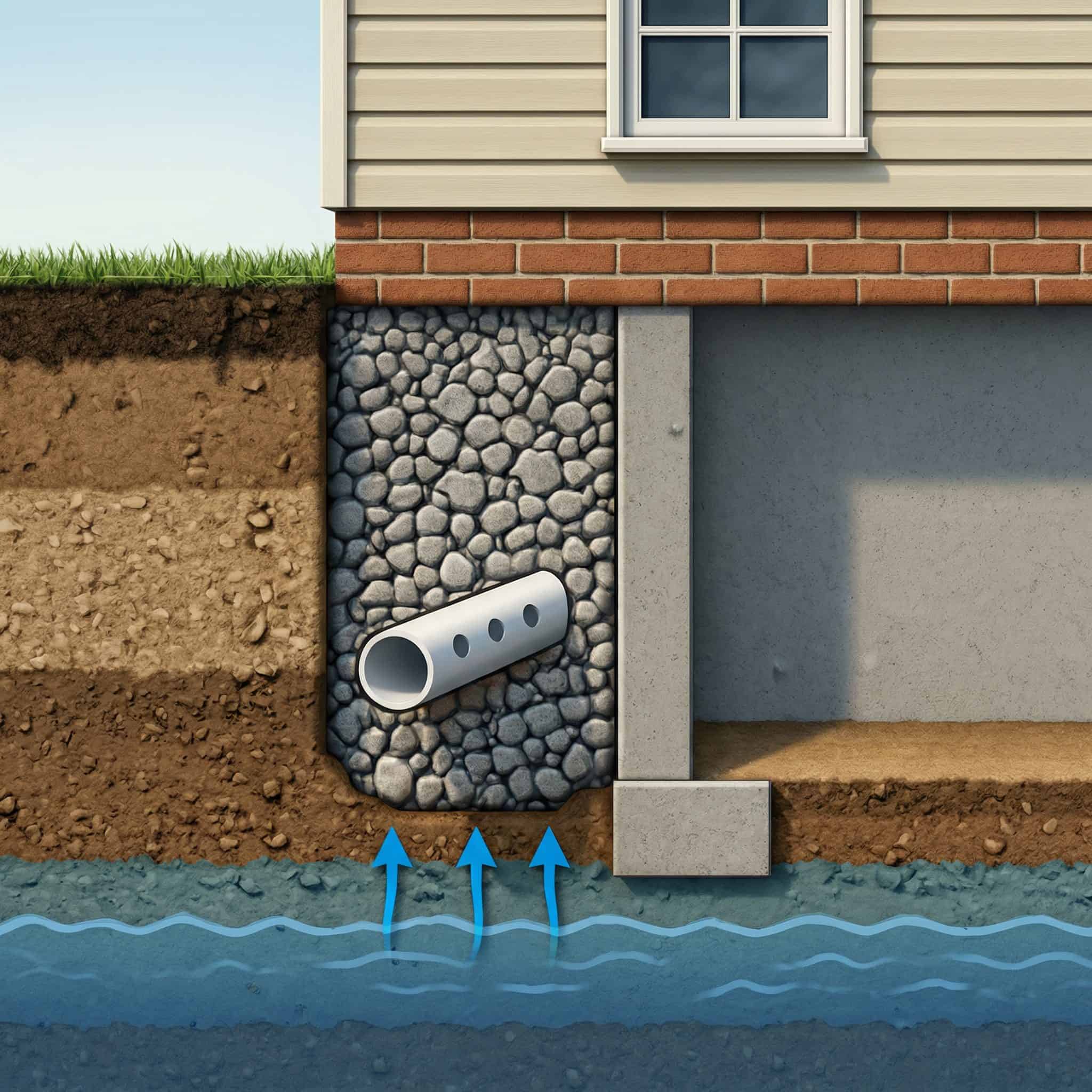
Your foundation does not move on its own. It moves because the soil beneath it moves โ and soil moves primarily in response to changes in moisture. Too much water causes certain soils to swell and push upward against your footings. Too little water causes those same soils to shrink and pull away, leaving voids your foundation slowly drops into.
The critical point most contractors miss is this: it is not the amount of water that damages your foundation. It is the change in moisture โ the cycle of wet and dry, year after year โ that accumulates damage over time. A foundation that experiences consistent moderate moisture will almost always outlast one that swings between saturation and bone-dry conditions, even if the second one occasionally gets less water overall.

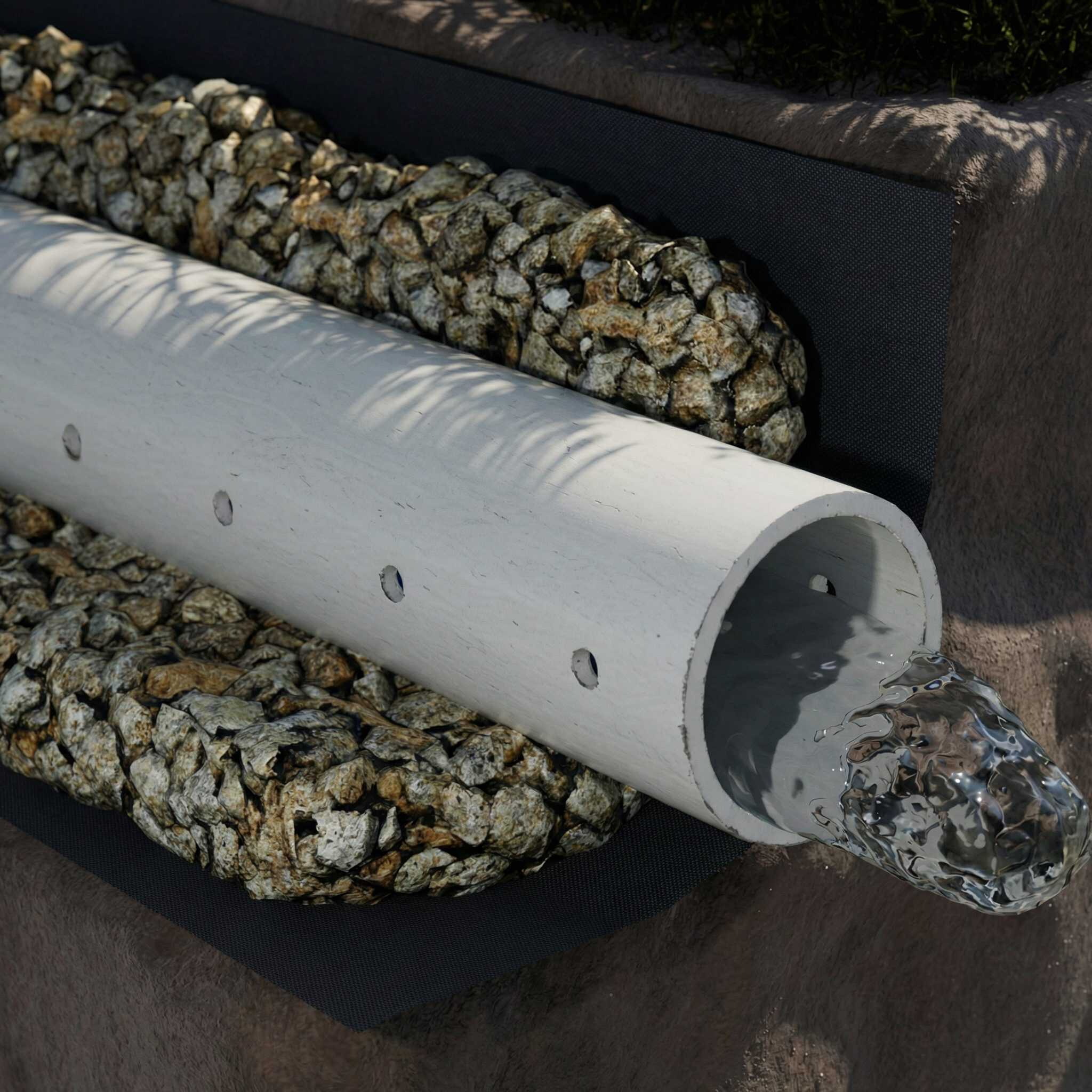
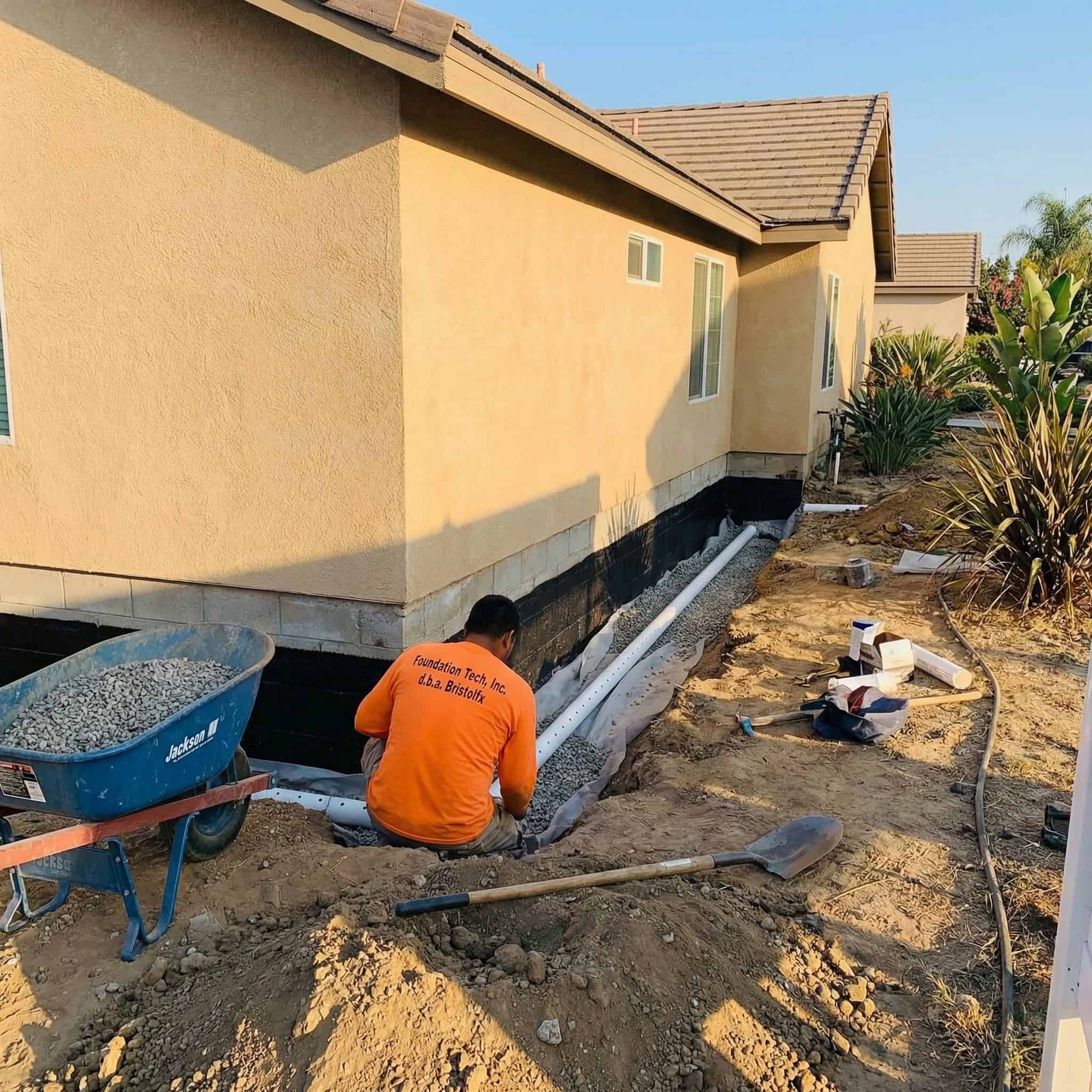
Good drainage does not just remove water from your property. It maintains a consistent moisture environment around your footings, which is the true goal. Bristolfx provides professional drainage correction services throughout Southern California and Arizona for exactly this reason.
Common Drainage Problems That Damage Foundations
Inadequate Site Grading
The ground around your home should slope away from the foundation on all sides โ a minimum of six inches of drop over the first ten feet is the standard recommendation. When the grade is flat or slopes toward the house, every rain event and every irrigation cycle sends water directly toward your footings. Over time this creates chronically saturated soil on the perimeter, leading to either heaving (in expansive clay soils) or weakening of the bearing capacity altogether.
Regrading is one of the most cost-effective foundation protection measures available, and it is almost always the first thing we address before any structural repair. Fixing the structure without fixing the drainage is like repairing a leaking roof without finding the source of the leak. Learn more about our foundation repair process in Southern California and Arizona.

Rain Gutters Discharging Too Close to the Foundation
A standard residential roof sheds thousands of gallons of water during a single rain event. If your downspouts terminate within four feet of the foundation โ or worse, discharge directly into a planter bed against the wall โ that water has nowhere to go except into the soil immediately surrounding your footings. Extending downspouts a minimum of six feet from the foundation, or connecting them to underground drain pipes that carry water to the street or a dry well, is a simple fix with significant long-term impact.
Blocked or Absent Yard Drains
Many properties in Southern California were built with surface area drains designed to collect and redirect water during heavy rain events. When those drains become clogged with debris, or when landscaping changes have redirected water away from them, ponding conditions develop. Standing water adjacent to a foundation saturates the soil far more deeply than normal rain infiltration, and that saturation can persist for weeks after the water on the surface has evaporated.
Inspect your yard drains at least once per year before the winter rainy season. Clear any debris from the drain grates and verify that water flows freely through the outlet. It takes five minutes and can prevent thousands of dollars in foundation damage.
Closed Planters Against Foundation Walls
Raised planter beds built directly against the foundation wall are one of the most common drainage problems we encounter on inspection. The planter soil stays perpetually moist from irrigation, and that moisture migrates laterally into the soil supporting your footings. Additionally, the weight of the wet soil and plant material in the planter exerts direct lateral pressure against the foundation wall. Over time, this can contribute to both inward bowing of stem walls and settlement of the adjacent footing.
If you have planters against your foundation walls, ensure they have drainage holes at the bottom and are not being over-irrigated. Ideally, maintain a gap of at least 12 inches between any planted soil and your foundation.

Excessive Irrigation
Irrigation systems are one of the leading causes of foundation problems in residential Southern California. They run on a schedule regardless of whether the soil actually needs water โ and most are set far more aggressively than necessary. Drip systems around foundation plantings, in particular, can maintain near-constant saturation in the soil immediately adjacent to footings.
The fix is simple: reduce irrigation frequency and duration in zones adjacent to the house, switch to deep watering cycles rather than frequent shallow ones, and install a smart irrigation controller that adjusts based on rainfall and evapotranspiration data. Your foundation will benefit, and so will your water bill.
Seasonal Moisture Fluctuations and Your Foundation
In Southern California and Arizona, the foundation threat is not just a single weather event โ it is the seasonal cycle that repeats year after year. Understanding what each season does to the soil beneath your home is the first step toward managing it.
Winter โ The Heave Season
When winter rains saturate clay-rich soils, the clay minerals absorb water and physically expand. This expansion exerts enormous upward pressure against the underside of your slab and outward pressure against your perimeter footings. The technical term is soil heave, and it can lift sections of your foundation by several inches in severe cases.
The perimeter of your slab is most vulnerable because it is directly exposed to surface moisture infiltration. The interior slab, protected by the house above it, stays comparatively drier. The result is a differential โ the edges rise while the center stays put โ producing the characteristic center-sag cracking pattern with diagonal cracks at window and door corners.
In extreme winters or when drainage is very poor, the soil can also become so saturated that it loses its load-bearing capacity entirely, causing rapid settlement rather than heave. This is called hydro-consolidation and is most common in sandy alluvial soils. When voids form beneath a slab as a result, polyurethane foam injection is often the fastest and least invasive repair method available.
Summer and Drought โ The Settlement Season
When summer heat and drought conditions take over, that same clay soil that expanded in winter shrinks dramatically. Loamy and clay soils can experience vertical elevation changes of three to four inches simply due to the loss of moisture volume. The soil pulls away from your footings, creating gaps and voids that your foundation slowly drops into โ unevenly, wherever the shrinkage is most severe.
This is why so many Southern California homeowners notice their doors sticking or their floors sloping at the end of summer. The soil has moved beneath the house, and the structure has followed it. By the time the symptoms are noticeable, weeks or months of movement have already accumulated.

Extended drought conditions โ increasingly common in California โ amplify this effect significantly. A foundation that managed the normal wet-dry cycle for decades can begin showing serious problems after two or three consecutive dry years that drive the clay to an extreme moisture deficit.
Managing the Cycle
The goal of moisture management is not to keep your soil dry. It is to keep moisture levels as consistent as possible year-round. In practice this means ensuring excess water drains away in winter while maintaining minimal irrigation near the foundation in summer to prevent extreme drying. A soaker hose system running on a low-frequency schedule during the driest months โ just enough to prevent the soil from completely desiccating โ can significantly reduce the amplitude of the seasonal swing and protect your foundation in the process.
Understanding Soil Types and Foundation Risk

Not all soils respond to moisture the same way. Understanding what type of soil is beneath your home tells you a great deal about your foundation risk profile.
The Plasticity Index โ The Number That Matters Most
The Plasticity Index (PI) is the standardized engineering measure of how much a soil expands and contracts with changes in moisture. It runs from near zero for non-plastic soils like clean sand to well above 50 for highly plastic clays. California building codes require geotechnical testing of PI for new construction โ but the majority of homes built before the 1970s were constructed without this requirement, meaning millions of Southern California homes sit on soils whose actual expansion potential was never formally assessed.
As a general guide: a PI below 15 indicates low expansion risk, 15 to 35 indicates moderate risk requiring engineering consideration, and above 35 indicates high risk requiring specific foundation design. Many residential neighborhoods in the Los Angeles basin, the San Fernando Valley, and the San Joaquin Valley have soils testing above 35. When cracking has already occurred as a result of clay movement, crack injection repair can restore structural integrity before further damage accumulates. For further reading on soil expansion testing, the USGS publishes ongoing research on California land subsidence and soil movement that is worth reviewing.
Sandy Soils
Sandy soils consist of coarse particles with large pore spaces between them. They drain quickly, hold little moisture, and expand and contract minimally with moisture changes. Foundations on sandy soils are generally at low risk from moisture-driven movement. Their primary risk is erosion โ if water flows rapidly across or beneath sandy soil, it can carry material away from beneath footings, creating voids. This is particularly relevant for hillside properties with sandy soils and inadequate drainage, where hillside stabilization is often necessary alongside drainage correction.
Silty Soils
Silty soils have finer particles than sand and hold water more readily. They are commonly found in valley floors and near natural waterways where sediment has been deposited over time. Silty soils are moderately vulnerable to settlement under saturated conditions โ when they become fully waterlogged, their load-bearing capacity can decrease significantly. They are less prone to heave than clay but more prone to consolidation settlement when repeatedly wetted and dried.
Loamy Soils
Loamy soils are a mixture of sand, silt, clay, and organic material. They are highly productive for agriculture, which is why so much of Southern California was farmland before development. For foundations, however, loamy soils present significant risk: their organic content makes them compressible, and their clay fraction makes them susceptible to moisture-driven expansion and contraction. Elevation changes of three to four inches over a season are not uncommon in loamy soils experiencing drought followed by heavy rain.
Clay Soils
Clay soils are the most significant foundation risk in Southern California and Arizona. Clay particles are microscopic, tightly packed, and highly absorbent โ they can swell to many times their dry volume when saturated, and shrink dramatically when dry. The American Society of Civil Engineers estimates that expansive clay soils cause more property damage annually in the United States than all natural disasters combined, including hurricanes and earthquakes. For foundations on clay soils, push piers and helical piers driven past the active clay zone to stable bearing material are typically the most permanent repair solution.
Clay soils in the Los Angeles basin, Ventura County, and the San Joaquin Valley routinely test at Plasticity Index values above 35, placing them in the high-risk category. Homes built on these soils without proper drainage management, moisture barriers, or deep foundations anchored below the active clay zone are in a perpetual slow battle with the soil beneath them.
Recognizing Foundation Problems Early
The earlier a foundation problem is identified, the less expensive it is to address. Most homeowners wait until symptoms are severe before calling for an inspection โ but many of the warning signs appear long before structural damage becomes critical.
Visual Warning Signs

Look for diagonal cracks running from the corners of windows and doors โ these are the most reliable indicator of differential foundation movement, because the stress concentrates at the weakest points in the wall. Stair-step cracks in brick or block exterior walls follow the mortar joints and indicate the same thing. Vertical cracks in the foundation itself suggest settlement or heave depending on their location and whether they are widening at the top or bottom.
Inside the house, doors and windows that begin to stick or fail to latch properly are early warning signs โ the door frame is racking slightly out of square because the wall above it has shifted. Floors that slope noticeably toward one part of the house, gaps between the wall and the ceiling or floor, and cabinets or countertops pulling away from the wall are all signs that movement has been occurring for some time.
On the exterior, look for soil pulling away from the foundation wall, gaps between the porch or steps and the main structure, and any visible separation at the top of the foundation where it meets the framing above.
Four Questions to Ask Yourself
When you notice any of these signs, four questions help determine urgency. First โ when did this start? A crack that appeared after a specific event (a very wet winter, a nearby construction project, a plumbing leak) has a likely cause you can investigate. A crack that has been there as long as you can remember may be old and stable. Second โ is it getting worse? A crack that is widening or a door that is increasingly difficult to close indicates active movement that needs attention now. Third โ have you addressed the likely cause? If poor drainage is contributing to the problem, fixing the drainage first may slow or stop the movement before structural repair is needed. Fourth โ how long are you willing to wait? Foundation problems do not resolve themselves. In almost every case, delayed action means a more expensive repair later.
What To Do Next

If you have identified drainage problems on your property, addressing them now is the most cost-effective foundation protection available. Regrading, extending downspouts, clearing drains, and adjusting irrigation can often be done without professional help and can prevent significant structural damage over time.
If you are already seeing foundation movement symptoms โ cracking, sticking doors, sloping floors โ the next step is a professional inspection to determine whether the movement is active and what is causing it. A proper inspection does not just look at the cracks on the wall. It assesses the soil conditions, the drainage situation, the elevation differential across the structure, and any contributing factors specific to your property and location. You can also review our foundation repair FAQ for answers to the most common questions homeowners ask before their first inspection. For properties with moisture intrusion into crawl spaces or basements, our waterproofing services address the source directly rather than treating symptoms.
Bristolfx provides free foundation inspections throughout Southern California and Arizona. There is no cost, no obligation, and no sales pressure โ just an honest assessment of what is happening and what your options are.

Schedule a Free Inspection
Our Drainage Services
Bristolfx โ Foundation Tech, Inc. | CA CSLB #991221 | AZ ROC #354312 | Serving Southern California and Arizona