
✓ 20+ Years Experience
✓ Lifetime Warranties
✓ Brace + Bolt Certified
✓ Free Inspections
Why Woodland Hills Is Different
A Canyon Neighborhood Where New Construction Sits On Old Footings.
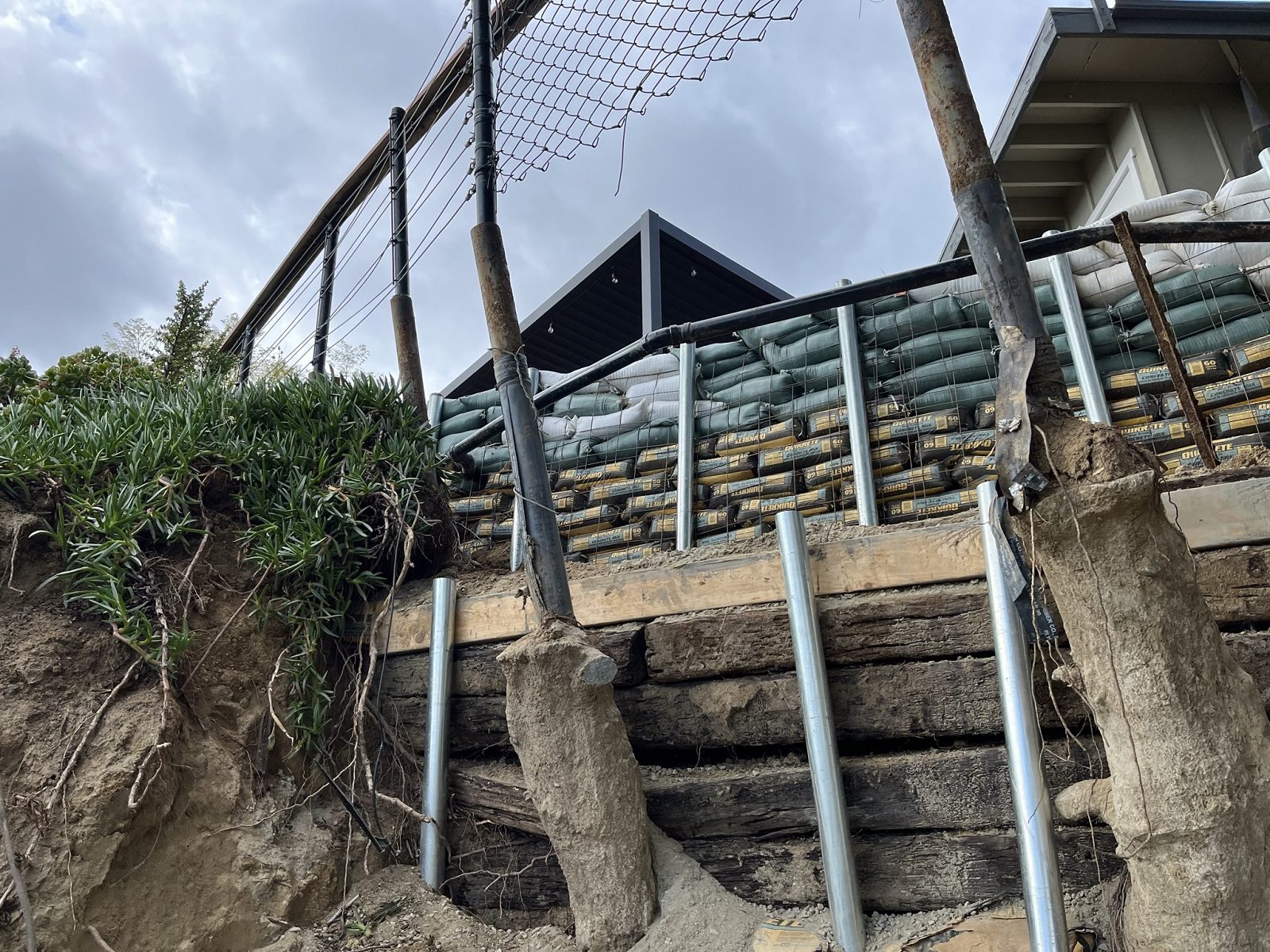
A canyon lot after a major erosion event — the slope gone, the utilities left hanging, the house directly above it.
Woodland Hills does not look like the rest of the San Fernando Valley, and it does not fail like the rest of the Valley either. The great majority of homes here sit west of Ventura Boulevard on canyon lots — sloped ground, cut-and-fill pads, and terraced yards held by retaining walls of widely varying quality.
Most of those homes went up more than fifty years ago. Very few of them have been left alone since. Woodland Hills has seen decades of remodeling, and the pattern is remarkably consistent: the house above grade gets rebuilt, expanded, and modernized, while the foundation underneath it stays exactly as it was poured in the 1960s or early 1970s. New square footage, new loads, new roof weight — carried by original footings that were never engineered for any of it.
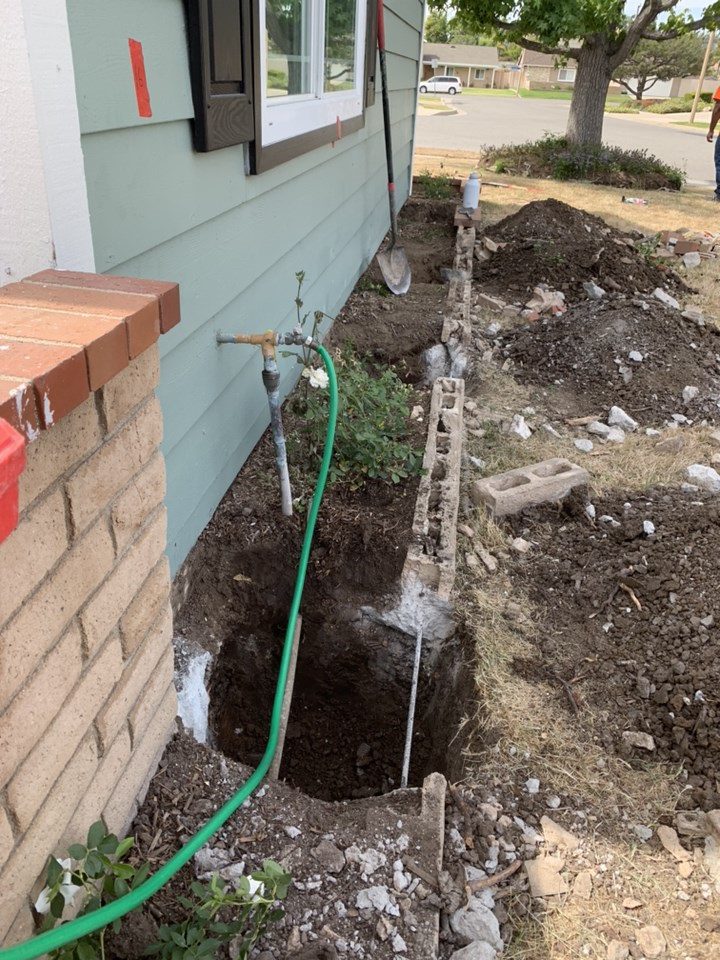
Excavation along the foundation line. Exposing the existing footing is the only way to know what a house is actually sitting on.
Then there is the climate. Woodland Hills runs hotter and drier than most of Los Angeles County. Extended stretches of triple-digit heat pull moisture out of the soil until it contracts and loses volume. Soil that has lost moisture no longer supports what is sitting on it, and the structure settles into the space the soil vacated. That is a different mechanism than the swelling most homeowners have heard about — and in this neighborhood it is the one that does the damage.
The Woodland Hills pattern in one sentence: water arrives in the wrong places and the wrong amounts during the wet months, the soil dries out and shrinks during the hot months, and a remodeled house with original footings has to absorb both.
Threat #1 — The Wet Months
Canyon Water Goes Where The Grading Sends It
On a canyon lot, every drop of water that falls uphill of you eventually passes your property. Where it goes is decided by grading and drainage that in most cases was laid out fifty or more years ago, before anyone was thinking seriously about stormwater. Three problems dominate here.
Hillside Runoff & Over-Irrigation
Landscape irrigation on a slope does not stay where it is applied. It migrates downhill through the soil profile and collects at the first thing that stops it — often a footing, a retaining wall, or a downhill neighbor’s foundation. In a canyon neighborhood where nearly every yard is irrigated, that adds up to water loading the soil around foundations twelve months a year, not just in winter.
Poor Stormwater Management
Downspouts that terminate at the base of the house. Yards graded toward the structure instead of away from it. Terraced lots with no interception between levels. Retaining walls built without drainage behind them. Each of these sends concentrated storm flow into the soil supporting your foundation, and Woodland Hills rain arrives in short intense bursts that overwhelm inadequate drainage quickly.
Slope Movement & Retaining Wall Failure
Saturated soil on a slope is heavier and less stable than dry soil. Add hydrostatic pressure behind a wall that has no drainage and the wall begins to lean, crack along the joints, or fail outright. When a wall stops holding the soil above it, that load transfers to whatever is downhill — frequently the foundation of the house it was built to protect.
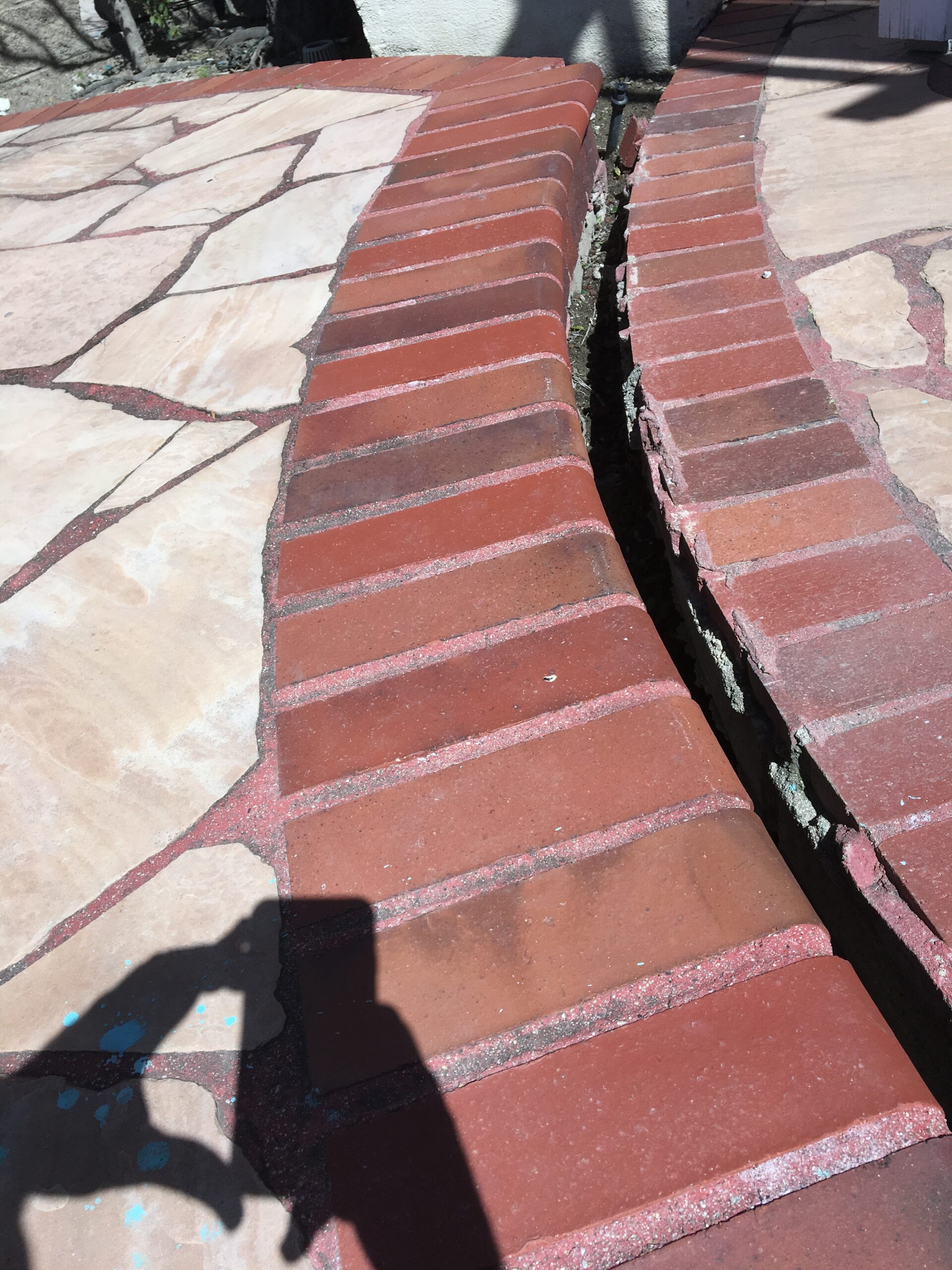
A pool deck sinking and sliding downhill. On the canyon ridges this is one of the earliest visible signs that the slope beneath a property is moving, and it usually shows up in the hardscape before the house.
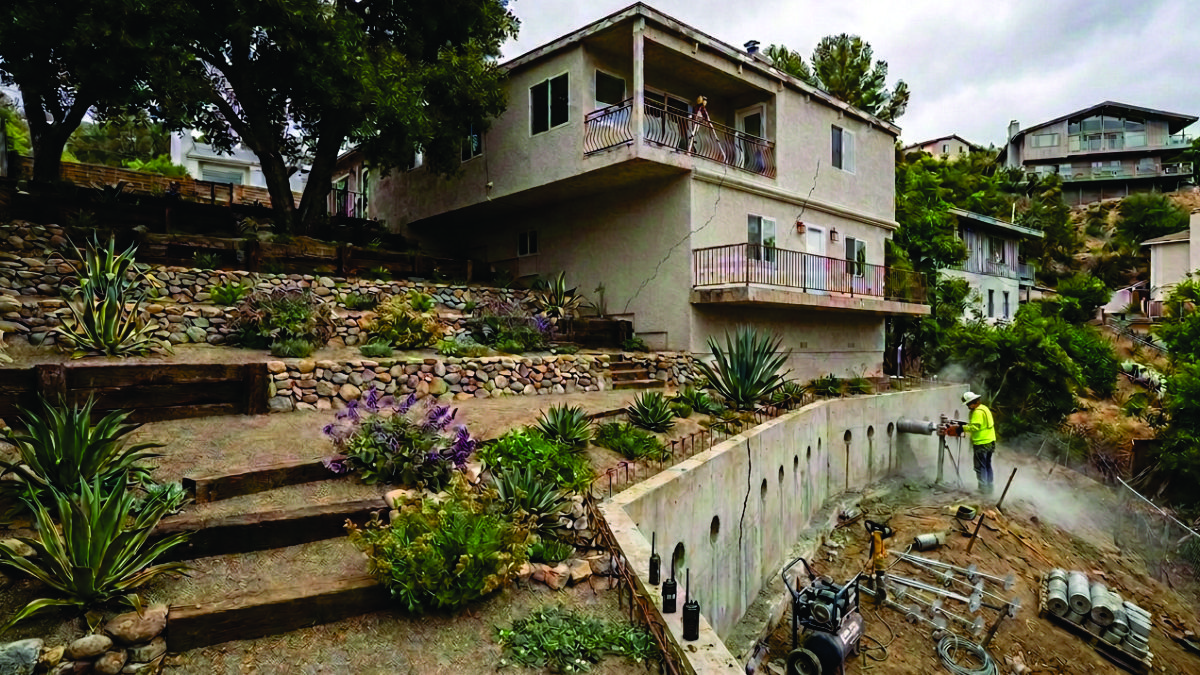
Helical tie-backs going into a failing retaining wall in Woodland Hills. Tie-backs anchor the wall into stable ground behind the slope, which is what stops the movement rather than resurfacing it.
Threat #2 — The Dry Months & The Remodels
Shrinking Soil Under Foundations That Were Never Meant To Carry This Much
The second half of the Woodland Hills problem shows up in summer, and it lands hardest on the parts of the house that were added later. Here is where we find most of the damage.
Settlement From Low Soil Moisture
Extended triple-digit heat drives moisture out of the soil until it contracts and loses volume. The support beneath the footing goes with it. This is settlement caused by drying, not by swelling, and it is why cracks in Woodland Hills so often appear or widen at the end of a long hot summer rather than during the rainy season.
Remodels On Original Foundations
A 1960s foundation was sized for a 1960s house. Fifty years of remodeling has added square footage, second stories, heavier roofing, and stone and tile finishes on top of footings that were never reengineered. The original foundation is now carrying loads it was never designed for, on soil that moves seasonally. Something has to give.
Room Additions On Shallow Footings
The foreclosure wave between 2007 and 2014 brought a great deal of fast, cheap flip work into Woodland Hills. Room additions from that period are frequently built on footings far shallower than the original house — sometimes only inches deep. A shallow footing sits entirely inside the zone of soil that dries out and contracts, so the addition moves independently while the main house stays put. The crack where old meets new is the classic tell.
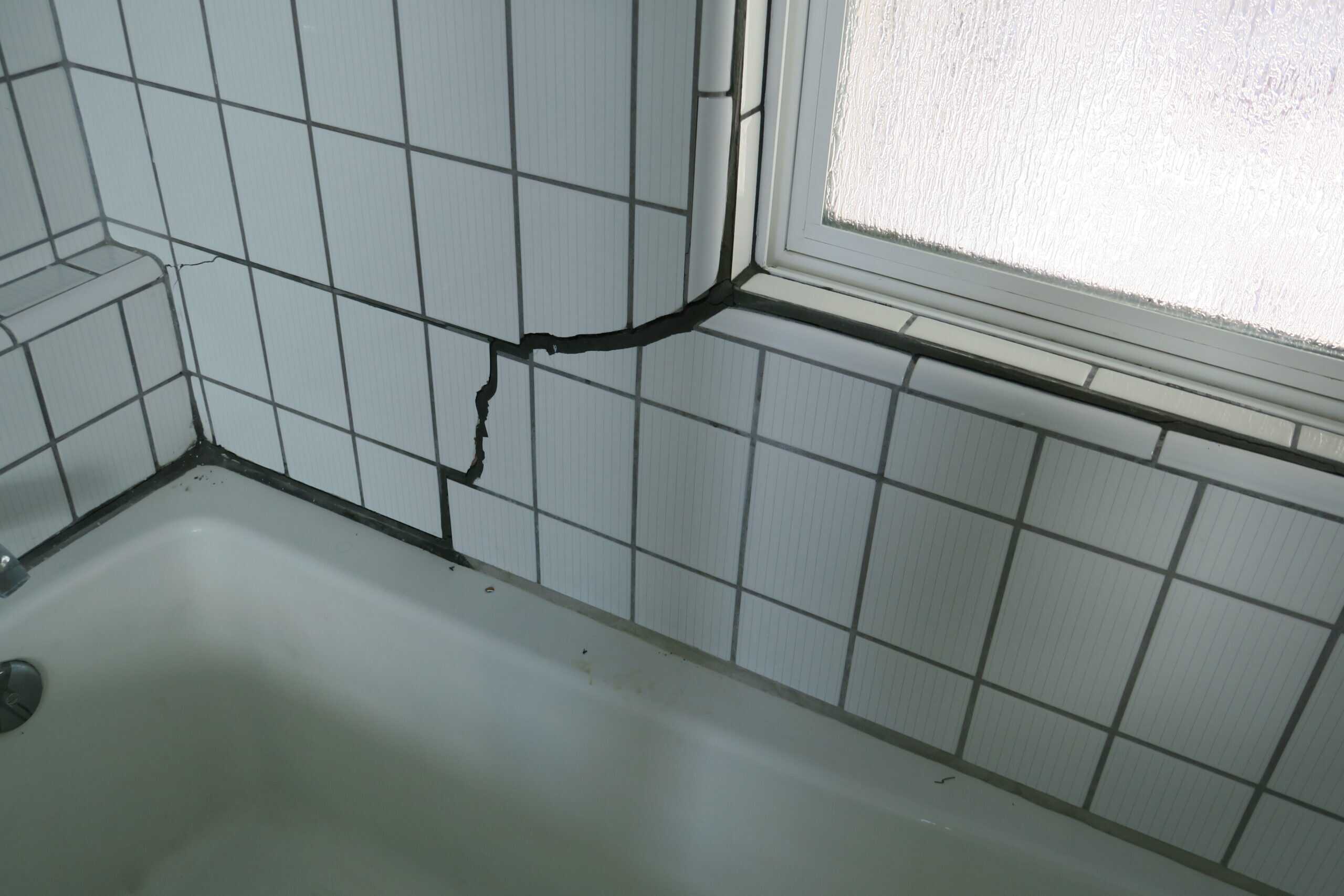
Cracking through interior tile caused by perimeter foundation settlement. When the perimeter drops and the center does not, rigid finishes are the first thing to break.
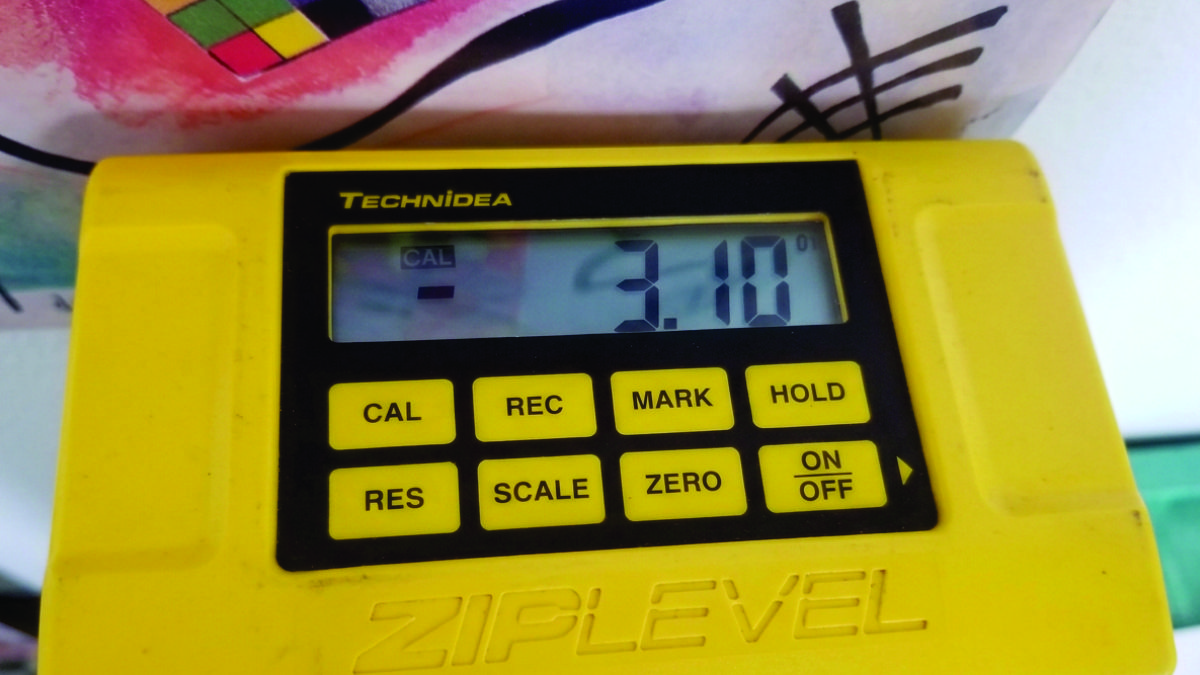
The same problem, measured. A ZipLevel reading documenting 3.1 inches of settlement — we measure the floor before recommending anything, because guessing at elevation is how the wrong repair gets sold.
What Most Contractors Get Wrong Here
Not Every Crack In Woodland Hills Is A Foundation Problem.
This is worth saying plainly, because it costs homeowners in this neighborhood a great deal of money every year.
The same remodeling wave that put new square footage on old footings also did something else: it opened these houses up. Interior walls came out by the dozen to create the open floor plans buyers wanted. Many of those walls were load-bearing. In a lot of cases they were replaced with a beam and posts — and in a lot of cases the beam and posts that went in were not sized for what they were being asked to carry.
Then the roof got heavier. Concrete tile, clay tile, and slate went on over framing originally designed for composition shingle, frequently without anyone reinforcing what was underneath. So you now have a structure carrying substantially more roof weight, through fewer supports, sized by guesswork.
The result looks like foundation failure. Long diagonal cracks through drywall. Stucco cracking on the exterior. Doors and windows out of square. Ceiling lines that are no longer straight. A homeowner sees that and reasonably concludes the house is settling — and a contractor who only sells piers will happily agree.
On Woodland Hills homes we have personally inspected, a meaningful share of that cracking was not foundation movement at all. It was overloaded beams and posts deflecting under roof weight the structure was never designed to carry. The foundation was fine. Piers would have accomplished nothing, and the actual problem would have kept getting worse.
Telling the difference is not complicated for someone who knows what to look at — but it does require actually looking, rather than pricing a pier job off a photo of a crack. That is what a Bristolfx inspection is for. If your problem is structural rather than geotechnical, we will tell you that, and we will tell you what it actually needs.
The Question Worth Asking Before You Buy Or Remodel Again
Do You Know What Is Actually Under The Addition?
Most Woodland Hills homeowners have never seen the footings beneath the newer parts of their house, and a great deal of the remodel work done here over the last twenty years was never inspected in a way that would have caught a shallow footing. If your home has an addition and you are seeing cracking where old meets new, that is worth looking at before the next hot summer or the next wet winter.
Solutions Used in Woodland Hills
Control The Water. Support The Structure. In That Order.
Most Woodland Hills properties need work in two directions: getting water away from the foundation, and getting the structure onto support that does not change with the season. Doing the second without the first is why so many repairs in this neighborhood do not hold.
French Drains & Drainage Correction →
The first repair most canyon properties here need. Perimeter french drains intercept hillside water before it reaches the foundation, and proper downspout routing keeps roof runoff from discharging against the footings. On a sloped lot this is not optional maintenance — it is the difference between a repair that holds and one that does not.
Yard Regrading & Surface Flow →
Regrading terraced canyon yards so surface water runs away from the structure instead of collecting against it. Swales, surface drains, and corrected slope profiles built for the short intense storms this area actually gets, rather than the gentle rainfall the original grading assumed.
Push Piers & Helical Piers →
Steel piers driven past the seasonally active soil layer to competent bearing below. This is what permanently stops settlement in a remodeled home whose original footings can no longer carry the load, and it is the standard solution for additions built on footings that were too shallow from the start.
Hillside Stabilization & Retaining Walls →
Helical tiebacks, slope repair, and retaining wall stabilization for canyon lots. Where a wall is leaning or a terrace is moving, stabilizing it protects everything downhill of it — including the house.
Concrete Leveling & Slab Repair →
Repair and leveling for settled driveways, walkways, patios, and pool decks — the hardscape damage that shows up first on canyon lots and is often the earliest visible sign that soil beneath the property is moving.
Comprehensive Foundation Repair →
Full structural assessment and repair scopes for Woodland Hills properties carrying combined drainage, slope, settlement, and remodel-related damage. The complete Bristolfx solution when a property has more than one thing going on — which here, it usually does.
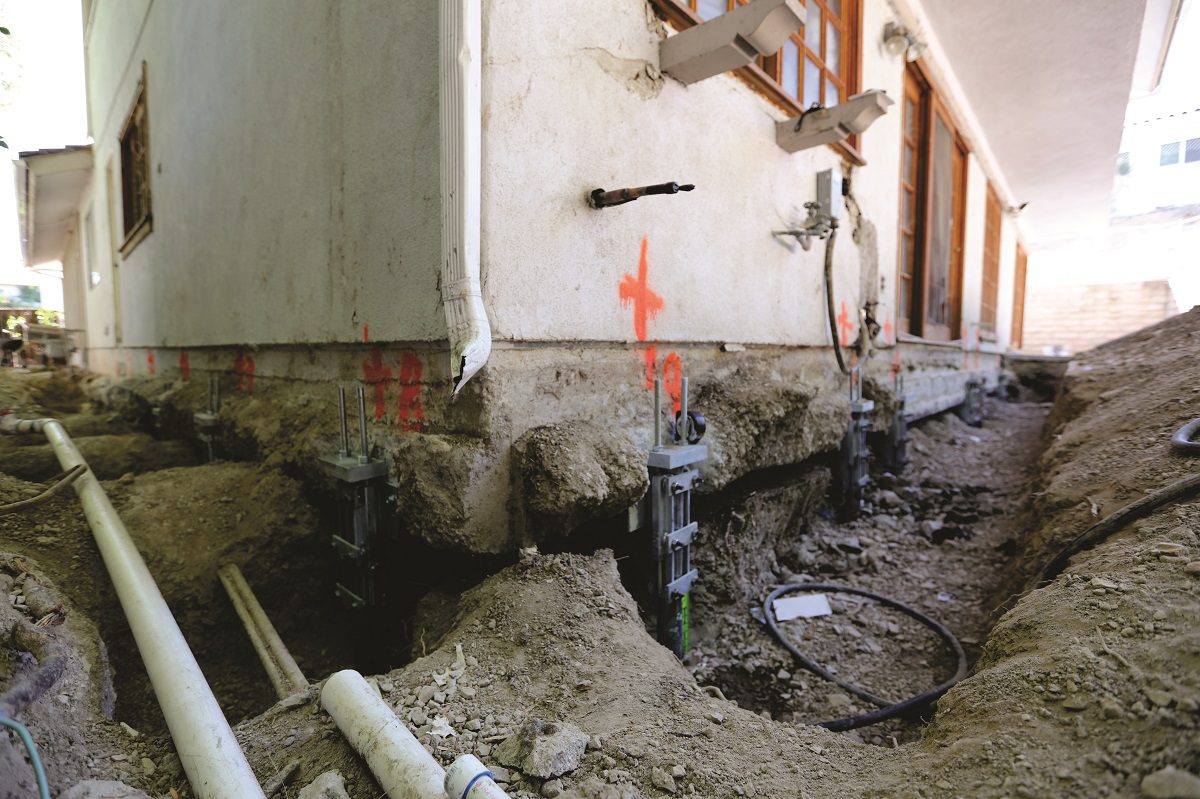
Six inches of lift recovered with ECP push piers. Once the piers reach competent bearing, the structure can be brought back toward its original elevation.
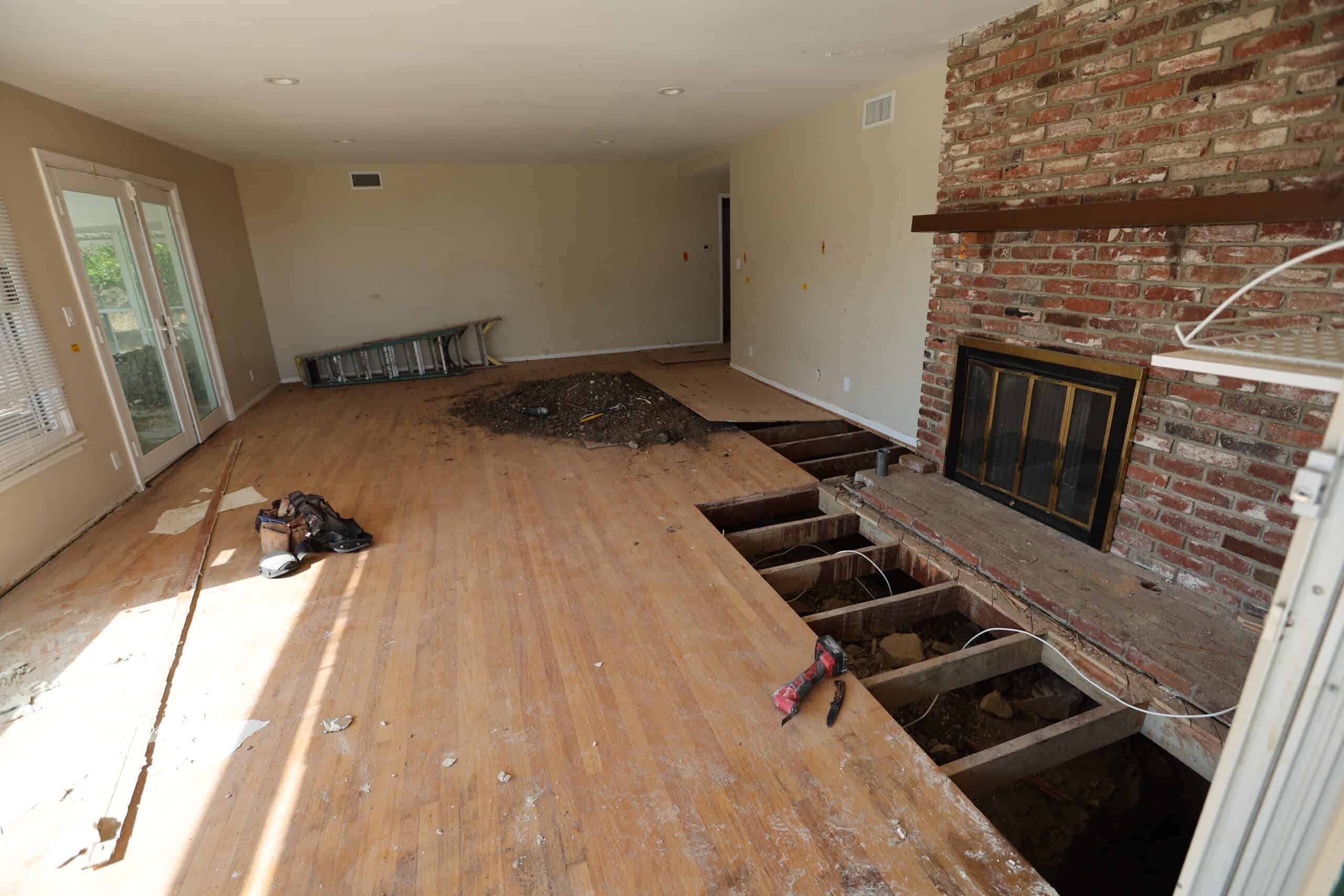
A full foundation replacement in progress — house shored, original foundation removed. Not every job needs this. When one does, we are equipped for it.
How It Works
Our 5-Step Process — No Surprises, Ever.
Every Bristolfx job follows the same disciplined process. No verbal estimates. No guesswork. No assumptions.
Explore More
Foundation Repair Across The San Fernando Valley
Bristolfx serves homeowners throughout Woodland Hills and the west San Fernando Valley. Our nearby coverage includes Northridge, Van Nuys, Simi Valley, Thousand Oaks, and Santa Clarita. If water is your problem, start with drainage and french drains. If your lot is moving, see hillside stabilization. For settlement, see push piers and helical piers. View our full coverage map, or contact us for a free Woodland Hills foundation inspection.
Woodland Hills — Free Inspection
We Know What Is Under These Houses.
A free Bristolfx inspection costs you nothing and obligates you to nothing. We will document soil conditions, drainage, slope activity, and foundation condition — in writing, on paper, before you decide anything. If the answer is that you are fine, we will tell you that too.
Foundation Tech, Inc. d.b.a. Bristolfx | CA CSLB #991221 | AZ ROC #354312 | Licensed & Insured | Serving Woodland Hills, Warner Center, Walnut Acres, Carlton Terrace & Surrounding Canyons