
✔ CA CSLB #991221
✔ AZ ROC #354312
✔ Emergency Response Available
✔ Financing Available
✔ Residential & Commercial
WHAT IS HILLSIDE STABILIZATION?
Your Hillside Is Always Moving — The Question Is How Fast
Hillside stabilization is a set of geotechnical engineering techniques designed to prevent landslides, soil erosion, and structural damage on sloped properties. Every hillside property is subject to the relentless forces of gravity, water, and seismic activity — and without proper stabilization, the soil beneath your home is always moving, even when you can’t see it.
Effective hillside stabilization follows a three-pronged approach: water control to remove the primary trigger of slope failure, vertical retention to physically hold the slope in place, and vegetation management to bind soil naturally with root systems.
01 Water Control
Remove the primary trigger of slope failure through drainage systems.
02 Vertical Retention
Physically hold the slope in place against gravity and seismic forces.
03 Vegetation
Bind soil naturally with root systems for long-term slope stability.
THE SILENT THREAT
Hillside Creep — The #1 Foundation Failure In Southern California

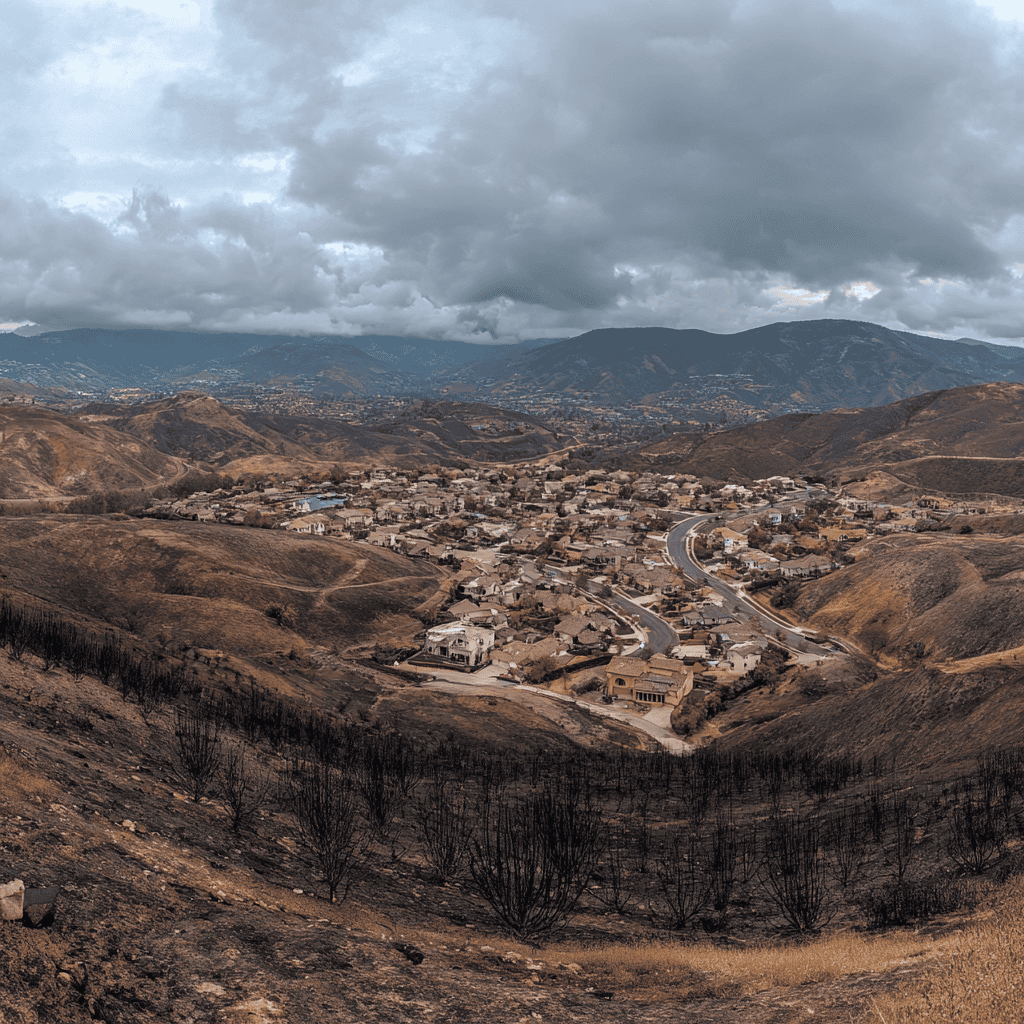
You can’t see it happening. You can’t hear it. But right now, the soil beneath and around your hillside home may be moving — slowly, continuously, and relentlessly downhill. It’s called hillside creep, and it is the single most common cause of foundation failure we encounter on Southern California hillside properties.
Hillside creep is the slow, continuous downward movement of soil, rock, and debris on a slope due to gravity. Moving at only inches per year, it is the slowest form of mass wasting. But slow doesn’t mean harmless. Over 10, 20, or 30 years, that movement adds up to serious structural consequences.
“In Southern California, hillside creep is amplified by the dramatic wet-dry cycles that cause soil to repeatedly expand and contract — shifting downhill a little more each season.”
The Cut & Fill Problem
The foundation failure risk is dramatically worse for homes built on cut and fill lots — a construction technique used from the 1950s through the 1990s throughout the Santa Clarita Valley, San Fernando Valley, and mountain rim communities of Los Angeles. Tens of thousands of homes were built on fill pads that are slowly, quietly failing.
Signs of Hillside Creep
- ✓ Trees leaning downhill or curved at the base
- ✓ Tilting fences, retaining walls, or utility poles
- ✓ Step-like terracettes forming on the slope
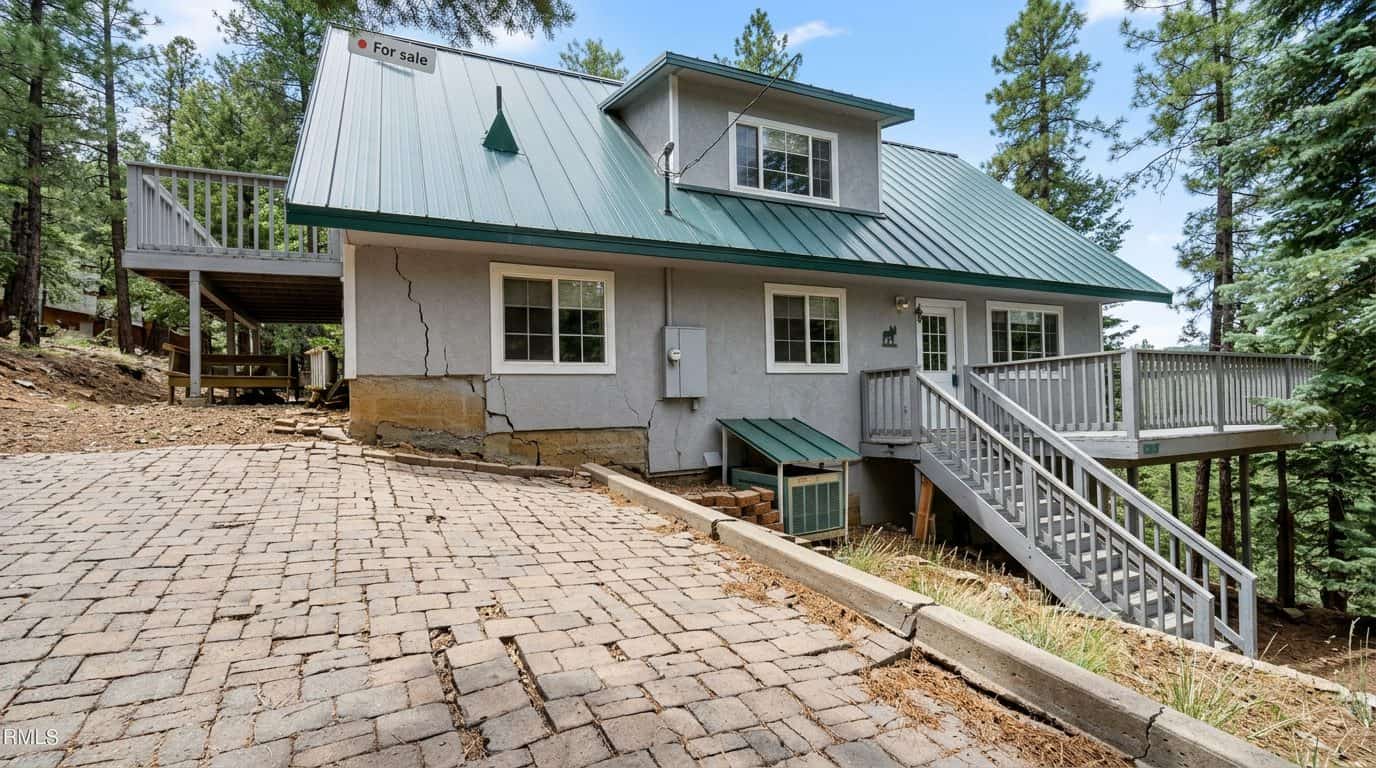
- ✓ Foundation cracks especially on the downhill side
- ✓ Doors and windows sticking or no longer squaring
- ✓ Floors noticeably sloping toward the downhill side
- ✓ Soil accumulating at the base of the slope over time
WARNING SIGNS
Signs Your Hillside Needs Stabilization Now
⛰ Visible Soil Creep
Bulging soil, leaning trees, tilted fence posts, or cracked ground are signs that soil is actively moving downhill — a progressive condition that accelerates over time if not addressed.
🏠 Foundation Cracks
When the hillside beneath your home moves, your foundation moves with it. Diagonal cracks in walls, sticking doors and windows, and sloping floors are all symptoms of hillside movement.
💧 Erosion Channels After Rain
Deep channels or gullies cutting into your hillside after rain are signs of serious erosion. Each storm removes more soil, progressively steepening the slope and undermining support.
🡱 Leaning Retaining Walls
A retaining wall that is tilting, cracking, or bowing outward is under more lateral pressure than it was designed to handle — a serious warning sign that the hillside is saturated or moving.
🌧 Water Seeping From Hillside
Water visibly seeping from a hillside after rain or irrigation indicates poor drainage and saturated soil — the primary trigger for slope failure and landslides.
🌿 Loss of Vegetation
A bare or sparsely vegetated slope is exponentially more vulnerable to erosion and failure — especially after a dry season when the first major rainstorm arrives.
OUR SERVICES
Hillside Stabilization Solutions We Provide
SERVICE 1
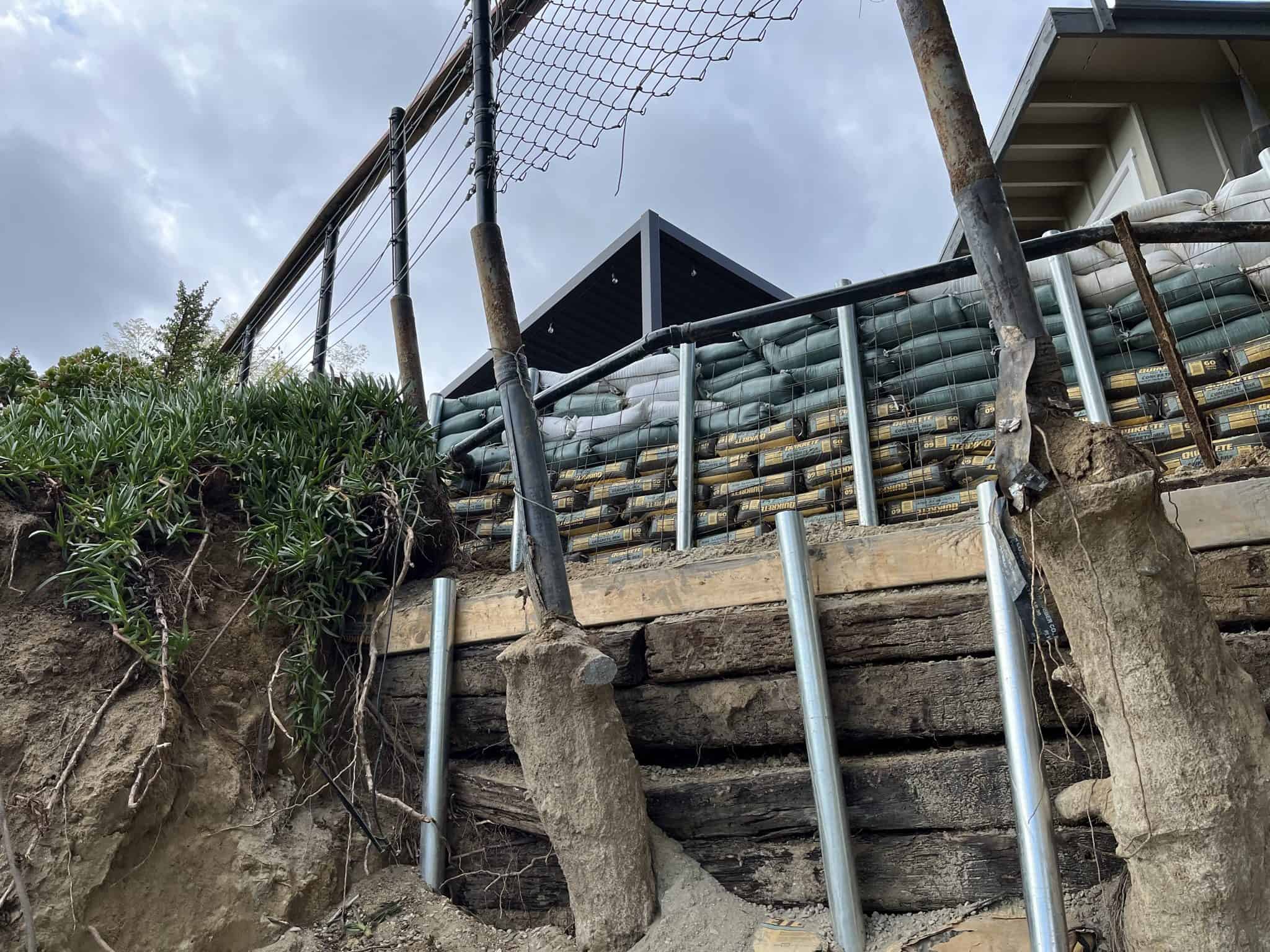
Retaining Wall Repair & Construction
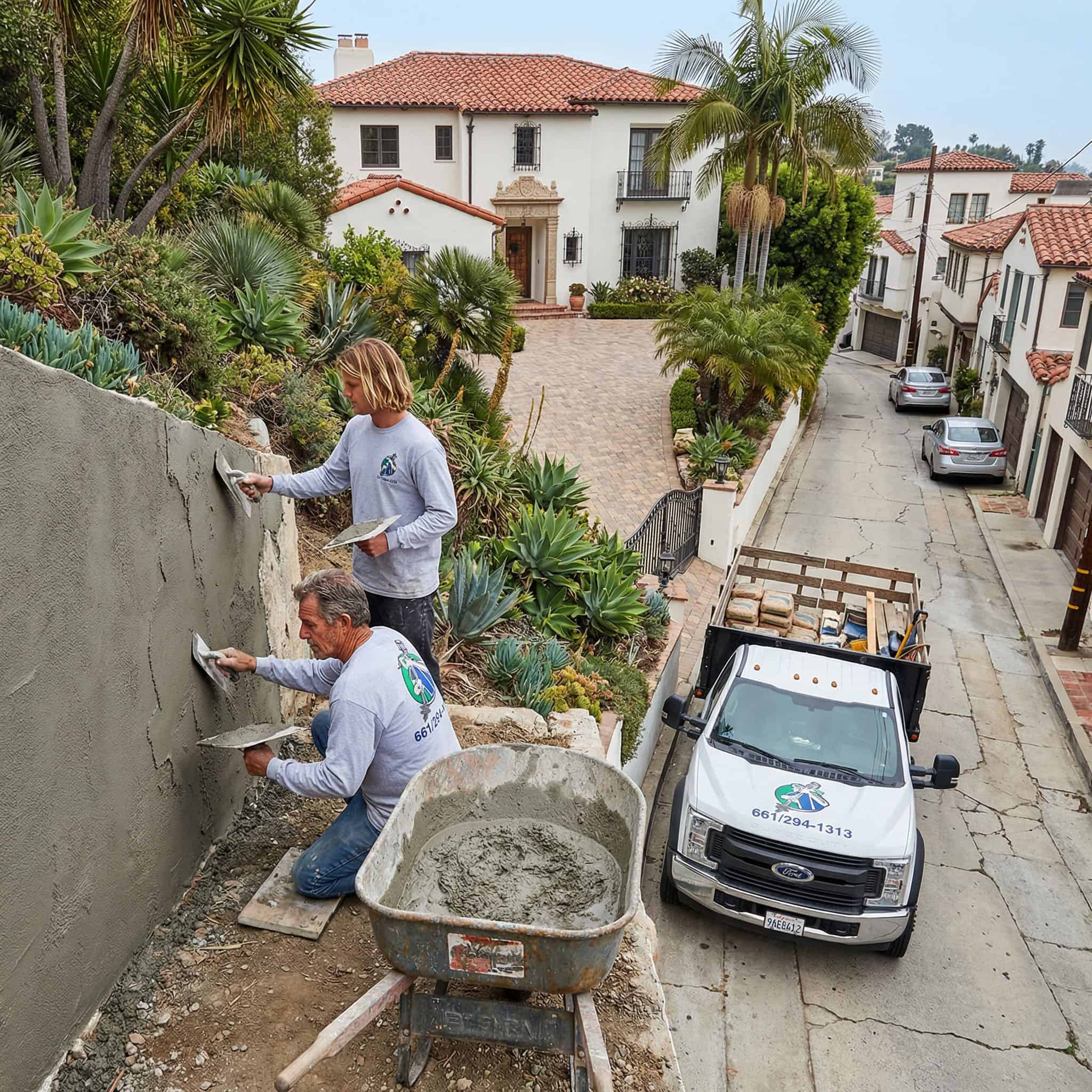
Retaining walls are the front line of hillside defense — providing the lateral support that keeps soil in place and your slope stable. Bristolfx repairs failing retaining walls and constructs new ones using concrete, block, stone, and gabion systems engineered for your specific soil load and slope conditions.
A properly designed retaining wall is more than just a barrier — it includes drainage provisions behind the wall to relieve hydrostatic pressure, the primary cause of retaining wall failure.
- ✓ Repair of leaning, cracked, or failing retaining walls
- ✓ New retaining wall design and construction
- ✓ Concrete, block, stone & gabion basket systems
- ✓ Integrated drainage to prevent hydrostatic pressure
- ✓ Engineered for your specific slope load conditions
SERVICE 2
Hillside Tiebacks & Soil Nails
When a slope or retaining wall needs more than surface support, tiebacks and soil nails anchor the hillside from within. High-strength steel rods are drilled deep into the slope — past the failure plane — and anchored into stable soil or bedrock. This ties the unstable surface layer back to solid ground, preventing movement no matter what happens at the surface.
- ✓ Anchors slope into stable soil or bedrock
- ✓ Reinforces retaining walls under excess pressure
- ✓ Soil nail grid stitches entire slope face together
- ✓ Ideal for steep cuts, hillside foundations & walls
- ✓ Engineered and load-tested for your specific conditions

SERVICE 3
Shotcrete Slope Walls
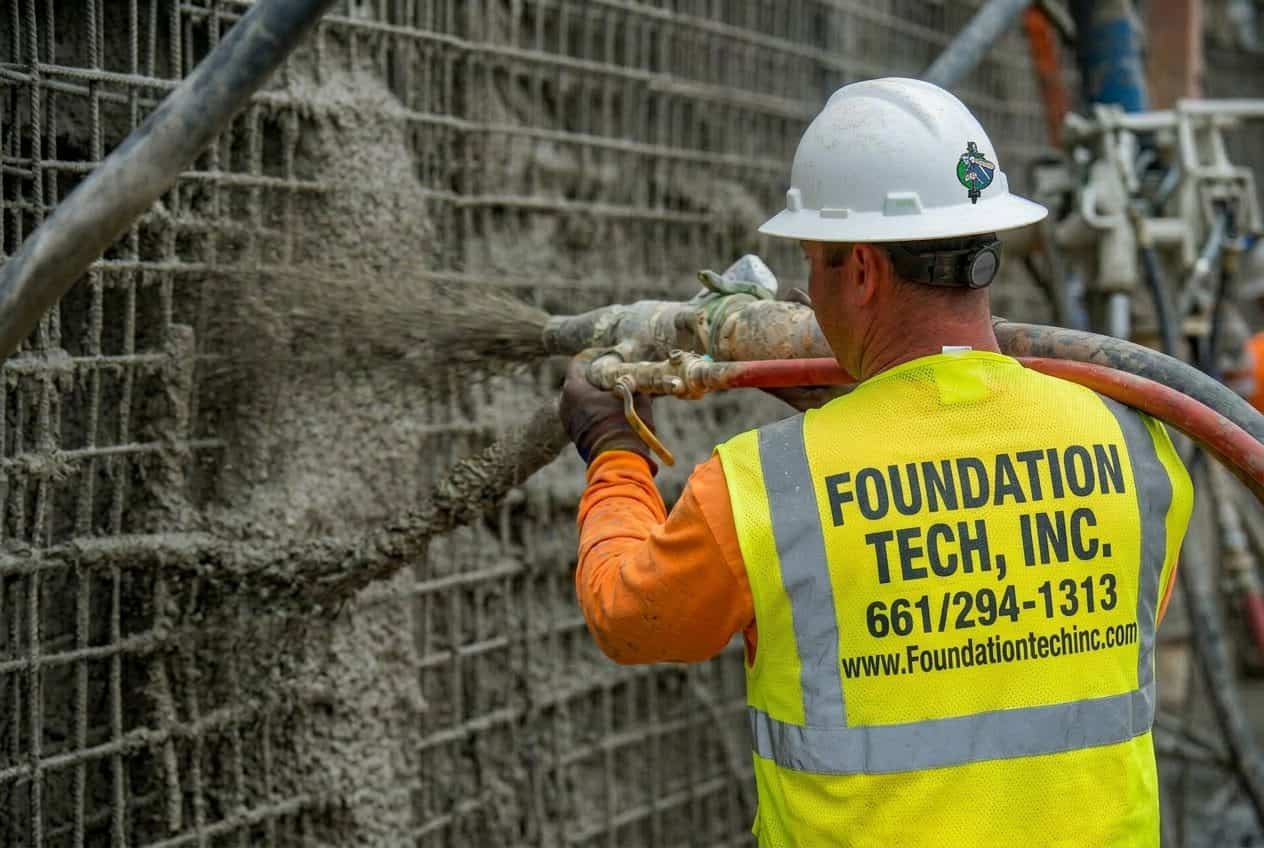
Shotcrete — also known as gunite — is concrete pneumatically applied at high velocity directly onto a slope face or into a formed wall. It creates a dense, reinforced concrete layer that permanently armors the slope surface against erosion, weathering, and surface failure. Shotcrete is ideal for steep slopes, rock faces, and hillside cuts where conventional forming is impractical.
- ✓ Permanently armors slope surface against erosion
- ✓ Ideal for steep slopes and hillside cuts
- ✓ Combined with soil nails for full-depth stabilization
- ✓ Fast application — minimal disruption to property
- ✓ Engineered and designed for your specific slope
SERVICE 4
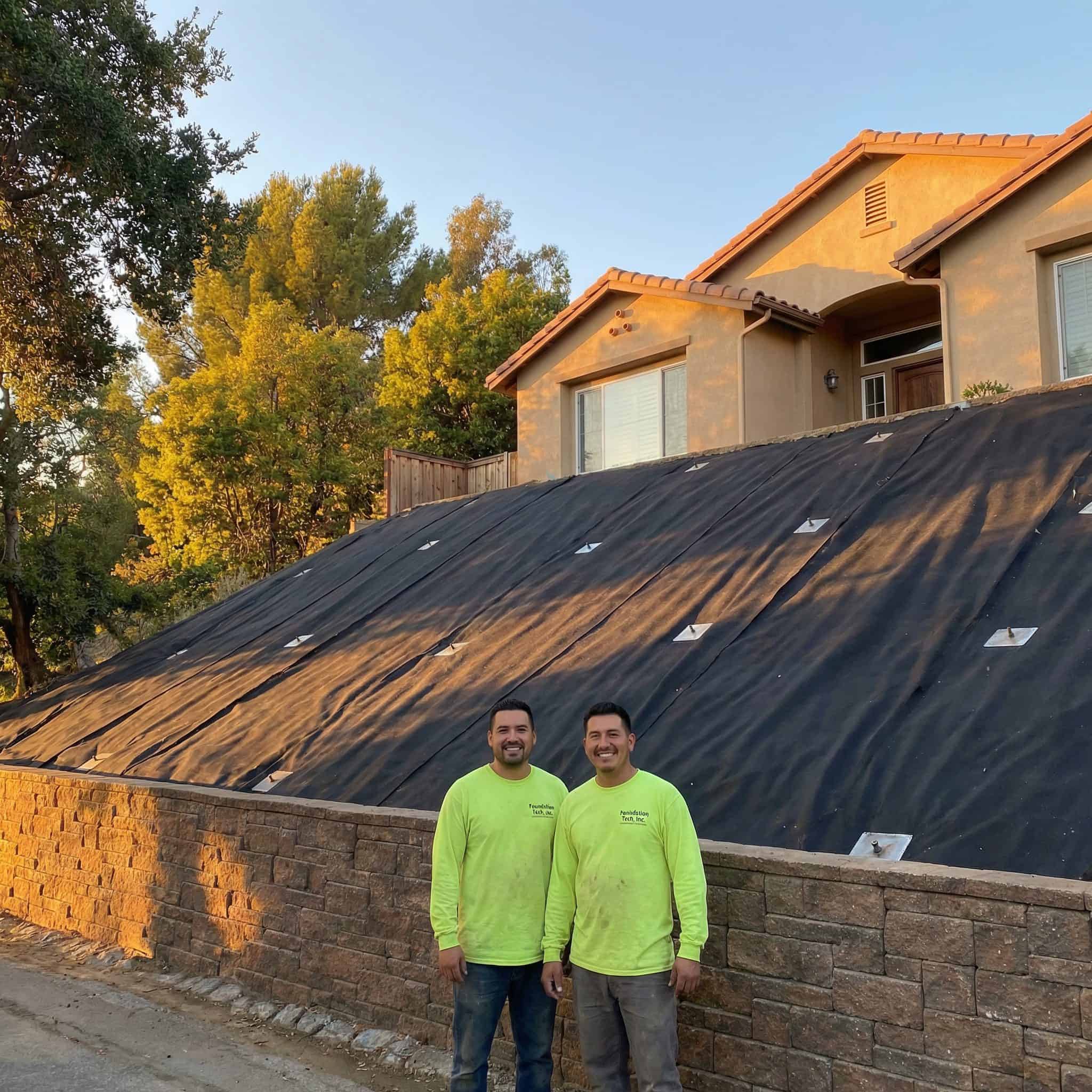
Geogrids, Geotextiles & Erosion Control
Geogrids are high-strength polymer grids installed between layers of compacted soil to dramatically increase the shear strength of a slope. Think of them as rebar for a hillside — they distribute load, prevent soil layers from sliding against each other, and allow the construction of stable reinforced slopes that would otherwise be too steep to hold.
- ✓ Geogrids increase soil shear strength between layers
- ✓ Geotextile fabric prevents soil migration in drains
- ✓ Erosion control mats protect bare slopes from rain
- ✓ Biodegradable and permanent mat options available
- ✓ Allows vegetation to establish for long-term stability
SERVICE 5 — URGENT
Emergency Hillside Stabilization
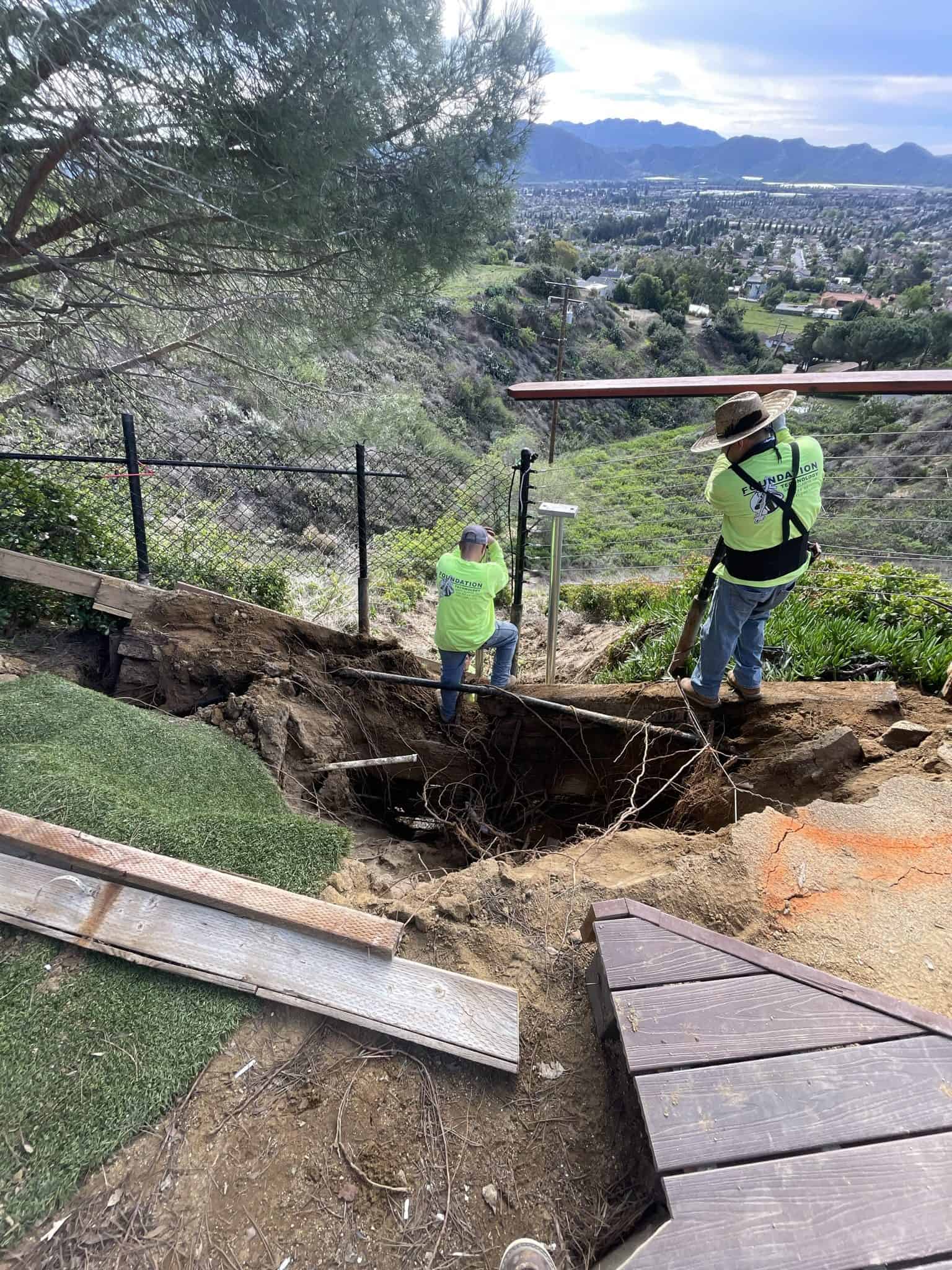
When a hillside fails — or is showing imminent signs of failure — the situation requires immediate professional response. A saturated slope, active slide, or failing retaining wall can move from dangerous to catastrophic in a single rain event.
Bristolfx provides emergency hillside stabilization response for residential and commercial properties across Southern California and Arizona. Our crews deploy rapidly to install temporary erosion control, emergency shoring, and drainage interception.
- 🚨 Rapid response to active slope failures
- 🚨 Emergency erosion control installation
- 🚨 Temporary shoring and slope protection
- 🚨 Emergency drainage interception
- 🚨 Immediate assessment and stabilization plan
WHERE WE SERVE
California & Arizona
California
📞 (661) 294-1313
Serving Southern California hillside homeowners with stabilization solutions designed for local soil conditions, seismic activity, and seasonal rain events.
Arizona
📞 (928) 767-7789
Serving Arizona hillside properties with stabilization systems built for desert terrain, rocky slopes, and monsoon season erosion events.
DON’T WAIT FOR YOUR HILLSIDE TO FAIL
Get a Free Hillside Inspection Today
No cost. No obligation. No pressure. A certified Bristolfx inspector evaluates your slope, identifies the risk factors, and delivers a complete written proposal before any work begins.