
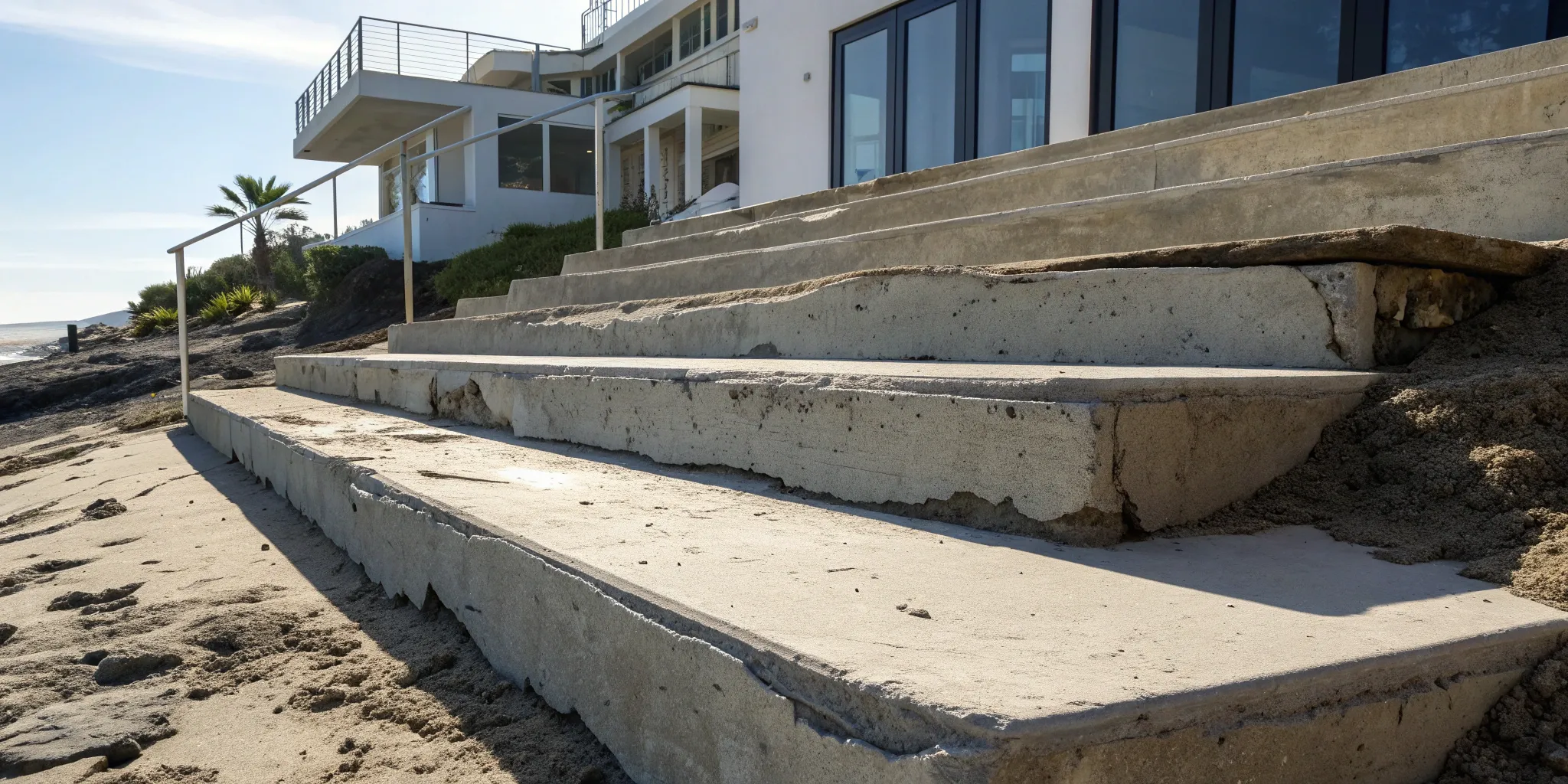
That tiny crack in your foundation or driveway is easy to ignore. You might see it every day and think nothing of it, but even a hairline fracture can be a warning sign of a much bigger issue. In Redondo Beach, our soil can shift and settle, putting stress on your home’s structure. That small crack could be the first indication of water intrusion or an unstable foundation. Waiting for it to get worse is a gamble that rarely pays off, often leading to more extensive and costly fixes down the road. This article will help you understand what these signs mean and when it’s time to call in a professional for concrete repair Redondo Beach to address the root cause.
Key Takeaways
- Address small issues before they become big problems: Living on the coast means being vigilant. Regularly check for hairline cracks, ensure water drains away from your home, and address minor damage quickly to prevent the need for major, costly structural repairs later on.
- Repairing is usually smarter than replacing: Don’t assume a cracked or sunken slab needs to be torn out. Modern solutions like foam injection and crack sealing are less disruptive, more cost-effective, and can restore your concrete’s strength without the hassle of a full replacement.
- Vet your contractor to protect your investment: The right professional makes all the difference. Always confirm they are licensed and insured, check for a strong track record with local coastal properties, and get a detailed written quote and a solid warranty before any work begins.
Why Does Concrete Fail in Redondo Beach?
Living in Redondo Beach is incredible, but our beautiful coastal environment can be surprisingly tough on concrete. The same salt air and moisture we love can cause serious wear and tear on driveways, foundations, and patios. Understanding why concrete fails is the first step to protecting your property. From subtle shifts caused by the soil to the relentless effects of the ocean breeze, several factors are unique to our area. Knowing what to look for can help you catch problems early and avoid more extensive and costly repairs down the road.
How Coastal Weather Takes a Toll
The biggest challenge for concrete in Redondo Beach is the coastal weather. The salty, moist air is a constant threat. This salt-laden moisture seeps into the pores of the concrete and can corrode the steel rebar within it. As the rebar rusts, it expands, putting immense pressure on the surrounding concrete and causing it to crack and break apart from the inside out. This process is often slow and invisible until significant damage has occurred. Proper waterproofing is one of the best defenses against this kind of moisture intrusion, helping to seal the concrete and protect the structural steel from the corrosive effects of the salty air.
Spotting the Telltale Signs of Damage
It’s easy to overlook the early signs of concrete damage, but catching them soon can save you a lot of headaches. Keep an eye out for small hairline cracks in your foundation, driveway, or patio—especially if they start to grow. Other red flags include uneven or sinking concrete slabs, which can create tripping hazards. You might also notice “spalling,” where the surface of the concrete begins to flake or peel away. If you see any of these issues, it’s wise to have your property inspected as early as possible. Addressing a small crack now is much simpler than dealing with a major foundation repair later.
Uncovering Hidden Structural Problems
Sometimes, the most serious concrete problems aren’t visible on the surface. Water intrusion, for example, can lead to concrete spalling, where the surface peels or flakes off, often exposing the steel rebar underneath. Once the rebar is exposed to the elements, it begins to rust, which compromises the structural integrity of the concrete. Another hidden issue is soil settlement. The soil beneath your home can shift or compact over time, causing the foundation to settle unevenly. This can lead to cracks in your interior walls, sticking doors, and sloping floors—signs that the problem runs deeper than just the concrete itself. A professional can perform a corrosion repair to address these underlying issues.
When to Call for Emergency Repairs
While most concrete issues develop over time, some situations require immediate attention. If you notice a crack that is widening rapidly, a wall that is visibly bowing, or a section of your foundation that has suddenly dropped or shifted, it’s time to call a professional right away. These are signs of a serious structural problem that could compromise the safety of your property. An experienced repair team can quickly assess the situation and implement emergency stabilization solutions, such as installing push piers and helical piers, to secure your foundation and prevent further damage. Don’t wait on these kinds of repairs—your safety is the top priority.
What Kind of Concrete Repair Do You Need?
Figuring out what’s wrong with your concrete can feel like a puzzle. Is that crack just a cosmetic issue, or is it a sign of something more serious? Concrete problems come in all shapes and sizes, and each one requires a specific solution. You wouldn’t use a bandage for a broken bone, and the same logic applies here. Understanding the type of damage you’re dealing with is the first step toward finding the right fix. From deep structural issues to surface-level imperfections, let’s walk through the common types of concrete repair you might encounter as a Redondo Beach property owner. This will help you identify what’s happening with your property and what kind of professional help you need.
Foundation Repair and Stabilization
If you’re seeing cracks in your drywall, doors that stick, or sloping floors, the problem might be deeper than the concrete you can see. These are classic signs that your home’s foundation is shifting or settling. Foundation issues are serious because they affect the entire structural integrity of your property. Ignoring them can lead to much bigger, more expensive problems down the road. Professionals address these issues with proven foundation repair techniques, often using steel piers to lift and stabilize the foundation. This isn’t a DIY job—it requires specialized equipment and engineering expertise to ensure your home is secure for the long haul.
Crack Sealing and Injection
It’s easy to dismiss a small crack in your driveway or foundation wall, but even minor fissures can be trouble. Cracks are entry points for water, which can erode the soil underneath, widen the crack through freeze-thaw cycles, and even corrode the rebar inside the concrete. Proactive crack injection is a targeted solution that fills the gap with a strong, flexible, and waterproof epoxy or polyurethane resin. This not only seals the crack from moisture but also helps bond the concrete back together, restoring its strength and preventing the damage from spreading. It’s a simple measure that can save you from a full replacement later on.
Surface Restoration and Overlays
Is your patio, pool deck, or walkway looking worn out, pitted, or flaky? This is known as spalling, and it happens when the top layer of concrete breaks away. While it might seem like a cosmetic issue, it’s actually a sign of deterioration that can weaken the slab over time. Surface restoration addresses this by removing the damaged layer and applying a new overlay or coating. This not only makes the surface look brand new but also adds a durable, protective layer that resists moisture, salt air, and daily wear and tear. It’s a great way to extend the life of your existing concrete without the cost of a complete tear-out.
Concrete Lifting and Leveling
A sunken sidewalk, a dipping patio slab, or an uneven garage floor isn’t just an eyesore—it’s a serious tripping hazard. This sinking often happens when the soil underneath the slab erodes or compacts over time. In the past, the only solution was to demolish the old slab and pour a new one. Today, there’s a much cleaner and more affordable option. Using polyurethane geotechnical foam, technicians can lift and level the sunken concrete. They inject the foam through small, discreet holes, and it expands to fill the voids, raising the slab back to its original position with precision.
Waterproofing and Sealing
Living in Redondo Beach means dealing with constant moisture from the coastal air. For concrete, especially in basements, crawl spaces, and below-grade walls, this can be a major problem. Water intrusion leads to mold, mildew, musty odors, and can slowly break down the concrete itself. Professional waterproofing is your best defense. This involves applying specialized sealants, membranes, and drainage systems to create an impermeable barrier that keeps water out for good. It’s an essential step for protecting your property’s health, value, and air quality from the persistent dampness of a coastal environment.
Decorative Concrete Touch-Ups
Your concrete surfaces don’t have to be plain and gray. If you’re already investing in repairs, it’s a perfect opportunity to add some aesthetic flair. Decorative touch-ups can transform the look of your concrete while also adding to its durability. This can range from applying a simple color stain to creating a stamped pattern that mimics stone or brick. These finishes can cover up minor imperfections, stains, and discoloration, giving your patio, walkway, or driveway a polished, custom look. It’s a smart way to combine necessary repairs with a visual upgrade that enhances your property’s curb appeal.
Top Concrete Repair Companies in Redondo Beach
Finding the right team for your concrete repair project is a big decision. You need a company with the right skills, a solid reputation, and a clear understanding of the unique challenges coastal properties face here in Redondo Beach. From salt air corrosion to shifting sandy soil, the factors at play require specialized knowledge. To help you get started, we’ve put together a list of some of the top concrete repair companies serving the area. Each one brings something different to the table, whether it’s a focus on deep foundation work or expertise in cosmetic finishes, so you can find the perfect fit for your specific needs.
While this list is a great starting point, it’s so important to do your own research. We recommend checking out platforms that offer real customer feedback, like Angi’s list of concrete repair specialists in Redondo Beach, to get a well-rounded view of a company’s recent work. A truly reliable contractor will not only fix the visible damage but also diagnose and address the underlying cause to prevent future problems. This proactive approach is what gives you peace of mind and protects your investment for years to come.
Bristol FX
At Bristol FX, we specialize in a scientific approach to concrete and foundation issues. Our team focuses on the root cause of the problem, whether it’s soil settlement, water intrusion, or structural movement. We handle everything from stabilizing foundations with push and helical piers to detailed crack injections and waterproofing. Our goal is to provide a lasting solution, not just a temporary fix. We offer professional foundation repair that restores the integrity of your property, backed by extensive warranties for your confidence.
South Bay Concrete
A well-known name in the local community, South Bay Concrete has built a reputation for its concrete repair services. They are a familiar choice for many homeowners in the area who need straightforward repairs for driveways, patios, and walkways. When considering them, it’s a good idea to look up recent customer reviews on local business directories to get a sense of their current projects and client satisfaction. Their long-standing presence in the area speaks to their experience with regional conditions.
Harbor Concrete
Harbor Concrete is another established local company with deep roots in the Redondo Beach community. They focus on providing essential concrete repair services tailored to residential properties. Like other local experts, they have hands-on experience with the types of issues that are common in coastal environments. For homeowners looking for a contractor with a strong local footprint, Harbor Concrete is worth considering. Be sure to check their portfolio and ask for references from nearby projects to see their work firsthand.
Pacific Foundation
Pacific Foundation centers its services on foundation repair, which naturally includes a significant amount of concrete work. They are a strong option if you suspect your concrete cracks are linked to deeper structural or soil-related issues. Their team is experienced in diagnosing and addressing problems like foundation settlement and erosion that often manifest as surface-level concrete damage. If your repair needs go beyond a simple patch, their specialized expertise could be exactly what you need for a comprehensive solution.
Beach Cities Construction
As a general construction company, Beach Cities Construction offers a broad range of services that include both concrete installation and repair. They are a versatile choice, especially if your project involves more than just concrete work. For instance, if you’re planning a larger remodel that includes fixing a damaged patio or foundation, their team can manage multiple aspects of the job. This makes them a convenient option for property owners looking to streamline a multi-faceted construction or renovation project.
How to Choose the Right Concrete Repair Service
Finding the right contractor for your concrete repair is the single most important decision you’ll make in this process. It’s about more than just getting a crack filled; it’s about entrusting your property’s safety and value to a professional. In a coastal community like Redondo Beach, you need a team that understands how to handle issues caused by salt air and shifting soil. A great contractor acts as a partner, guiding you through the repair process with clear communication and reliable expertise.
Making the right choice means you get a durable, high-quality repair that solves the root problem, not just the surface-level symptoms. A poor choice can lead to recurring issues, wasted money, and major headaches down the road. To make sure you hire a true professional, you’ll want to do a little homework. By checking their credentials, looking into their experience, and understanding their process, you can feel confident that your home or commercial building is in good hands. Let’s walk through the key things to look for.
Verify Their License and Insurance
This is the absolute first step and it’s non-negotiable. A reputable contractor will be fully licensed, bonded, and insured, and they should be able to provide proof without hesitation. A state license shows they’ve met the minimum requirements for competency and are registered to work in California. Insurance is your financial safety net—general liability covers any accidental damage to your property, while workers’ compensation covers their crew if someone gets injured on the job. Without it, you could be held liable. Think of it as your project’s essential protection plan. You can easily verify a contractor’s license online through the California Contractors State License Board.
Look for Proven Experience
When it comes to structural repairs, experience is everything. You want a company that has a long track record of successfully completing projects similar to yours, especially in the Redondo Beach area. Ask to see a portfolio of their work or for case studies. How many years have they been in business? Do they specialize in the type of repair you need, whether it’s simple crack injection or complex hillside stabilization? A company with deep local experience will understand the specific challenges of coastal properties and have the right techniques and materials to ensure a lasting fix. General handymen are great for some things, but foundation and concrete work requires a specialist.
Ask About Warranty Coverage
A warranty is a direct reflection of a company’s confidence in its workmanship and materials. If a contractor doesn’t offer a solid warranty, consider it a major red flag. Ask specifically what is covered and for how long. Is it a limited warranty on materials, or does it also cover the labor? Top-tier companies stand behind their work with extensive coverage. For example, Bristol FX offers lifetime warranties on certain foundation repair solutions like pier installations. This kind of guarantee provides peace of mind and assures you that the company is invested in a long-term solution, not a quick, temporary patch.
Read Customer Reviews
Online reviews are an invaluable tool for getting an unfiltered look at a company’s reputation. Go beyond the testimonials featured on their website and check third-party platforms like Google, Yelp, and Angi. Don’t just look at the star rating; read the actual reviews. Look for comments that speak to the company’s professionalism, communication, and punctuality. How did they handle unexpected issues? Were clients happy with the final result? A few negative reviews aren’t necessarily a deal-breaker, especially if the company responded professionally, but consistent patterns of complaints about the same issue should give you pause.
Clarify the Project Timeline
A professional contractor should be able to provide a clear and realistic timeline for your project. Ask about their estimated start date, the key phases of the work, and the projected completion date. This helps you manage your expectations and plan for any disruptions. It’s also wise to ask what factors might cause delays, such as weather, permit approvals, or the discovery of additional damage once work begins. While some things are out of their control, a good company will have a plan for communicating any changes to the schedule, ensuring you’re kept in the loop from start to finish.
Understand Their Quoting Process
Never accept a verbal quote. A professional contractor will provide a detailed, written estimate that breaks down the entire scope of work. This document should clearly outline the costs for labor, materials, permits, and any other expenses. Be wary of quotes that seem unusually low, as they may signal subpar materials or hidden fees that will appear later. If you’re comparing multiple quotes, make sure each one is for the exact same scope of work and repair method. For instance, a quote for a polyurethane geotechnical foam injection will be very different from one for a full concrete replacement, so ensure you’re making an apples-to-apples comparison.
What Will Concrete Repair Cost?
Let’s talk about the big question on every property owner’s mind: the budget. Understanding the cost of concrete repair is key to planning your project without any surprises. The price isn’t a one-size-fits-all number; it depends entirely on your unique situation. The scope of the damage, the specific repair method required, and the materials used all play a significant role in the final quote. For example, a simple cosmetic fix for a patio will cost much less than a complex structural issue requiring deep stabilization for your entire home.
Think of it as an investment in your property’s health and safety. While it’s tempting to look for the cheapest option, a high-quality repair protects your home or business from further damage, saving you money and stress down the road. A reputable contractor will provide a detailed, transparent quote that breaks down every aspect of the job, so you know exactly what you’re paying for. They’ll walk you through the process, explain why certain techniques are necessary, and ensure you feel confident in the solution. This transparency is a hallmark of a trustworthy professional and is crucial for making an informed decision about your property.
Factors That Influence the Price
The cost of concrete repair is shaped by a few key variables. The most significant factor is the extent and type of damage. A few hairline cracks in your driveway are a much different project than a sinking foundation that needs stabilization. The accessibility of the damaged area also matters—a hard-to-reach spot in a crawl space might require more labor than an open patio slab. The specific repair method, whether it’s a straightforward crack injection or a more involved process like installing piers, will also heavily influence the final price.
Typical Price Ranges for Services
While every project is unique, you can expect costs to scale with complexity. Minor surface repairs, like sealing small cracks or patching spalling, are on the lower end of the cost spectrum. Mid-range projects might include lifting a sunken sidewalk slab with polyurethane foam or applying a new surface overlay. The most significant investments are typically for extensive foundation repair, which can involve installing push or helical piers to secure the entire structure. Getting a professional assessment is the only way to get an accurate quote tailored to your property’s specific needs.
Available Payment Options
Don’t let the potential cost of a major repair keep you from addressing a serious issue. Many professional concrete repair companies understand that this can be a significant, sometimes unexpected, expense for property owners. Because of this, reputable contractors often offer flexible payment plans or financing options to help make the project more manageable for your budget. When you get a quote, don’t hesitate to ask about the payment solutions they have available. This can help you move forward with necessary repairs without having to bear the full cost upfront.
Will Your Insurance Cover It?
This is a common question, and the answer really depends on your homeowner’s insurance policy and the root cause of the damage. Generally, insurance is more likely to cover damage resulting from a sudden, specific event, like a burst pipe or a storm. Problems that develop slowly over time, such as gradual soil settlement, are often not covered. Your best first step is to review your policy documents and speak directly with your insurance agent. A professional repair company can also provide a thorough inspection and documentation that may be useful for your claim.
Weighing Cost vs. Long-Term Value
When you get a quote, it’s important to look beyond the initial number and consider the long-term value. Opting for a cheap, temporary patch might seem appealing now, but it will likely fail, leading to more extensive and costly damage later. A professional repair using modern techniques and high-quality materials is an investment in your property’s structural integrity and market value. Proper waterproofing, for example, not only fixes a current leak but also prevents future moisture intrusion, mold growth, and foundation decay, protecting your property for years to come.
What to Expect from a Professional Repair Job
Hiring a professional for concrete repair can feel like a big step, but knowing what the process involves makes it much less intimidating. A reputable company won’t just show up and start working; they’ll walk you through a clear, structured process designed to find the right solution for your property. From the initial inspection to the final care instructions, you should feel informed and confident at every stage. Here’s a breakdown of what a quality repair job looks like from start to finish.
The Initial Assessment Process
A true professional starts with a thorough investigation, not a quick guess. During this initial assessment, an expert will visit your property to examine the damage up close. They’re trained to identify not just the obvious cracks or sinking slabs, but also the root cause of the problem—whether it’s soil erosion, water intrusion, or something else. They look closely to figure out the best way to fix it, ensuring the plan is tailored specifically to your home. This detailed evaluation is the foundation for an effective, long-lasting foundation repair and an accurate, transparent quote.
A Look at Modern Repair Techniques
Gone are the days of messy, disruptive concrete repairs. Today’s top companies use advanced methods that are faster, cleaner, and more effective. For instance, instead of traditional mudjacking, many experts now use polyurethane geotechnical foam. This process involves injecting a specialized foam beneath the concrete to lift and stabilize it from below. It’s a minimally invasive technique that cures quickly, allowing you to use your driveway or patio again in hours, not days. Other modern solutions, like carbon fiber reinforcement and targeted crack injection, allow for precise repairs that strengthen your concrete without a full replacement.
How They Ensure Quality Work
A professional team’s commitment to quality shows in everything they do. They focus on working carefully and efficiently, aiming to make you happy with both the process and the results. This means using top-tier materials, employing skilled technicians who respect your property, and maintaining clear communication from start to finish. A key indicator of quality is a company that stands behind its work with a strong warranty. For major structural fixes, like pier installations, look for a lifetime warranty—it’s a clear sign that the company is confident in the durability of its repairs and is invested in your property’s long-term stability.
Your Guide to Post-Repair Care
Once the repair is complete, a little maintenance goes a long way in protecting your investment. Your contractor should provide you with specific care instructions, but some general rules apply. Keep the surface clean by sweeping it regularly and rinsing it with water. It’s best to avoid using harsh chemicals or de-icing salts, as these can damage the concrete over time. Also, ensure that water drains away from the repaired area. Proper waterproofing and grading can prevent future issues from developing. Following these simple guidelines will help keep your concrete surfaces strong and stable for years to come.
Protect Your Coastal Property’s Concrete
Living by the coast in Redondo Beach is incredible, but the beautiful ocean air isn’t always kind to your property’s concrete. The key to preserving your foundation, driveway, and patios is to be proactive. A little prevention goes a long way in avoiding expensive, large-scale repairs down the road. By taking a few strategic steps, you can protect your investment and keep your concrete structures strong and stable for years to come.
Manage Salt Air and Moisture Damage
The salty, moist air that makes Redondo Beach so pleasant is a major challenge for concrete. Salt accelerates the corrosion of the steel rebar inside your concrete, causing it to expand and crack the structure from within. Constant moisture can seep into porous surfaces, leading to weakness and deterioration. You can help by regularly rinsing your exterior concrete with fresh water to wash away salt deposits and ensuring your property has proper drainage to prevent water from pooling. For a more robust defense, professional waterproofing creates a durable barrier against moisture intrusion.
Choose Weather-Resistant Materials
When it comes to new construction or repairs, using the right materials is non-negotiable. In a coastal environment, this means opting for concrete mixes with corrosion-inhibiting admixtures and using epoxy-coated rebar. For existing surfaces, applying a high-quality sealant can prevent water from getting in and causing issues like spalling, where the concrete surface peels or flakes off. When planning a project, it’s wise to work with experts who understand the demands of coastal building and can recommend the best materials for new construction and repairs.
Implement Preventive Solutions
The best time to fix a problem is before it starts. Property owners in Redondo Beach should have their buildings inspected regularly to catch potential issues early. A professional can spot subtle signs of stress or water damage that might go unnoticed. Small cracks can be sealed before they widen and compromise the structure’s integrity. Taking action with early-stage crack injection and corrosion repair is a simple, effective way to stop damage in its tracks, saving you from a much bigger headache later on.
Create a Long-Term Maintenance Plan
Think of concrete maintenance as a marathon, not a sprint. A consistent, long-term plan is your best strategy for preservation. This should include annual visual inspections, routine cleaning, and clearing debris from drainage systems. Addressing minor issues as they appear is crucial. Remember, a timely concrete repair is almost always cheaper, faster, and more environmentally friendly than a full replacement. Working with a professional to develop a maintenance schedule tailored to your property ensures your foundation repair needs are always covered, protecting its value and safety.
Common Concrete Repair Myths, Debunked
When you spot a crack in your driveway or a slope in your patio, it’s easy to fall into one of two traps: panic or procrastination. You might immediately assume the worst—a massive, budget-breaking project—or you might tell yourself it’s just a small issue you can deal with later. A lot of this uncertainty comes from common myths floating around about concrete repair. People often think of concrete as a simple, brute material, but the science behind maintaining and repairing it is surprisingly complex, especially here in Redondo Beach where coastal air and shifting soil add extra challenges. These misconceptions can lead property owners down the wrong path, resulting in temporary fixes that fail, bigger problems down the road, and ultimately, higher costs. The truth is, understanding what’s really going on with your concrete is the first step toward a smart, effective, and often affordable solution. In this section, we’re going to clear the air and debunk some of the most persistent myths about concrete repair. Think of this as your guide to separating fact from fiction, so you can feel confident in the decisions you make for your home or commercial property.
DIY vs. Professional Repairs
The idea of tackling a concrete crack yourself is tempting. It seems like a straightforward way to save some money, right? While a small cosmetic patch might be a manageable weekend project, anything involving your home’s foundation or structural integrity is a different story. The real risk is that an improper repair won’t just fail—it can mask a deeper issue, like soil erosion or water intrusion, and even make it worse over time. A professional foundation repair assessment goes beyond the surface to identify the root cause of the problem, ensuring the solution is permanent and effective, not just a temporary cover-up.
The Truth About Repair Costs
Many people automatically assume that any professional concrete repair will come with a shocking price tag. This fear often causes them to delay calling for help, which unfortunately allows minor issues to grow into major, more expensive problems. The reality is that modern repair techniques are often far more affordable than a full replacement. For instance, using polyurethane geotechnical foam to lift and level a sunken slab can cost significantly less than tearing out the old concrete and pouring a new one. Addressing problems early is almost always the most budget-friendly approach to protecting your property’s value.
What Maintenance Really Looks Like
Another common belief is that concrete is indestructible and requires zero maintenance. While it’s incredibly durable, concrete is still vulnerable to the elements, especially in a coastal environment like ours. Moisture, salt air, and daily wear and tear can lead to cracks and deterioration over time. Think of maintenance as proactive care rather than a huge chore. Simple steps like sealing small cracks before they widen and ensuring your gutters and downspouts direct water away from your foundation can prevent water from seeping in and causing extensive damage. A little bit of attention now can dramatically extend the life of your concrete and prevent costly future repairs.
Repairing vs. Replacing Your Concrete
When you see a large crack or an uneven slab, your first thought might be that the entire thing needs to be ripped out and replaced. More often than not, this isn’t the case. Repairing concrete is typically much faster, less disruptive, and can cost 50% to 70% less than a full replacement. Advanced methods like crack injection can restore structural integrity and seal out moisture without the mess and expense of demolition. By choosing to repair instead of replace, you’re not only making a smart financial decision but also a more environmentally friendly one.
Related Articles
- Waterproofing Services – Professional Foundation Repair
- 3 Ways To Repair a Crack in a Concrete Foundation – Professional Foundation Repair
- Crack Injection Repair – Professional Foundation Repair
Frequently Asked Questions
How can I tell if a crack in my concrete is a serious problem or just cosmetic? It’s smart to pay attention to any crack, but certain signs suggest a deeper issue. A key red flag is change—if a crack is getting wider or longer, it needs a professional look. Also, take note of what’s happening around it. If that crack is paired with other symptoms like uneven floors, doors that suddenly stick, or water seeping in, it’s likely a sign of a structural problem that goes beyond the surface.
Why is concrete repair in Redondo Beach different from other places? Our beautiful coastal environment is the biggest factor. The constant salty moisture in the air is uniquely corrosive to the steel rebar that reinforces most concrete structures. This salt-laden air seeps into the concrete and causes the rebar to rust and expand, breaking the concrete apart from the inside. This specific issue requires repair methods and materials designed to stand up to our local climate, which is very different from the challenges faced by properties inland.
Will a concrete repair be a huge, messy disruption to my home? Not anymore. While older methods involved a lot of demolition and dust, modern techniques are much cleaner and more efficient. For example, lifting a sunken slab with polyurethane foam is done by injecting material through small, discreet holes, and you can often walk on the surface within hours. A professional team will always prioritize minimizing the impact on your daily life and keeping the work area tidy.
Is it more cost-effective to just replace my damaged concrete instead of repairing it? In the vast majority of cases, repairing your concrete is the smarter financial choice. A professional repair not only costs significantly less than a full tear-out and replacement, but it also addresses the underlying cause of the damage. Simply pouring a new slab on top of the same unstable soil won’t solve the problem for good. Repairing is faster, less disruptive, and provides a much more durable, long-term solution.
What’s the most important thing I can do to prevent future concrete damage? Water management is everything. The single most effective way to protect your concrete is to control where water goes on your property. This means ensuring your gutters and downspouts direct water far away from your foundation and that the ground slopes away from your home. Sealing small cracks as soon as you see them also helps prevent water from getting in and causing bigger problems down the line.