
Foundation Failure Signs Checklist: A Homeowner’s Guide

A large interior wall crack is one of the earliest and most recognizable foundation failure signs.
Foundation failure signs often start small — a hairline crack here, a sticky door there — but they rarely stay that way. The good news is that almost every failing foundation gives you warnings before it gets serious. This homeowner’s checklist walks through the most common foundation failure signs across Southern California, Nevada, and Arizona homes, what each one usually means, and when to call a professional.
Interior Foundation Failure Signs
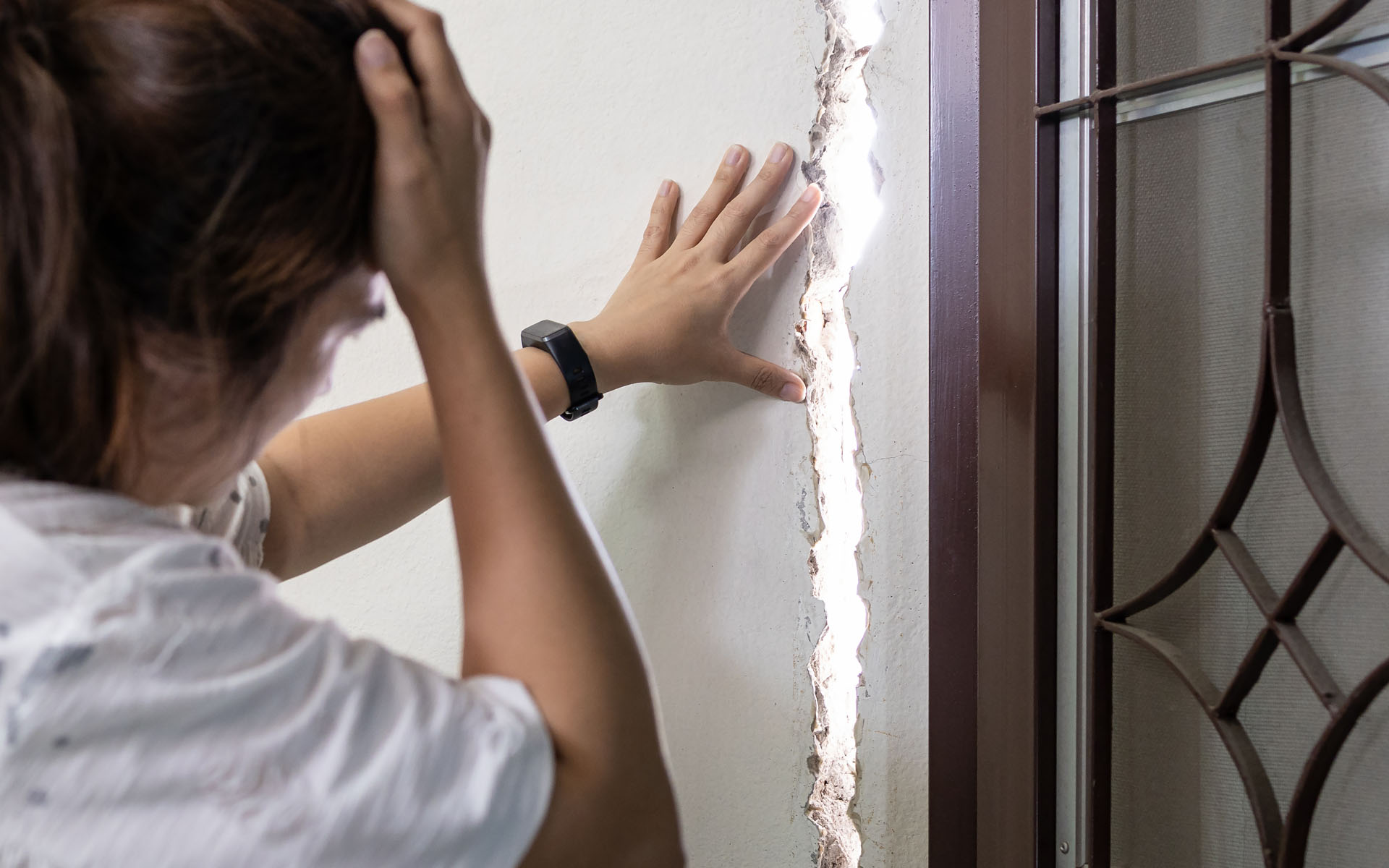
Early-stage hairline cracks often signal foundation movement before larger structural damage appears.
Most homeowners notice interior signs first because they live with them every day. Watch for these:
- Wall Cracks Wider Than 1/8 Inch: Hairline cracks are usually cosmetic. Cracks wider than 1/8 inch — especially diagonal or stair-step patterns — are foundation failure signs that need evaluation.
- Stuck Doors and Windows: When the foundation shifts, your door and window frames shift with it. Doors that previously latched smoothly begin to stick or fail to latch entirely.
- Sloping or Uneven Floors: A floor that visibly slopes — or one where a marble rolls on its own — indicates the supporting structure beneath has settled unevenly.
- Cracks in Corners and Ceilings: Stress concentrates at corners. When you see fresh cracks where two walls meet, or where walls meet the ceiling, the foundation is moving.
- Counters and Cabinets Pulling Away: Kitchen or bathroom cabinets separating from the wall, or countertops cracking, indicate the wall framing is shifting independently of the cabinetry.
Exterior Foundation Failure Signs
Outside warning signs are often more dramatic but also easier to overlook because we don’t see them daily.
- Vertical or Diagonal Cracks in the Foundation: Visible cracks in your foundation wall, stem wall, or slab edge are direct foundation failure signs and should be measured and documented.
- Leaning or Separating Chimney: A chimney pulling away from the house indicates the foundation beneath the chimney has settled at a different rate than the rest of the structure.
- Windowsills and Moldings Pulling Away: Trim separating from siding is the exterior version of the cabinet-pulling-away problem indoors.
- Cracked or Crumbling Mortar: Brick or stone homes show foundation movement through cracked, crumbling, or missing mortar joints.
- Pooling Water or Soggy Soil: If water consistently pools against the foundation, soil saturation is likely already weakening the structure beneath.
Foundation Failure Signs in the Plumbing System
Foundation movement and plumbing problems often go hand in hand. These signs may indicate a slab leak or a sewer line failure beneath your home:
- Recent or Past Sewer Line Repair: A history of sewer issues often points to underlying foundation movement that broke the lines in the first place.
- Unexplained Water Bill Spikes: A sudden jump in your water bill with no obvious cause may indicate a slab leak.
- Damp Spots or Musty Odors: Persistent moisture under flooring or in crawl spaces signals water intrusion that often accompanies foundation failure.
How to Assess the Severity of Foundation Failure Signs

Measuring stem wall crack width is the standard test for foundation failure severity.
Once you’ve spotted any of the warning signs above, four questions help you decide whether you need a professional inspection right away:
- When did the cracking or settlement first appear? Recent damage that appeared after a rain event, earthquake, or drought tends to be more urgent than long-standing cosmetic issues.
- Is the problem getting worse? Mark the end of any visible crack with a pencil and the date. If the crack extends past the mark within weeks, the foundation is actively moving.
- Did you stop the cause? If the underlying issue — a leaking pipe, poor drainage, or an active tree root — is still present, the damage will continue regardless of any cosmetic repair.
- How long can you afford to wait? Foundation failure compounds over time. A crack that costs $5,000 to address today often becomes a $30,000 structural repair within a year or two.
What Causes These Foundation Failure Signs
Most residential foundation failures in our service area stem from a handful of common causes. We’ve covered each in detail in separate articles:
- Expansive soil settlement — clay soils that swell and shrink with moisture changes
- Foundation drainage problems — pooling water, bad gutters, and poor grading
- Tree roots and plumbing leaks — silent threats that work together to undermine foundations
- Seismic events — particularly along the San Andreas Fault system and other Southern California fault lines
- Cut-and-fill settlement — common in hillside neighborhoods where homes sit on graded soil
Permanent Repair Options
Once foundation failure signs are confirmed, the right repair depends on the underlying cause:
- Push piers and helical piers permanently transfer the home’s load to stable bearing soil or bedrock.
- Drainage correction redirects water before it can saturate the soil and cause settlement.
- Crawl space repairs rebuild aging post-and-pier systems and beam structures.
- Crack injection seals structural cracks with epoxy or polyurethane after settlement is stabilized.
What to Do Next
If you’ve identified any of the foundation failure signs above in your home, don’t wait. Bristolfx has helped Southern California and Arizona homeowners protect their foundations for over 20 years, and we offer free inspections so you’ll know exactly what you’re dealing with before any work begins.
📞 Call Bristolfx today for a FREE foundation inspection.
California: (661) 294-1313 | Ariz