
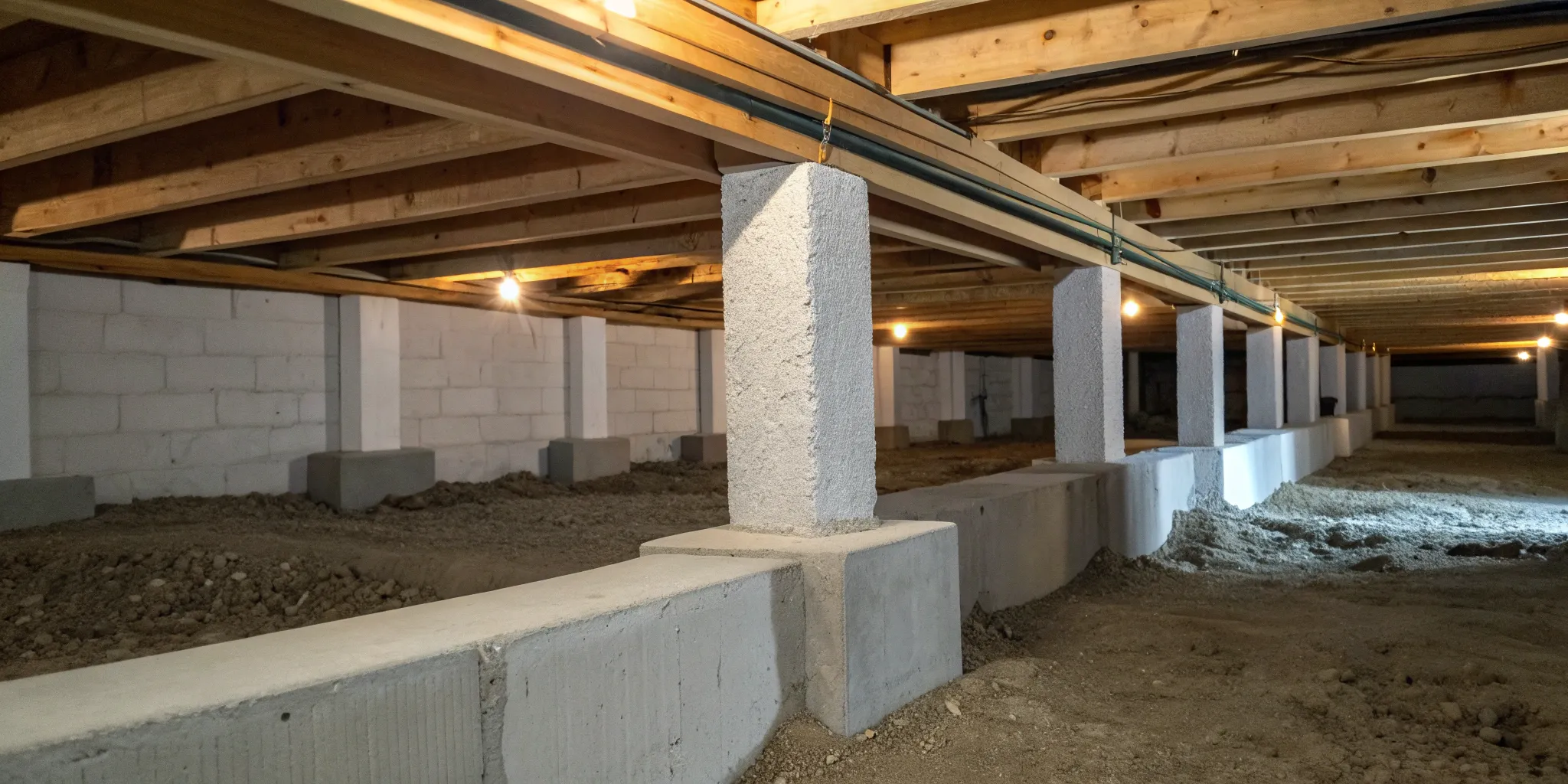
Your home has its own way of communicating, and it’s important to listen. That door that suddenly sticks, the new crack spreading across your drywall, or that bouncy spot in the living room floor—these aren’t just quirks of an aging house. They are often direct messages that something is wrong with the foundation below. The structural integrity of your crawl space is directly tied to the stability of everything above it. Ignoring these signals can lead to more severe and expensive problems down the road. We’ll help you translate what your house is trying to tell you and explain the process of a professional crawl space structural repair to restore its strength and your peace of mind.
Key Takeaways
- Look for clues inside your home: Problems under your house often show up upstairs. Pay attention to uneven floors, doors that suddenly stick, and persistent musty smells, as these are clear signals that your crawl space needs a professional inspection.
- Control moisture to protect your structure: Water is the primary cause of crawl space failure, leading to rotted wood, mold, and a weakened foundation. A permanent fix must address both the structural damage and the source of the moisture.
- View professional repair as a home investment: While some tasks are DIY-friendly, your foundation isn’t one of them. An expert repair ensures the job is done safely and correctly, protecting your home’s stability, improving air quality, and preserving your property value.
Signs Your Crawl Space Needs Repair
Because your crawl space is out of sight, it’s easy to keep it out of mind. But the structural health of this hidden area is directly tied to the stability and safety of your entire home. Problems that start below your floors can quickly spread, leading to bigger, more expensive issues. Learning to spot the early warning signs is the best way to protect your property. Your house has subtle (and not-so-subtle) ways of telling you something is wrong. Here’s what you should be looking out for.
What to Look For
Most homeowners discover crawl space problems in one of three ways. First, you might notice your floors beginning to sag, slope, or feel unusually bouncy underfoot. This often indicates that the support posts or floor joists in the crawl space are failing. Second, a persistent musty odor that seems to come from the floors or vents is a major red flag. This smell is typically caused by mold and mildew growth fueled by excess moisture. Finally, you might get a tip from a tradesperson. An electrician, plumber, or HVAC technician working in the crawl space may report seeing standing water, mold, or insect damage, signaling the need for professional crawl-space repairs.
How Your House Will Tell You
The structural issues in your crawl space won’t stay contained for long. As the support system weakens, the entire frame of your house can shift, creating noticeable problems upstairs. You might see cracks forming in your interior drywall, especially around door and window frames. Doors that used to close smoothly may suddenly start to stick or not latch properly, and windows can become difficult to open or shut. These are classic signs that the foundation is no longer level. Bouncy or uneven floors are another direct symptom of failing supports below. When you notice these changes, it’s a clear signal that your home’s foundation requires a professional evaluation.
Clues from Your Indoor Air Quality
If you’ve noticed a decline in your home’s air quality or an increase in allergy symptoms, your crawl space could be the culprit. Due to a phenomenon known as the “stack effect,” a significant portion of the air you breathe inside your home originates from the crawl space. When this area is damp, it becomes a breeding ground for mold, mildew, and dust mites. These contaminants release allergens and spores into the air, which then circulate throughout your living spaces via your HVAC system and small gaps in the flooring. Addressing the underlying moisture issues with proper waterproofing is essential for creating a healthier indoor environment for your family.
Pests and Damaged Wood
Moisture doesn’t just cause mold—it also makes the wooden structures in your crawl space highly attractive to pests. Termites, carpenter ants, and powderpost beetles thrive in damp, dark environments and feed on softened wood. An infestation can rapidly compromise the integrity of your floor joists, support beams, and sill plates. You might see evidence of pests, like discarded wings or mud tubes, or notice that the wood itself is soft, crumbly, or discolored. This combination of wood rot and pest damage weakens your home’s core structure, making timely crawl-space repairs critical to prevent catastrophic failure and protect your investment.
What Causes Crawl Space Structural Issues?
Most crawl space problems don’t happen overnight. They usually start small and are almost always tied to three main culprits: water, soil, and the foundation itself. Because your crawl space is out of sight, it’s easy for these issues to grow until they start affecting the rest of your home—think sagging floors, musty smells, or doors that won’t close properly. Understanding what’s happening beneath your floors is the first step to protecting your home’s structural integrity for the long haul.
Excess moisture is the root cause of nearly every crawl space problem. When water gets in, it creates a damp, humid environment perfect for mold, mildew, and wood rot. This not only weakens the wooden beams and posts supporting your floors but can also attract termites and other pests that thrive in damp conditions. Since a significant portion of the air you breathe upstairs comes from your crawl space through a “stack effect,” moisture issues can directly impact your home’s air quality and your family’s health. Effective crawl-space repairs almost always begin with identifying and stopping the source of the water before addressing the structural damage it has caused.
The Impact of Moisture and Water
Water is the number one enemy of a healthy crawl space. It seeps in through foundation cracks or from poor drainage around your home, saturating the soil and air. This constant dampness is absorbed by the wooden structures—the joists, beams, and subfloor—causing them to soften, rot, and decay over time. This is what leads to sagging, bouncy floors. Furthermore, this dark, moist space is an ideal breeding ground for mold and fungus. These biological growths feed on organic materials like wood and dust, releasing spores into the air that can circulate throughout your home via your HVAC system.
How Shifting Soil Affects Your Foundation
The ground beneath your home isn’t static. Soil can shift and change, especially due to water. Heavy rains can wash away, or erode, the soil that supports your foundation. When this happens unevenly, parts of your foundation can sink or settle, causing significant structural stress. You might notice this as zig-zag cracks appearing on your exterior foundation walls, or find that doors and windows suddenly start sticking. To correct this, professionals often perform foundation repair by installing steel piers that anchor the foundation to stable, deeper soil, preventing further movement and securing your home.
When Natural Settling Becomes a Problem
While some minor settling is normal for any structure, excessive water in the soil can turn it into a serious problem. Clay-based soils are particularly troublesome because they expand significantly when wet. This expansion creates immense hydrostatic pressure that pushes against your crawl space walls from the outside. The first sign of this is often a long horizontal crack along the wall. If the pressure continues, the wall will begin to bow inward. Addressing this early with solutions like carbon fiber reinforcement can stabilize the wall and prevent a much more costly failure down the road.
How Professionals Repair Crawl Spaces
When you spot signs of structural trouble in your crawl space, it’s a clear signal to call in the experts. Professional contractors have the training, tools, and materials to address the root cause of the problem, ensuring a permanent solution rather than a temporary patch. The goal isn’t just to fix the visible damage but to stabilize your home for the long haul. A professional assessment will determine the exact cause and extent of the damage, leading to a tailored repair plan.
This is important because crawl space issues are often interconnected. For example, excess moisture can lead to wood rot, which weakens support posts and causes floors to sag. A quick fix that only replaces the posts without addressing the water problem means you’ll likely face the same issue again down the road. A comprehensive approach ensures all contributing factors are handled. These aren’t weekend DIY projects; they are complex jobs that protect the integrity of your entire home. Let’s walk through the most common methods professionals use for crawl-space repairs.
Installing New Support Systems
If you have sagging, bouncy, or uneven floors, the problem likely lies with the support posts in your crawl space. Over time, original supports can weaken, sink into the soil, or rot from moisture. Professionals address this by installing modern support systems. These systems typically consist of heavy-duty, adjustable steel posts that are resistant to moisture, mold, and pests. A technician will install them on a solid, engineered base to ensure they don’t sink, then adjust them to lift the floor joists and beams back to their original position. This provides immediate stabilization and a lasting solution that can be fine-tuned over time if any further settling occurs, giving you peace of mind.
Reinforcing Floors and Beams
Sometimes, the issue isn’t just the vertical posts but the horizontal beams they support. If a main support beam has cracked, rotted, or started to sag, it compromises the entire floor structure above it. In these cases, a simple post replacement won’t be enough. A professional crew will first add temporary support to the area before removing the damaged beam. They typically replace it with a much stronger steel I-beam, which offers superior strength and longevity compared to wood. If the original support columns are failing but the beam is intact, they can be replaced with high-capacity steel jacks. This process effectively reinforces the “spine” of your home’s foundation, ensuring it can handle the load for decades to come.
Repairing Foundation Walls
The foundation walls enclosing your crawl space are just as critical as the interior supports. Hydrostatic pressure from saturated soil can cause these walls to bow inward, crack, or shear. Ignoring this can lead to serious structural failure. Professionals use specific techniques based on the severity of the bowing. For walls that have moved less than two inches, high-strength carbon fiber straps can be bonded to the wall to stabilize it and prevent further movement. For more significant bowing, experts may install wall anchors or helical tiebacks. These anchors extend into stable soil away from your foundation, effectively pulling the wall back toward its original position and securing it permanently.
Effective Waterproofing Solutions
Structural repairs are only half the battle if moisture is the underlying cause. Without addressing water intrusion, you’ll likely face the same problems again. Professional waterproofing is about managing water, not just blocking it. This often involves installing an interior drainage system along the perimeter of the crawl space floor. This channel collects any water that seeps in and directs it to a sump pump, which then safely pumps the water away from your foundation. Combining this with a durable vapor barrier to cover the soil can dramatically reduce humidity and prevent the moisture that leads to wood rot, mold growth, and soil settlement.
Using SmartJacks and Steel Supports
For serious floor sagging, professionals turn to engineered solutions like the SmartJack® system. These aren’t your average hardware store jack posts; they are robust steel supports designed to handle immense weight. A single SmartJack can typically support loads exceeding 60,000 pounds, providing a powerful and permanent fix for failing floor joists and beams. The installation process is meticulous. A crew digs a hole at each support location, fills it with engineered fill or concrete to create a stable footing, and then cuts a custom-length steel post. The jack is assembled and tightened, immediately lifting the sagging floor and transferring the home’s weight to stable soil below.
What Does Crawl Space Repair Cost?
Let’s talk about the number one question on every homeowner’s mind: the cost. Facing a crawl space issue is stressful enough without worrying about the final bill. While there’s no single price tag for crawl-space repairs, understanding what shapes the cost can give you a clearer picture. The total expense depends entirely on the specific problems under your home and the solutions needed to fix them for good.
What Influences the Final Price?
The cost of crawl space repair can range from a few hundred dollars to several thousand, with an average around $4,500. This wide range exists because every crawl space is unique. The final price is influenced by the type of repair, the size of the area, and the severity of the damage. For example, sealing minor cracks is a much smaller job than stabilizing a sinking foundation wall. The materials used, from steel piers to specialized membranes, also play a significant role.
Average Costs for Common Repairs
To give you a better idea, let’s look at some typical price ranges. Structural work, like fixing damaged support beams, often costs between $1,000 and $7,500. If moisture is the main culprit, installing a new vapor barrier might run from $1,500 to $4,000. For more comprehensive moisture control, a full crawl space encapsulation can range from $2,000 to $15,000. This is a complete waterproofing solution that protects your home from mold, pests, and rot.
Insurance Coverage and Financing Options
A common question is whether homeowners insurance will cover the repair costs. Unfortunately, the answer is usually no. Most policies don’t cover damage that occurs gradually, such as issues from soil settlement or persistent moisture. Coverage typically only applies if the damage is from a sudden event, like a burst pipe. Always review your specific policy. Since these repairs are essential, many contractors offer financing options to make the investment more manageable.
The Long-Term Value of Repair
While the upfront cost can seem high, think of it as a crucial investment in your home’s future. Addressing crawl space issues now prevents them from escalating into much larger, more expensive problems. A properly repaired and sealed crawl space also improves your home’s energy efficiency, which can lower your utility bills. More importantly, it protects your family from poor indoor air quality caused by mold and mildew. A healthy crawl space means a stable, safe, and more valuable home.
DIY vs. Professional Repair: Making the Call
Tackling home projects yourself can be incredibly rewarding, but when it comes to your home’s foundation, the stakes are much higher. While sealing a small crack or improving ventilation might feel manageable, most crawl space issues are symptoms of larger problems that require specialized knowledge and equipment. Structural repairs, in particular, are complex and directly impact the safety and stability of your entire home. Before you grab your toolbelt, it’s important to honestly assess the scope of the problem and understand when to call in a professional for a safe and lasting solution.
When You Absolutely Need an Expert
Some jobs are simply too big or complex for a DIY approach. If you notice large foundation cracks, significant wood rot, sagging floors, or standing water, it’s time to call an expert. These are often signs of serious structural issues that, if handled incorrectly, could lead to even more damage and costly repairs down the line. Professionals have the right tools, engineering knowledge, and experience to diagnose the root cause and implement the correct crawl-space repairs safely and effectively. Trying to install support piers or manage major water intrusion on your own can be dangerous and may not meet local building codes, putting your home and family at risk.
How to Choose the Right Contractor
Finding the right partner for your repair project is key. Start by looking for a contractor who is respectful, listens to your concerns, and provides an honest, thorough evaluation of the problem. Don’t just rely on a web search; ask friends, neighbors, or local real estate agents for recommendations. Once you have a few names, do your homework. Check their licenses, insurance, and online reviews. A reputable company will be transparent and happy to provide references. Get at least three detailed quotes, but remember that the cheapest option isn’t always the best. You’re looking for a team with proven expertise in foundation repair who you can trust to protect your home.
Permits and Regulations to Know
Many homeowners are surprised to learn that crawl space repairs often require a permit from their local government. Any work that involves altering your home’s structure, such as installing new support posts or repairing foundation walls, will almost certainly need one. Even some waterproofing jobs, like installing a sump pump that requires new electrical wiring, may fall under this requirement. Failing to secure the proper permits can result in fines and problems when you eventually sell your home. A professional contractor should be well-versed in local building codes and will typically handle the entire permitting process for you, ensuring all work is done legally and to standard.
What to Expect During the Repair Process
Knowing what to expect can make the repair process much smoother. It usually begins with a detailed inspection and a clear proposal outlining the work and costs. Once you approve, the team will schedule the job. The work itself can be disruptive. For example, installing support systems often involves excavating soil inside the crawl space and can be noisy. The crew will need clear access to the area, so you may need to move some belongings. A good contractor will communicate with you throughout the project, keeping you updated on their progress. After the work is complete, they should conduct a final walkthrough with you to ensure everything meets your satisfaction.
How to Prevent Future Crawl Space Problems
Once your crawl space is repaired, the goal is to keep it that way. Proactive maintenance is your best defense against future issues, saving you from the stress and expense of repeat problems. A healthy crawl space supports the entire structure of your home, improves your indoor air quality, and can even lower your energy bills. Staying ahead of potential trouble doesn’t require a ton of work—just a little bit of regular attention. By focusing on a few key areas, you can protect your investment and ensure your home remains stable and healthy for years to come. Think of it as a simple check-up for one of your home’s most important areas. If you ever feel overwhelmed, professional crawl-space repairs and maintenance plans can handle the heavy lifting for you.
Your Regular Inspection Checklist
Setting aside a little time twice a year to peek into your crawl space can make a huge difference. Regular checks help you spot small issues before they become major headaches. When you inspect the area, look for a few specific things. First, check for any signs of water, like puddles, damp soil, or condensation on pipes. Next, look for pests—webs, droppings, or damaged insulation are tell-tale signs. You should also examine the wooden structures for any discoloration or softness, which could indicate rot. Finally, scan the interior foundation walls for new cracks. If you find any small openings where pests could enter, seal them up. Catching these things early is the key to simple, low-cost fixes.
Strategies for Controlling Moisture
Moisture is the number one enemy of a healthy crawl space. It invites mold, wood rot, and pests, and can even weaken your home’s structure over time. The best strategy is to stop moisture before it starts. A high-quality vapor barrier—a thick plastic liner covering the entire dirt floor—is essential for blocking moisture rising from the ground. In humid climates, a dehumidifier can help maintain optimal moisture levels. For a more comprehensive solution, crawl space encapsulation involves sealing vents and installing a vapor barrier on the walls and floor. This creates a clean, dry, and conditioned space, which is the most effective form of waterproofing for the area under your home.
Why Proper Ventilation Matters
You might be surprised to learn that up to 50% of the air you breathe inside your home comes up from the crawl space. This is due to a phenomenon called the “stack effect,” where air naturally flows from the lower levels of your house to the upper ones. That’s why a damp, moldy crawl space can lead to poor indoor air quality and allergy-like symptoms for your family. The goal is to keep the relative humidity in your crawl space around 50%. This creates an environment where mold can’t grow and dust mites can’t thrive. Proper moisture control and ventilation strategies ensure the air circulating from your crawl space is clean and healthy.
Tips for Catching Problems Early
Your house often gives you clues when something is wrong in the crawl space. It’s important to know what to look for so you can act quickly. Inside your home, pay attention to floors that feel bouncy, soft, or uneven. Doors and windows that suddenly start to stick or won’t close properly are another common sign. You might also notice new cracks appearing in your interior drywall, especially over doorways and windows. Outside, walk around your home and look for cracks in the foundation walls. Vertical or stair-step cracks are often a red flag for foundation movement. If you spot any of these signs, it’s time to call a professional for a foundation repair assessment.
The Payoff: Benefits of a Healthy Crawl Space
Investing in crawl space repair isn’t just about fixing a problem—it’s about upgrading your entire home. Think of it as a foundational investment that pays dividends in comfort, health, and financial security. When you address issues under your house, you’re not just patching a crack or stopping a leak; you’re creating a more stable, efficient, and valuable property. From the air you breathe to the money you save on energy bills, the positive effects ripple through every aspect of your home life. Let’s look at the specific advantages you can expect.
Improve Your Home’s Energy Efficiency
A damp, unsealed crawl space can be a major drain on your home’s energy. When humid air from the crawl space gets pulled into your home, your HVAC system has to work overtime to heat, cool, and dehumidify it. This extra effort means higher utility bills and more wear and tear on your equipment. By properly sealing and waterproofing your crawl space, you can maintain a consistent, lower humidity level. This simple change makes it easier for your HVAC system to do its job, resulting in noticeable savings on your monthly energy costs and a more comfortable home environment year-round.
Breathe Healthier Air Indoors
Did you know that a significant portion of the air you breathe inside your home originates in your crawl space? This is due to a phenomenon called the “stack effect,” where air naturally flows upward from the lowest levels of the house. If your crawl space is damp, it can become a breeding ground for mold, mildew, and dust mites. These allergens are then circulated throughout your living areas via your ductwork, potentially triggering allergies and respiratory issues. Professional crawl-space repairs eliminate the moisture that fuels this growth, creating a healthier environment for you and your family and ensuring the air you breathe is clean and safe.
Protect Your Home’s Structural Integrity
Your crawl space is the literal foundation of your home, and its health is critical to the entire structure. Excess moisture is the number one enemy, as it can seep into wooden support beams and floor joists, causing them to soften, rot, and decay over time. This deterioration leads to common problems like sagging, bouncy, or uneven floors. If left unaddressed, it can compromise the stability of your entire house. Timely foundation repair reinforces these vital supports, stops decay in its tracks, and ensures your home remains strong and secure for decades to come. It’s the most effective way to preserve your home’s structural backbone.
Increase Your Property Value
A clean, dry, and structurally sound crawl space is a huge selling point for any home. When potential buyers see that this often-neglected area has been professionally maintained, it gives them confidence in the overall condition of the property. Addressing crawl space issues prevents problems like mold, pests, and wood rot, which are major red flags during a home inspection. Investing in permanent solutions, especially those that come with a transferable warranty, can directly increase your home’s market value. It’s a smart, proactive step that not only improves your quality of life now but also provides a significant return when it’s time to sell.
Related Articles
- Crawl-space Repairs – Professional Foundation Repair
- Crawl Space Repair Services | Bristol FX
- Waterproofing Services – Professional Foundation Repair
Frequently Asked Questions
My floors are only slightly bouncy in one spot. Is this something I need to fix right away? Even a small, isolated bounce in your floor is worth investigating. It often points to a problem with a specific support post or floor joist directly underneath that spot. While it may seem minor now, that single weak point puts extra stress on the surrounding structure. Addressing it early usually means a simpler, less expensive fix and prevents the issue from spreading and causing more widespread sagging or damage.
Will fixing my crawl space get rid of the musty smell in my house? Yes, in most cases, it will. That musty, earthy smell is typically caused by mold and mildew thriving in a damp crawl space. Because air naturally flows from the lower levels of your home upward, those odors get pulled into your living areas. A professional repair that includes proper waterproofing and moisture control eliminates the damp environment, which stops mold growth at its source and significantly improves your indoor air quality.
What’s the difference between a vapor barrier and full encapsulation? Think of a vapor barrier as the first step in moisture control. It’s a heavy-duty plastic liner placed over the dirt floor to stop moisture from rising out of the ground. Full encapsulation is a more complete solution. It includes a vapor barrier on the floor but also seals the foundation walls and crawl space vents, completely isolating the area from outside moisture and humidity. This creates a clean, dry, and conditioned space that offers the highest level of protection.
How long does a typical crawl space repair project take? The timeline really depends on the scope of the work. A straightforward job, like installing a few new support posts, might only take a day or two. More complex projects, such as stabilizing foundation walls or completing a full encapsulation, could take a week or more. A professional contractor will give you a clear and detailed timeline before any work begins so you know exactly what to expect.
Can I still use my crawl space for storage after it’s been repaired and sealed? Absolutely. In fact, a professionally encapsulated crawl space becomes an excellent spot for storage. Unlike a damp, dirty crawl space, an encapsulated area is clean, dry, and protected from pests and moisture damage. It’s a great place to store seasonal decorations, outdoor gear, and other items you don’t need every day, freeing up valuable space in the rest of your home.