
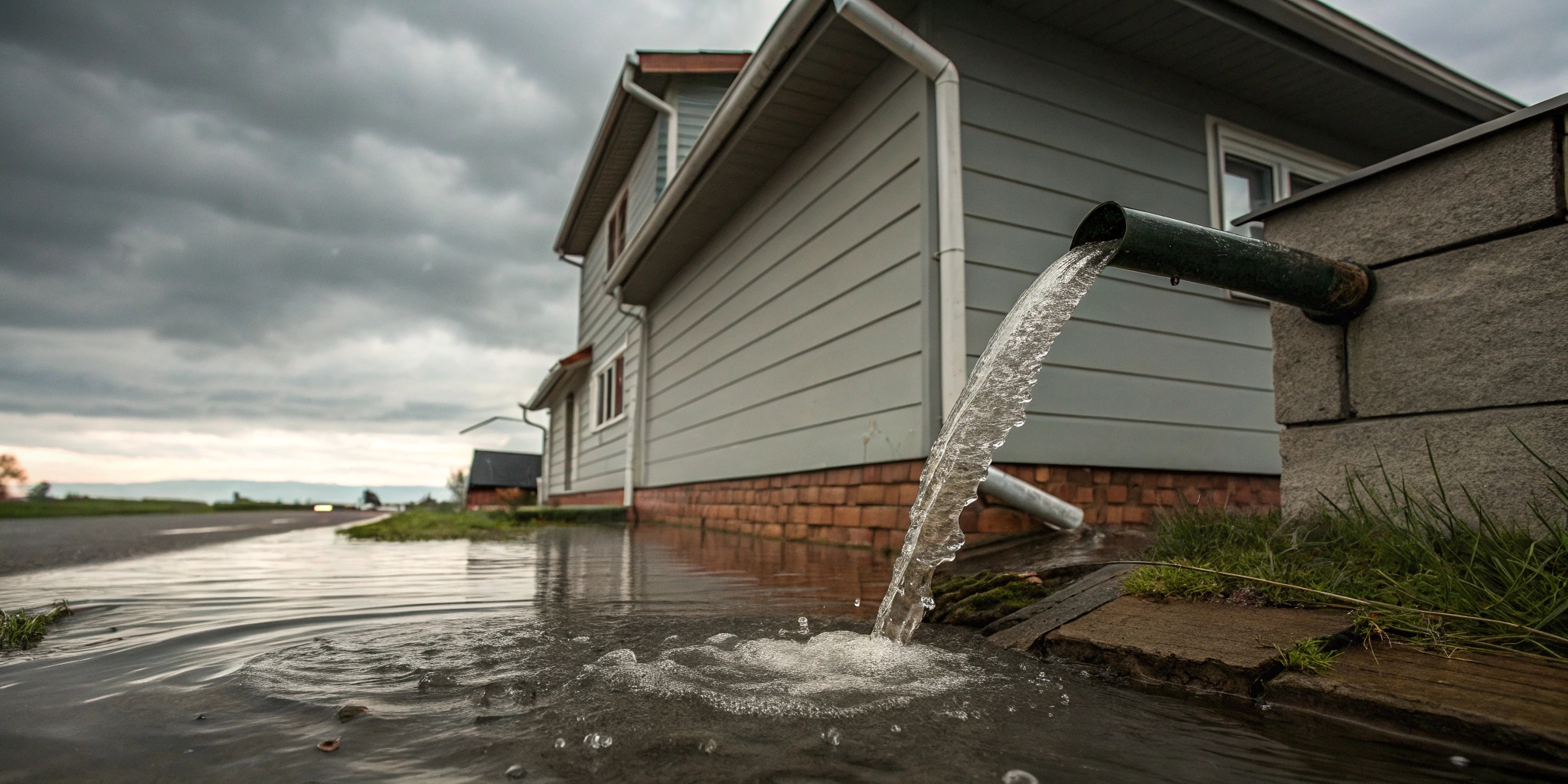
Your home’s gutters and downspouts serve as the first line of defense against water damage, but when they’re not properly managed, they can become your foundation’s worst enemy. Misdirected water from downspouts is one of the leading causes of foundation settlement, a costly problem that can compromise your home’s structural integrity.
The massive volume problem
The sheer amount of water flowing through your downspouts is staggering. A typical 2,500 square foot roof collects approximately 1,558 gallons of water from just one inch of rainfall. To put this in perspective, that’s enough water to fill about 25 standard bathtubs from a single storm. When downspouts discharge this enormous volume too close to your foundation, the soil around your home becomes severely oversaturated.
This excess moisture dramatically alters the soil’s properties, particularly in clay-rich soils common in many regions. As water saturates the ground, it causes the soil to expand and become unstable. When the soil eventually dries out during seasonal changes or drought conditions, it contracts significantly, creating voids and uneven support beneath your foundation.
The settlement process
Foundation settlement occurs when the soil beneath your home can no longer adequately support the structure’s weight. Oversaturated soil loses its bearing capacity, causing different sections of your foundation to sink at varying rates. This differential settlement creates cracks, uneven floors, and structural stress throughout your home.
The process is often gradual, making it easy to overlook until significant damage has occurred. What starts as minor soil saturation from poorly directed downspouts can evolve into thousands of dollars in foundation repairs.
Warning signs to watch for
Homeowners should be alert for several indicators of foundation settlement caused by water issues:
- Cracks in walls or ceilings
- Doors and windows that stick or won’t close properly
- Floors that feel uneven or bouncy
- Visible cracks in the foundation
- Gaps between the foundation and siding
- Standing water near the foundation after rain
Prevention is key
The solution is surprisingly straightforward: ensure downspouts direct water at least six to eight feet away from your foundation. Install downspout extensions, splash blocks, or underground drainage systems to carry water to safe disposal areas. Regular maintenance of gutters and downspouts prevents clogs that can cause overflow near the foundation.
Consider installing a drainage system around your home’s perimeter if you live in an area with poor natural drainage. Proper grading that slopes away from your foundation also helps direct surface water away from vulnerable areas.
Taking these preventive measures costs far less than foundation repairs and protects one of your most significant investments—your home.
What the experts say
- Minimum distance matters: Experienced builders and waterproofing professionals recommend that downspouts discharge water at least 6–10 feet away from the foundation. This helps avoid hydrostatic pressure buildup and foundation damage over time.
- Soil composition is critical: If your soil is clay-heavy, it can expand significantly when saturated and contract when dry—leading to foundation heaving or cracking. Proper water diversion is essential in these conditions.
- Freezing risk in cold climates: Water collecting near the foundation can freeze and thaw, accelerating erosion and potentially leading to costly repairs exceeding $10,000.
- Basement waterproofers warn: Water intrusion often occurs at the cove joint—the seam between the basement wall and floor. Even small amounts of pooling water can eventually find their way inside, especially under pressure.
- Temporary measures aren’t enough: While some builders delay final grading and extensions until landscaping is complete, it’s advised to use temporary downspout extensions during heavy rain events to avoid even short-term risks.
- Upgrade your system: Professionals suggest burying solid PVC drainpipes from the downspouts and routing them to pop-up emitters or drainage ditches 10+ feet away from the home. This creates a long-term, low-maintenance solution.
- Don’t wait for damage: Even new builds can suffer if early storms hit before the drainage is completed. Proactive homeowners often request temporary or permanent extensions before final handover.
Why gutters matter—even when it rains everywhere
- Concentrated runoff: Roofs act like funnels, collecting water from a wide surface and dumping it into a concentrated area. Without gutters, that water hits the ground in a torrent, often directly next to your foundation.
- Foundation protection: Directing water away is critical for preventing structural issues. Gutters channel rain to safer locations so it doesn’t erode or saturate the soil around the home’s base.
- Protects landscaping and walkways: Concentrated roof runoff can destroy landscaping, wash away mulch, and even erode soil along walkways or entries. Gutters help prevent these issues.
- Improved entry access: Proper gutter systems reduce water pouring over doorways, preventing splash-back and creating drier, safer entry points during storms.
- Helps with waterproofing strategy: Even in homes without basements, gutters support the overall water management plan—reducing pressure on perimeter drains, sump pumps, and waterproofing systems.
- Gutters are preventive maintenance: Builders and contractors agree: gutters are one of the most cost-effective investments for protecting your home from water damage and avoiding major repair costs later.
- Designers support control: Architectural designers emphasize that controlling water flow is always preferable to letting nature take its course—especially in construction, where drainage control can prevent major structural problems.
- Real-world examples: Many homeowners report foundation and siding damage after removing or neglecting gutters. On the flip side, strategic gutter use has helped homeowners in high-risk areas manage heavy rainfall effectively.
Need Foundation Help in Southern California?
If you’re noticing signs of settlement, cracks, or water pooling near your foundation—don’t wait. Bristol FX is a trusted name in Southern California for expert foundation inspections, drainage solutions, and structural repairs.
Protect your home before minor issues become major repairs.
Contact Bristol FX today for a professional assessment.