Lately, you’ve noticed thin cracks climbing up your foundation and interior walls like vines.
Your doors and windows are becoming increasingly difficult to pry open, and your floor is slowly turning into a slide. What could be causing these unusual problems?
It could be your home settling. While settlement is normal and happens to all homes, in some cases, a foundation can sink to a concerning degree. But how do you know what’s normal and what’s not when it comes to foundation problems?
To help you better understand how settlement works and how it presents itself, we’ll provide a brief introduction to settlement and teach you what you need to know about the three different types of foundation settlement.
What Is Settlement?
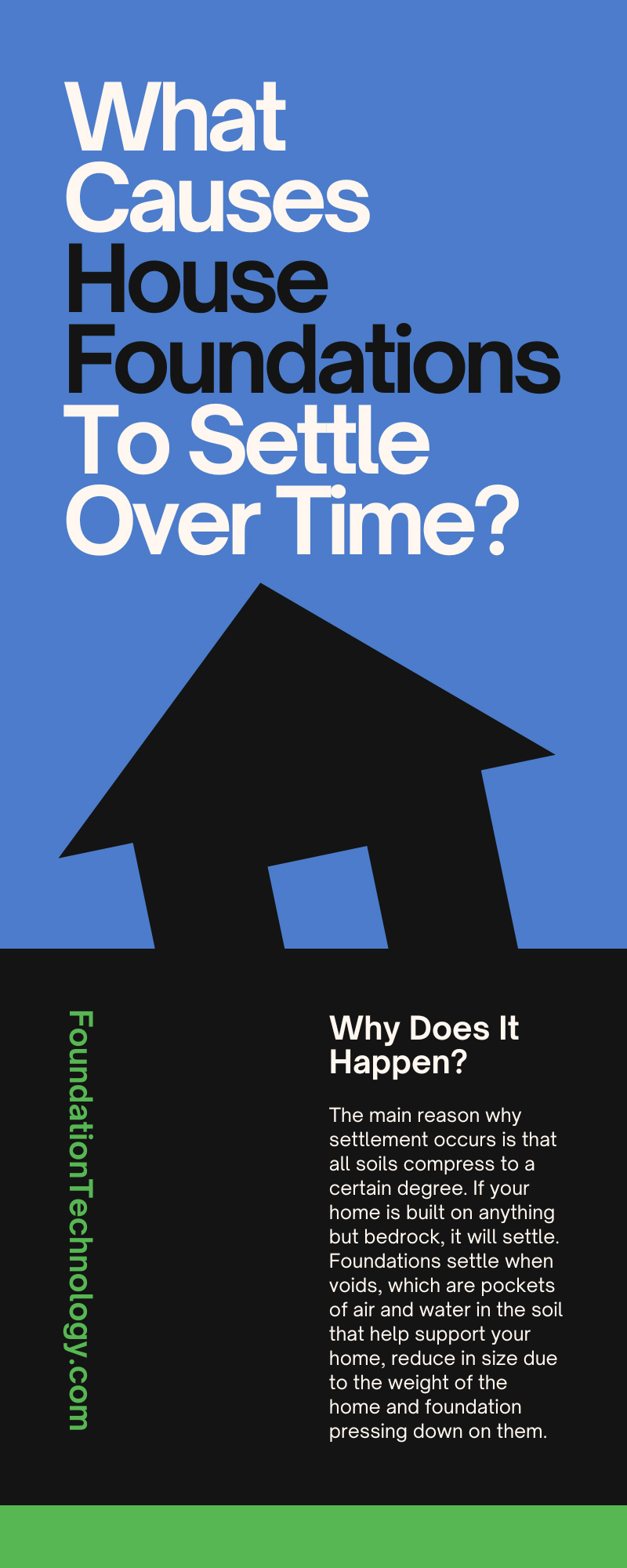
Foundation settlement occurs when a structure sinks slowly into the soil beneath it due to soil compression. All soil naturally compresses over time, and unless your foundation is built on bedrock, it will eventually settle. While this is a normal occurrence, settlement can become a problem if it happens unevenly or rapidly, affecting the structure’s stability.
Understanding how soil compression works can help you understand why homes sink. The soil beneath a structure contains voids, or pore spaces, which are made up of air and water. When a structure is built on the soil, it puts thousands of pounds of pressure on the dirt and presses it down. This reduces void space and makes the soil denser. This isn’t all bad, as compacted soil is stronger and will support your home better. The problem is when the soil settles, so does everything built on top of it.
When settlement occurs slowly, evenly, and minimally, it rarely causes permanent harm to a building. But if a foundation settles too quickly, unevenly, or severely, it can compromise the structural integrity and safety of a home.
Causes of Foundation Settlement
The composition of the soil beneath your home plays a big role in settlement. There are several factors that can lead to weak, unstable soil, including:
Drying
When soil particles dry out, they shrink, crack, and settle, causing the home above to sink into the ground with them.
Wetting
Wet soil can also cause settlement. When soil is saturated with moisture, it gets softer and weaker. Eventually, it becomes incapable of supporting the weight of your home. Water can also wash away some soil, creating gaps in the ground that cause the soil to sink.
Improper Compaction
Before a structure is built, the soil beneath needs to be pre-compacted. This is essential for long-term stability as it strengthens the soil so it can adequately support the heavy, permanent load placed atop it. Homes built on poorly compacted soil are more likely to settle and experience harsher forms of settlement.
Types of Foundation Settlement
Uniform Settlement
Uniform settlement happens when the foundation sinks evenly. Every part of the base lowers at the same rate. The house may sit lower overall, but it usually remains level.
For example, if a home is built on soil that compresses slowly under weight, the foundation may drop slightly over time. Because the movement is even, the structure often stays stable.
Uniform settlement is less severe than uneven movement, but it still requires attention. Regular monitoring ensures small problems do not turn into larger repairs.
Differential Settlement
Differential settlement is more serious. It occurs when one part of the foundation sinks faster or deeper than another. This uneven sinking places stress on walls, ceilings, and floors.
You may notice cracks that widen, doors that won’t close, or floors that slope. For example, a corner of a house built on softer soil may drop lower than the rest. This pulls the structure out of alignment and creates damage over time.
Among uniform and differential settlement, the uneven type is the most dangerous. Early inspection from professionals, like the team at Bristol FX, can prevent costly repairs.
Risks of Ignoring Foundation Settlement
Structural Damage
Ignoring foundation settlement can cause cracks in walls, ceilings, and floors. Over time, the frame of the house may weaken. Windows and doors can stop working correctly, and in severe cases, the structure may become unsafe.
Safety Hazards
Uneven floors increase the risk of trips and falls. Gaps caused by settlement allow water and pests inside. Serious settlement may even impact the roof or support beams, making the home dangerous for families.
Increased Repair Costs
Minor settlement is often easy to fix. But waiting allows the problem to grow. Repairs become larger and more expensive, often requiring underpinning or reinforcement. Acting early saves money and protects your home.
If you see warning signs, don’t wait. Contact Bristol FX for an inspection and expert advice.
How to Prevent Foundation Settlement
Proper Drainage
Direct water away from your foundation with gutters and downspouts. The ground should slope outward to prevent pooling. Even small improvements in drainage reduce settlement risk.
Regular Inspections
Check your home regularly for cracks, uneven floors, or sticky doors. Schedule professional inspections every few years. An expert can spot problems early and recommend solutions.
Soil Management
Healthy soil supports a stable home. Avoid planting large trees near the foundation. Keep soil moisture consistent to prevent shrinking or swelling. Simple steps like mulching and careful watering make a difference.
For added protection, homeowners can schedule inspections through Bristol FX, ensuring peace of mind.
The Three Types of Settlement
There are three forms of settlement. Each presents differently, and some forms are more severe than others, but all can damage the home. Here’s what you need to know about the three different types of foundation settlement.
Uniform Settlement
Uniform settlement is when all portions of a foundation settle at the same or similar rate. This causes the structure to move down vertically. This typically occurs when the soil beneath the home is all one type or when the load on the home is uniform in all areas. Uniform settlement has minimal effect on the structure and safety of a building. However, it can damage the building’s utilities, including the sewage and water supply. This can result in leaking and other problems that a professional will need to address.
Tipping Settlement
The next type of foundation settlement you should know about is tipping settlement. Tipping settlement is when one side of a foundation slab remains in place, and the other side settles uniformly. A good example of tipping settlement is the since-stabilized Leaning Tower of Pisa. This form of settlement doesn’t normally cause cracks, but that doesn’t mean it’s harmless. If the home isn’t properly stabilized, it can tip over.
Differential Settlement
This is the most severe form of settlement. It occurs when the soil under a home expands, contacts, or shifts away. In differential settlement, one portion of a foundation settles faster than the other portions, or non-uniformly. This can result in severe damage to the home, including cracks in the foundation and interior walls, stuck doors and windows, sinking exterior stairs, tilting chimneys, and leaking through sunken slabs. In some cases, though rare, it can also cause a home to fail and collapse.
What To Do if You Think Your Home Is Settling
Generally, settlement occurs in the first few years after construction, but it can happen at any time if conditions are right. Most settlement is normal, but sometimes it’s not. Keeping an eye out for the signs of dangerous settlement can help you catch symptoms early. Here are just a few symptoms to watch for:
- Stair-step cracking
- Diagonal cracks in the foundation and drywall
- Leaning or cracked chimneys
- Doors and windows separating from frames
- Doors and windows sticking
- Moisture in the basement or crawlspaces
- Standing water around the home
- Pests or insects in the basement
- Nails popping out of the drywall
- Uneven floors
- Cracking, bowing foundation walls
Final Thoughts on Foundation Settlement
Foundation settlement can happen to any home. Some movement is natural, but serious settlement causes damage and safety risks.
Early detection is the best way to protect your investment. Small cracks may seem harmless, but they can grow quickly into costly repairs. Acting early keeps your home safe and saves money.
If you suspect settlement issues, call the experts at Bristol FX. Our team provides professional inspections, explains the symptoms, and offers lasting solutions tailored to your needs.
Contact us today at (661) 215-6681 or visit us today to learn more about our foundation repair services. Protect your home now and enjoy peace of mind for years to come.
Frequently Ask Question
What are the common signs of foundation settlement? The most common signs of foundation settlement include visible cracks in your foundation, walls, and ceilings, doors and windows that are difficult to open or close, uneven floors, and gaps around doors or windows. If you notice these symptoms, it’s crucial to consult a professional to assess the situation before the problem worsens.
How do I know if my foundation settlement is serious? Not all foundation settlement is alarming, but if you notice large, diagonal cracks in the walls or foundation, doors and windows that stick, or uneven floors, these could be signs of more severe settlement. Differential settlement, where one part of your home sinks faster than another, is particularly concerning and requires immediate professional attention.
Can foundation settlement be repaired? Yes, foundation settlement can be repaired. There are several methods available, such as slabjacking, piering, and underpinning, to stabilize and lift your foundation back to its original level. A foundation repair professional can assess the extent of the settlement and recommend the best solution for your home.
Is it normal for a new home to experience foundation settlement? Yes, it’s normal for new homes to experience some degree of foundation settlement during the first few years after construction. However, excessive or uneven settlement could indicate a problem with the soil compaction or foundation design. It’s important to monitor your home during this period and consult a professional if significant issues arise.
What causes foundation settlement to happen? Foundation settlement can occur due to several factors, including soil compression, improper soil compaction before construction, moisture changes in the soil (drying or wetting), and poor drainage around the foundation. When the soil beneath your home shifts, it can cause the foundation to sink or settle unevenly, potentially leading to structural damage.
What is a normal foundation settlement? Normal foundation settlement is small, even sinking that occurs in the first few years after construction. It usually does not cause major damage.
What is settlement in a foundation? Settlement in a foundation happens when soil beneath a house compresses or shifts. This movement causes the base to sink or tilt.
What is a foundation settlement example? A house with wall cracks or sloping floors is a clear example. These are signs of uneven settlement that need attention.
What is a common cause of foundation settlement? Soil moisture changes are the most common cause. Heavy rain, poor drainage, leaks, or clay soils often weaken support beneath the home.