
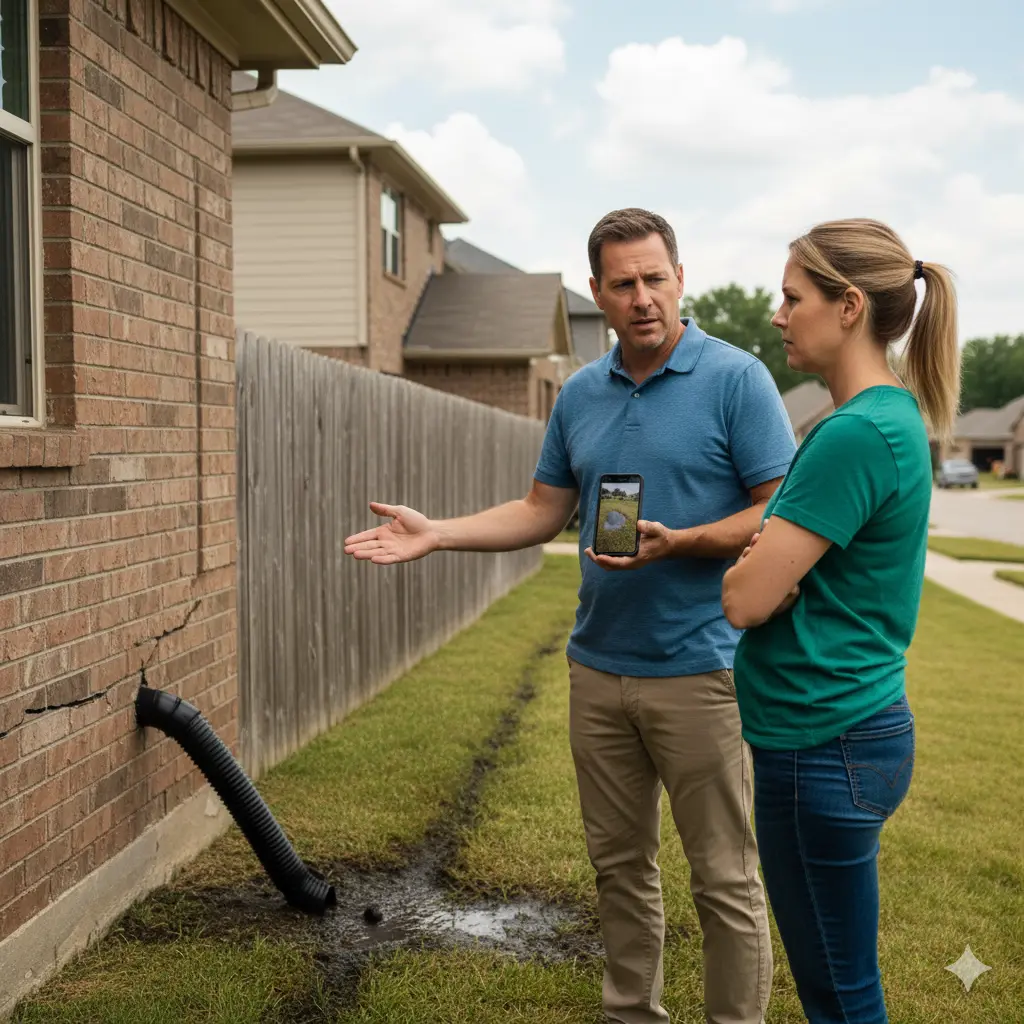
If you’ve noticed your yard feels like a swamp and your doors are suddenly sticking, you might be facing one of the most frustrating foundation problems homeowners encounter: water damage caused by your uphill neighbor’s drainage. At Foundation Tech, Inc., we’ve seen countless cases where excessive water from neighboring properties leads to serious foundation settlement. Here’s what you need to know about your rights and how to protect your home.
Understanding the Problem: How Excess Water Destroys Foundations
When your uphill neighbor over-waters their property—whether through excessive irrigation, poor drainage, or improper grading—gravity becomes your enemy. That water flows downhill, saturating your soil and creating a perfect storm for foundation damage:
Soil Expansion and Contraction:
Clay soils expand when wet and shrink when dry. Constant saturation from your neighbor’s runoff creates uneven pressure on your foundation, leading to cracks and settlement.
Erosion:
Persistent water flow can wash away the soil supporting your foundation, creating voids that cause uneven settling.
Hydrostatic Pressure:
Saturated soil exerts tremendous lateral pressure against foundation walls, potentially causing bowing, cracking, or even collapse in severe cases.
Loss of Soil Bearing Capacity:
Over-saturated soil loses its ability to support weight, essentially turning from solid ground into unstable mud beneath your foundation.
(Learn more about how soil behavior impacts your home in our guide: Foundation Settlement Explained.)
Your Legal Rights: The Law Is on Your Side
The good news? Property law generally protects you from damage caused by your neighbor’s improper water management. Here’s what you need to know:
The “Reasonable Use” Doctrine
Most states follow the “reasonable use” rule for surface water. Your neighbor has the right to use water on their property, but not in a way that unreasonably damages yours. Excessive irrigation that causes foundation damage typically violates this principle.
Civil Law Rule vs. Common Enemy Doctrine
Depending on your state, one of two legal principles applies:
• Civil Law Rule: Your neighbor cannot alter the natural flow of water in a way that increases damage to your property.
• Common Enemy Doctrine: Property owners can protect themselves from surface water but cannot negligently or maliciously direct water onto neighboring properties.
Negligence and Nuisance Claims
If your neighbor’s watering practices are excessive or careless, you may have grounds for:
• Negligence claims: They failed to exercise reasonable care in managing water on their property.
• Private nuisance claims: Their water use substantially and unreasonably interferes with your property use and enjoyment.
(For details on property rights and drainage laws, refer to EPA’s Stormwater Management Resources.)
Taking Action: Your Step-by-Step Game Plan
1. Document Everything
Before taking any action, build your case:
• Take date-stamped photos and videos of the saturated areas.
• Document visible foundation damage (cracks, sticking doors, uneven floors).
• Keep records of when and how often your neighbor waters.
• Get a professional foundation inspection report from BristolFX (call 855-650-2211).
• Consider installing a moisture meter to track soil saturation levels.
2. Talk to Your Neighbor
Start with a friendly conversation. Many neighbors don’t realize the damage they’re causing. Explain the situation and show them the evidence. They might be willing to:
• Adjust their irrigation schedule.
• Install better drainage systems.
• Redirect downspouts and runoff.
3. Send a Formal Written Notice
If talking doesn’t work, send a certified letter that:
• Describes the problem in detail.
• Includes your documentation.
• Requests specific remedial action.
• Sets a reasonable deadline for response.
• Mentions potential legal action if the problem isn’t resolved.
4. Contact Local Authorities
Check if your neighbor is violating any local ordinances:
• Water use restrictions.
• Building codes regarding drainage.
• Environmental regulations.
• Homeowner association rules (if applicable).
(You can verify local contractor and drainage compliance through the California Contractors State License Board (CSLB).)
5. Mediation
Before heading to court, consider mediation. It’s faster, less expensive, and preserves neighborly relations better than litigation.
6. Legal Action
If all else fails, consult with an attorney who specializes in homeowner disputes and property law. These attorneys understand:
• Property damage claims between neighbors.
• Water rights and drainage laws in your state.
• How to effectively use foundation assessment reports as evidence.
• The best legal strategy for your situation.
They can help you file a lawsuit for:
• Damages to repair your foundation.
• Diminished property value.
• Cost of preventive measures.
• Legal fees (in some cases).
Important: While we can provide technical documentation proving water damage and its source, legal strategy and representation should always be handled by a qualified attorney specializing in homeowner disputes.
Protecting Your Foundation: Defensive Measures You Can Take Now
While resolving the neighbor issue, protect your investment with these immediate steps:
Install a French Drain System
A properly designed French drain system can intercept water before it reaches your foundation, redirecting it safely away from your home.
Improve Your Grading
Ensure your property slopes away from your foundation at least 6 inches over the first 10 feet.
Waterproof Your Foundation
Apply waterproof coatings and sealants to your foundation walls to provide an extra barrier against moisture intrusion.
Install Gutters and Downspouts
Properly functioning gutters with extensions can help manage water flow around your property.
Consider a Sump Pump System
For severe water problems, a sump pump can actively remove water from around your foundation.
Plant Water-Loving Vegetation
Strategic landscaping with plants that absorb lots of water can help manage excess moisture naturally.
(If your home sits on a slope, review our Hillside Stabilization solutions to prevent erosion.)
How We Assess and Determine the Cause
At Foundation Tech, Inc., our comprehensive assessment process identifies not just the damage but, most importantly, determines its cause—critical information for both repairs and any potential legal action.
Our Diagnostic Process
Visual Inspection: Our experienced technicians examine both interior and exterior signs of foundation damage, documenting all cracks, settlement patterns, and water intrusion points.
Moisture Mapping: Using professional moisture meters and thermal imaging, we create a detailed map of water saturation patterns around your property. This often clearly shows water flowing from uphill properties.
Elevation Surveys: We use precision laser levels to measure exactly how much and where your foundation has settled, creating a topographical map of your foundation’s position.
Soil Analysis: We assess soil conditions around your foundation to determine saturation levels and identify erosion patterns that indicate external water sources.
Drainage Evaluation: Our team traces water flow patterns across your property, identifying the source and path of excess water—crucial evidence if the water originates from neighboring properties.
Photographic Documentation: We provide detailed, time-stamped photographs of all findings, creating a professional report that can serve as evidence for insurance claims or legal proceedings.
(Read more about our foundation inspection services and how they help homeowners document damage.)
Why Professional Assessment Matters
Our detailed assessment reports don’t just identify problems—they establish causation. When we find that excessive water from an uphill neighbor is causing your foundation issues, our report provides:
• Professional credibility for discussions with neighbors.
• Documentation for insurance claims.
• Evidence attorneys can use in legal proceedings.
• A clear repair plan with accurate cost estimates.
When to Call the Professionals
Foundation damage is progressive—what starts as minor settling can become major structural failure. Call us at 855-650-2211 immediately if you notice:
• Cracks in walls, especially diagonal or stair-step patterns.
• Doors and windows that stick or won’t close properly.
• Gaps between walls and ceilings or floors.
• Sloping or uneven floors.
• Water in your basement or crawl space.
• Visible foundation cracks wider than 1/4 inch.
(You can also submit a free inspection request online.)
The Bottom Line: Don’t Wait to Act
Water damage to foundations is a serious issue that only gets worse with time. While you have legal rights to protect your property from your neighbor’s excess water, the legal process can be lengthy. That’s why we recommend a two-pronged approach: pursue your legal remedies while simultaneously taking defensive measures to protect your foundation.
At Foundation Tech, Inc. (BristolFX.com), we’ve helped countless homeowners diagnose and repair water-related foundation damage. We can provide professional assessments that not only guide your repair decisions but also serve as crucial documentation if legal action becomes necessary.
Remember, your home is likely your biggest investment. Don’t let your neighbor’s watering habits wash away your foundation—and your home’s value. Take action today to protect your property and preserve your peace of mind.
Need a Professional Foundation Assessment?
Call Foundation Tech, Inc. at 855-650-2211 or visit BristolFX.com for a comprehensive inspection. We can assess your damage and determine the cause—providing you with technical documentation for repairs, insurance claims, or legal action.
(For legal advice and representation regarding property disputes, consult with an attorney who specializes in homeowner disputes.)
Disclaimer: This article provides general information about foundation damage and assessment. For legal advice regarding property disputes and water damage claims, always consult with a qualified attorney who specializes in homeowner disputes in your jurisdiction.