
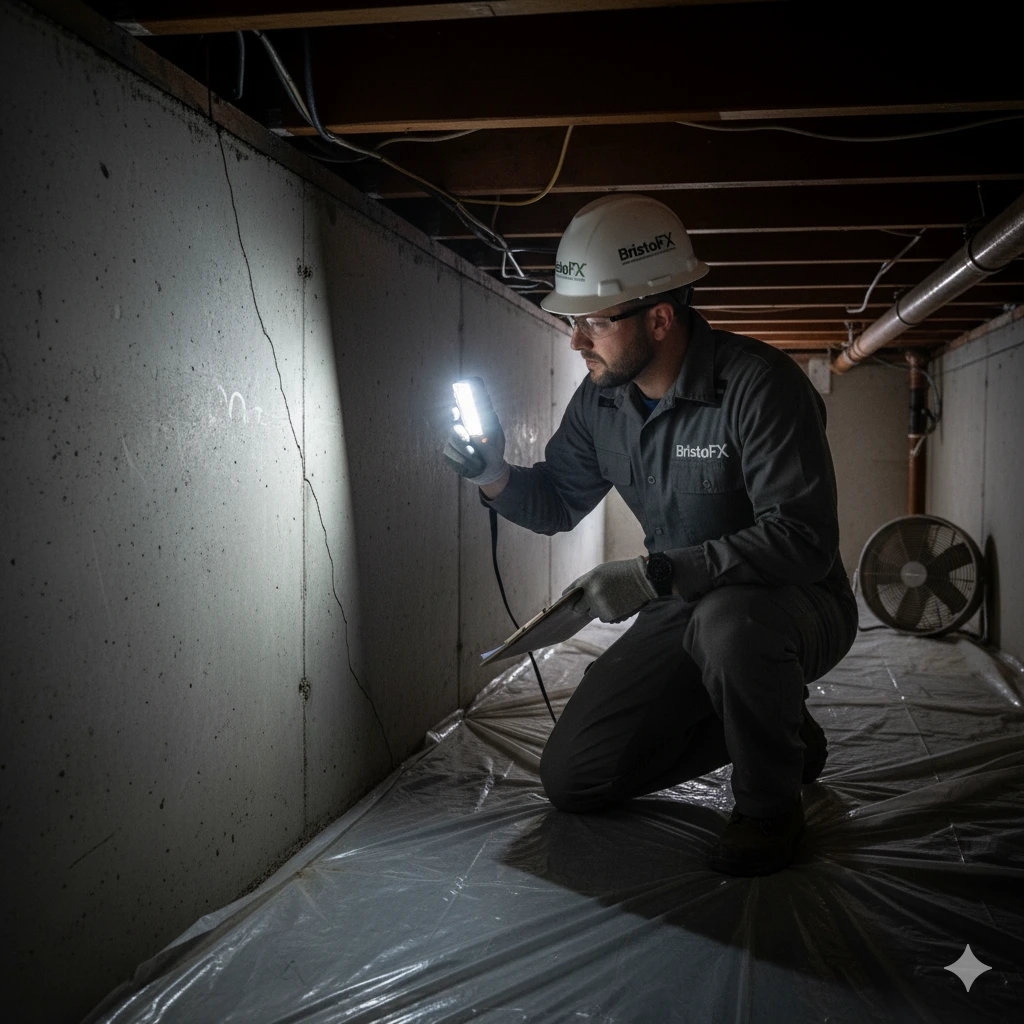
You’ve noticed that crack in your wall seems to be getting larger every week, and sometimes the front door sticks. Sometimes you can’t even open it at all. Last month, you noticed there was a bump in the floor that you seem to trip over every day now. What’s going on? Your neighbor says your house looks like it’s sinking on one side. Why is he even looking at my house anyway? “Mind your own business.”
After some online research, you’ve determined that you may have foundation problems, but why is your house sinking and not your neighbor’s? Aren’t they built on the same ground?
These and many more questions are often asked when potential customers call us for information or to come out and inspect their homes. The answer is simple: it’s the soil. It’s always the soil. Let’s look at why your home may be sinking or settling into the ground.
All Homes Settle — But to What Extent?
First off, all houses will sink to a point. If you review the documents that come with a brand-new constructed home, you’ll find a statement that allows for settlement or sinking of up to one inch over time. That’s completely normal, but the builder writes this statement to cover themselves in cases of cracking and foundation settlement.
Older houses can also sink and settle. Why does this happen? Soil conditions change over time, and the acceptable level of sinking or settlement is approximately one inch. Any more than that, and you may have poor soil conditions or other factors that can cause serious foundation damage.
If you suspect your foundation is moving, check out our post on foundation settlement explained to learn what’s normal and what’s not.
Water Is Your Best Friend — and Your Worst Enemy
Too much water in the soil won’t support your foundation. It’s like standing in the mud. Too little, and the soil shrinks away from the foundation.
Why is that? The simple answer: moisture content affects soil volume. Reduce the volume, and you get shrinkage.
If you had 12–15% moisture content in the soil beneath your foundation, and now the moisture content is 8–9%, the reduction in volume causes your foundation to sink.
If you live in Southern California, drought conditions over the past decade have greatly reduced soil moisture. Combined with watering restrictions, some homeowners see moisture levels as low as 4–5%. That’s a substantial reduction in soil volume and a major cause of settlement.
In fact, the California Geological Survey notes that clay-heavy soils throughout the Los Angeles Basin and Inland Empire are especially vulnerable to shrink-swell cycles.
Over the past few years, many homeowners have replaced lawns with artificial turf and removed plants to conserve water. While this helps with drought conditions, it can also accelerate moisture loss under your foundation — increasing the risk of settlement.
Sewer and Irrigation Leaks
Another major cause of foundation settlement in California homes comes from leaking sewer or irrigation lines.
If your sewer system has needed frequent roto-rooter service, the likelihood of water leaking into the ground underneath your home is high.
Many homeowners who have had their sewer lines replaced experience localized foundation settlement that often requires professional inspection and stabilization.
To learn about the methods we use for stabilization, read our guide on push piers and helical piers.
Soil Conditions and Foundation Problems
Water (or lack thereof) isn’t your only problem — the soil type itself can cause serious foundation issues.
Clay-type soils, or soils with high clay content, can cause your foundation to heave (lift) or settle (sink) depending on moisture levels.
Adding water to clay soil is like adding water to rice — it can expand up to four or five times its size. When it dries, it can crumble into dust.
If your home is built on soil with a high clay content, these changes can and will cause damage to your foundation.
Downhill Creep — California’s Silent Foundation Threat
Sounds like a movie, but if you live in the hills, this is real. “Downhill creep,” also known as soil creep, is the slow, downward movement of soil on sloped lots, often referred to as “fill lots.”
If you live in hillside areas of Los Angeles, Pasadena, or Malibu, chances are your home sits on a fill slope.
Downhill creep results from small, repeated movements of soil due to gravity and moisture changes, eventually pulling the foundation downhill.
As slope steepness increases, friction decreases, allowing the soil — and everything on it — to slide ever so slightly over time.
Proper drainage control and slope stabilization, such as retaining walls and subsurface drains, can help. Learn more about hillside stabilization in our detailed article on hillside repair and soil stabilization.
The 800-Pound Gorilla in the Room — Earthquakes
Seismic events happen every single day in California. Most don’t even merit a second thought. But if they’re strong enough, they can absolutely cause foundation damage — even smaller quakes, depending on soil conditions.
The California Department of Conservation reports that many older homes (built before the 1990s) lack proper seismic reinforcement, leaving them vulnerable to foundation cracking and displacement.
If you’ve noticed cracks in walls or uneven floors after shaking, your foundation might already be compromised. You can read our detailed guide on when to call a foundation expert after an earthquake for next steps.
Who Are You Going to Call?
At BristolFX, we understand that foundation problems aren’t something most homeowners think about until it’s too late. When you start noticing cracks, sticking doors, or sloping floors, your first step should be finding a licensed California foundation repair specialist — not just any contractor.
Before hiring, always verify your contractor’s license with the California Contractors State License Board (CSLB).
One thing you’ll notice when searching for “foundation repair contractors” on Google: there are a lot of companies claiming to offer the best price and service. But not all are created equal.
Here’s what sets BristolFX apart:
-
Over 40% of our clients never spend a dime with us — because after inspection, we determine they don’t need foundation repairs.
-
We always provide honest assessments, not sales pitches.
-
We’ll show you how small maintenance adjustments (like improving drainage or controlling moisture) can prevent damage.
Our motto:
“We know you choose us by intelligent decision and design, for which then we are gratefully bound to provide you with a clear vision, backed by definite plans, to give you the absolute highest quality service we can offer.”
Take the Next Step
If you’re experiencing any of the symptoms you’ve read here and would like one of our trained inspectors to evaluate your home, call BristolFX today at 855-650-2211 or visit BristolFX.com.
We think you’ll be impressed by our professionalism, transparency, and commitment to your home’s long-term stability.
And if you’d like to learn more before scheduling your inspection, we recommend reading our popular blog post: The Hidden Threat Beneath Your Feet: Expansive Clay Soil in Southern California.