
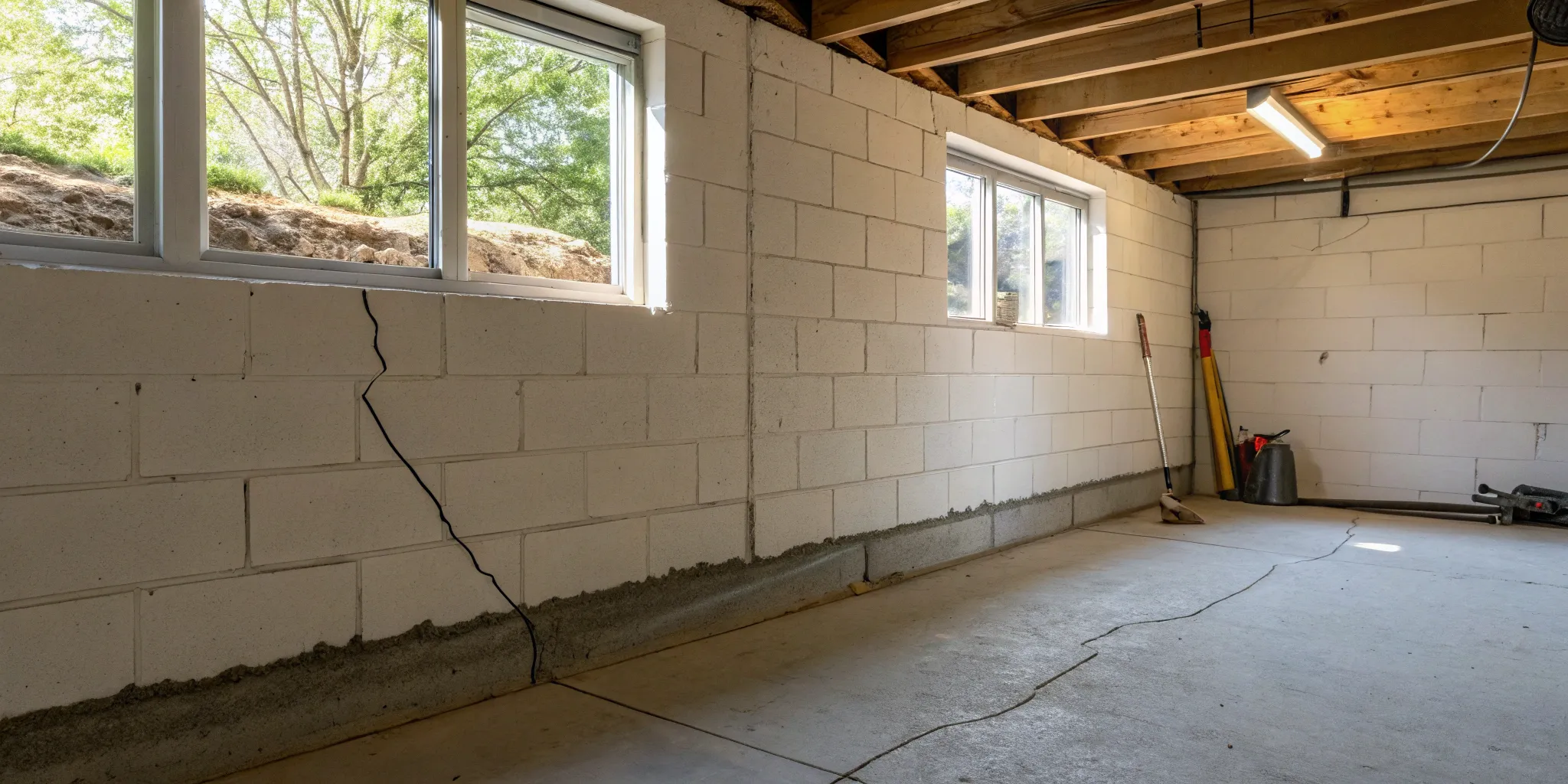
Ignoring a crack in your basement wall is one of the most expensive mistakes a homeowner can make. While the initial basement wall crack repair cost might seem daunting, it’s a critical investment in your property’s safety and value. A small issue left unaddressed can lead to bowed walls, water damage, and a much larger bill down the road. This article will help you understand the financial side of foundation repair. We’ll explore the costs associated with different solutions, from sealing minor leaks to installing piers, helping you protect your biggest asset without breaking the bank.
Key Takeaways
- Read the Cracks to Assess the Risk: Not all cracks are emergencies. Pay close attention to the direction and width—horizontal or wide stair-step cracks are red flags that indicate serious soil pressure and require a professional opinion.
- The Right Fix Addresses the Root Cause: Simply sealing a structural crack is a temporary patch, not a permanent solution. The cost of repair is determined by the underlying issue, whether it’s water pressure needing waterproofing or foundation movement requiring piers.
- Hire a Specialist and Maintain Your Home: Foundation work is a job for certified professionals who offer strong, transferable warranties. After the repair, protect your investment with simple maintenance like managing yard drainage and keeping an eye out for new issues.
What Do Those Basement Wall Cracks Mean?
Finding a crack in your basement wall can feel unsettling, but don’t panic. Not every crack signals a catastrophe. The key is to understand what you’re looking at, as different types of cracks tell different stories about your home’s foundation. Some are harmless signs of your house settling, while others are early warnings of more significant issues that need attention. Learning to spot the difference is the first step toward a sound solution and peace of mind. By knowing what to look for, you can determine whether you have a simple DIY fix on your hands or if it’s time to call in a professional for a thorough assessment.
How to Tell if a Crack is Serious
It’s a common misconception that any crack spells doom for your foundation. In reality, thin, vertical hairline cracks are often just a normal part of your home’s concrete curing and settling over time. The trouble starts when cracks show more aggressive characteristics. Pay close attention to the crack’s direction, size, and whether it’s changing. Horizontal or jagged, stair-step cracks in a concrete block wall are much more concerning, as they often indicate that outside soil pressure is causing your wall to bow inward. Any crack wider than a quarter of an inch, or one that is actively growing, is a clear sign you should seek a professional foundation repair assessment to understand the underlying cause.
Busting Common Myths About Wall Cracks
One of the biggest myths in foundation repair is that you can permanently fix a structural crack with a simple tube of epoxy or polyurethane sealant. While these modern materials are excellent for sealing a crack and stopping water leaks, they are essentially a bandage. They do a great job of covering up the symptom but do nothing to address the root problem causing the crack in the first place. If your foundation is settling or the soil is pushing against your walls, that pressure will continue. A true, long-term solution involves a crack injection as part of a larger strategy that stabilizes the foundation and prevents future movement.
Red Flags for Structural Problems
Beyond the crack itself, your house might be giving you other clues that something is wrong. Keep an eye out for a collection of warning signs that point to a structural issue. Are your doors and windows suddenly sticking or becoming difficult to open and close? Have you noticed sloping floors or gaps appearing between your walls and ceiling? Outside, look for cracks in your exterior brickwork or a chimney that seems to be leaning. Water pooling near your foundation after it rains is another major red flag. These symptoms, especially when they appear together, suggest that your foundation is shifting and may require stabilization with solutions like push and helical piers.
How Cracks Affect Your Property’s Value
Ignoring a foundation problem is one of the most costly mistakes a homeowner can make. What starts as a small crack can evolve into a severe structural issue, leading to much more extensive and expensive repairs down the road. Procrastination can result in bowed walls, widespread drywall cracks, and severe water damage that requires comprehensive waterproofing. These issues don’t just hurt your wallet; they can significantly decrease your property’s value and make it difficult to sell. Addressing foundation problems promptly is an investment in your home’s structural integrity and financial worth. A healthy foundation is critical to protecting your biggest asset.
What Determines the Cost of Repairs?
When you find a crack in your basement wall, one of the first questions you’ll ask is, “How much will this cost to fix?” The truth is, there’s no single price tag for foundation repair. The final cost depends on a handful of key factors that a professional will assess during an inspection. Think of it less like buying a product off the shelf and more like getting a custom solution tailored to your home’s specific needs.
The price can range from a few hundred dollars for a simple injection to tens of thousands for major structural work. Understanding what drives these costs will help you make sense of any quotes you receive and plan your budget accordingly. From the size and location of the crack to the type of soil your house sits on, each element plays a part in the diagnosis and the resulting repair plan. We’ll walk through the main factors that determine the scope—and cost—of your foundation repair project.
The Crack’s Size and Shape
Not all cracks are created equal, and their characteristics are the first clue to the severity of the problem. A thin, vertical hairline crack might just be a sign of concrete curing and could be a relatively simple fix. On the other hand, a horizontal crack that’s wider than a quarter-inch suggests your wall is under serious pressure from outside forces.
Generally, minor cracks can be sealed with an epoxy or polyurethane injection to prevent water intrusion. But if you’re seeing stair-step cracks in a block wall or horizontal cracks that are accompanied by bowing, you’re looking at a more complex structural issue. These more serious problems require robust solutions, which naturally come with a higher price tag.
Where the Crack Is Located
The location of a crack tells a story about what’s happening to your foundation. For example, cracks that appear in the middle of a wall often point to pressure from the soil outside. Horizontal cracks are especially concerning because they indicate that the wall is failing under this external load. This kind of issue often requires significant reinforcement to prevent the wall from collapsing.
Cracks that radiate from the corners of windows or doors can signal foundation settlement, where parts of your home are sinking at different rates. A professional will analyze the crack’s position to diagnose the root cause, whether it’s hydrostatic pressure pushing water against your foundation or soil movement beneath it. This diagnosis is key to recommending the right, lasting repair.
Is It a Structural Problem?
This is the most important question to answer. A surface-level, non-structural crack is an annoyance, but a structural one threatens the integrity of your entire home. The key difference is movement. Is the wall just cracked, or is it also bowing, leaning, or shifting inward? A professional will measure the displacement to determine the severity.
If a wall has moved less than two inches, the repair might be more straightforward. But if the movement is more significant, you’ll likely need a more intensive solution to stabilize the foundation and wall permanently. This could involve installing push and helical piers to support the foundation or carbon fiber straps to reinforce a bowing wall.
How Location Affects Price
Beyond where the crack is on the wall, its physical accessibility plays a big role in the project’s cost. If the damaged area is in an open, unfinished part of your basement, technicians can get to work right away. However, if the crack is hidden behind a finished wall, built-in shelving, or exterior landscaping, there’s more work to do before the repair can even begin.
Any demolition, excavation, or careful removal of obstacles adds to the labor hours and overall cost. A contractor will need to factor in the time it takes to access the site and then restore it after the repair is complete. When getting an estimate, make sure it’s clear what prep and finishing work is included in the price.
Your Home’s Environment and Soil
The ground your house is built on has a huge impact on your foundation’s health. Some regions have stable, sandy soil that drains well. Others, however, are known for expansive clay soils. Clay acts like a sponge, swelling dramatically when it’s wet and shrinking as it dries. This constant cycle of expansion and contraction puts immense pressure on your foundation walls, leading to cracks and bowing.
A repair plan must account for these environmental factors to be effective long-term. For homes with problematic soil, the solution might involve not just fixing the crack but also implementing better waterproofing and exterior drainage systems to manage soil moisture.
Will You Need a Permit?
For most substantial foundation repairs, the answer is yes. Your local municipality requires permits for structural work to ensure it meets safety codes and building standards. While it might seem like just another fee, a permit is actually a form of protection for you as a homeowner. It ensures the work is done correctly and is verified by a third-party inspector.
A reputable contractor will handle the entire permitting process for you, from submitting the plans to scheduling inspections. The cost of the permit, which can range from $75 to over $150, is typically included in your overall project quote. It’s a small but necessary expense for the peace of mind that comes with a safe, compliant repair.
Simple Fixes and What They Cost
When you spot a crack in your basement wall, it’s easy to jump to the worst-case scenario. But the good news is that not every crack signals a five-figure repair bill. Many common foundation issues can be addressed with straightforward, less invasive methods. These fixes are designed to seal out moisture, prevent cracks from worsening, and, in some cases, add structural support without a full-scale excavation. Understanding these options and their typical costs can help you figure out what to expect when you call in a professional for an assessment. Let’s walk through some of the most common solutions for non-structural or minor structural problems.
Epoxy Injection
Think of epoxy injection as a high-tech glue for your foundation. For thin, non-leaking cracks, a professional can inject a two-part epoxy resin directly into the gap. This material is incredibly strong—often stronger than the concrete itself—and it effectively welds the wall back together. It’s a great way to restore the structural integrity of the concrete and stop a crack in its tracks. This type of crack injection is a precise job best left to the pros and typically costs between $250 and $800 for a minor repair, making it an affordable first line of defense.
Hydraulic Cement
If you have a crack that’s actively leaking, hydraulic cement might be the answer. This is a special type of cement that sets and hardens very quickly, even in the presence of water. When a technician applies it to a crack, it expands as it cures, pushing into every nook and cranny to create a powerful, watertight seal. It’s a fast and effective way to stop water from seeping into your basement. Because it’s a relatively simple material to apply, it’s often one of the most cost-effective solutions for sealing minor, leaking cracks in a concrete wall.
Sealants and Waterproofing
When moisture is the main problem, a simple crack patch might not be enough. A more comprehensive waterproofing solution involves applying special sealants to the interior or exterior of your foundation walls. This creates a continuous barrier that blocks water from getting through. The cost for foundation sealing can range from around $2,300 to $7,300. The final price tag depends heavily on the size of your basement and whether the work can be done from the inside or requires exterior excavation, which is a much bigger job.
Carbon Fiber Straps
If your foundation walls are starting to bow inward, you’ve moved beyond a simple crack-fill. Carbon fiber straps are a modern, minimally invasive solution for reinforcing bowing walls. These straps are incredibly strong, lightweight, and are bonded to the wall with structural epoxy. They distribute the external pressure from the soil, preventing the wall from bowing further. While more involved than a simple injection, it’s much less disruptive than rebuilding a wall. Expect each strap to cost around $900 to $1,000, with the total for an average project landing near $13,000.
Tackling Serious Structural Problems
When simple crack injections aren’t enough, it’s time to look at more robust solutions that address the root cause of foundation movement. These repairs are more involved and represent a significant investment in your property’s long-term stability. They are designed to stop ongoing damage, correct issues like settling or bowing, and secure your home for years to come. While the costs are higher, these methods provide permanent or long-term solutions to serious structural threats, protecting your home’s integrity and value. A professional assessment is key to determining which of these heavy-duty repairs is right for your specific situation.
Wall Anchors
If you’re dealing with bowing or tilting basement walls, wall anchors are a common and effective fix. These anchors consist of a plate installed on the inside of the basement wall, connected by a long steel rod to an anchor placed in stable soil in your yard. By tightening the rod, the system exerts pressure that can stabilize and even straighten the wall over time. The cost for wall anchors is typically between $400 and $600 each. The total price will depend on how many anchors your wall needs for proper support, which is determined by the length of the wall and the severity of the bowing.
Helical Piers
For homes with significant settling issues, the solution often lies deep underground. Professionals use helical piers—essentially giant steel screws—to underpin and support the foundation. These piers are drilled deep into the ground until they reach solid, load-bearing soil or bedrock, effectively transferring the weight of your house onto a stable base. This process can halt settlement and, in many cases, lift the foundation back toward its original position. Expect to pay between $1,000 and $3,000 per pier, with the final cost depending on the number of piers required to secure your home.
Foundation Underpinning
Underpinning is a comprehensive foundation repair process used to strengthen and stabilize a failing foundation. It’s a major structural project that involves extending the foundation’s depth or breadth so it rests on more supportive soil or distributes its load over a larger area. This can involve installing piers, pouring additional concrete footings, or using other advanced techniques. Given the scale of the work, the costs for underpinning can range widely, from $6,000 to $36,500. The final price tag is influenced by the severity of the foundation issues and the specific method used to correct them.
Bowed Wall Repair
Beyond wall anchors, another powerful method for correcting bowed walls is using reinforcement strips. These high-strength supports, often made of carbon fiber or steel, are applied directly to the interior of the bowing wall. They bond with the concrete and resist the external pressure from soil and water, preventing any further inward movement. The cost for this type of reinforcement typically falls between $4,000 and $12,000. It’s an incredibly strong, low-profile solution. However, if a wall has already moved inward by more than three inches, the repair may become more complex and require more extensive, and therefore more costly, intervention.
Choosing a Pro and Understanding Warranties
Finding a crack in your basement wall is stressful enough; figuring out who to trust with the repair shouldn’t add to your anxiety. The right professional not only fixes the immediate problem but also gives you confidence in your home’s long-term stability. As you vet potential contractors, it’s just as important to understand the financial side of things—from the warranty that protects your investment to how you’ll cover the cost. This is where you take control of the process, ensuring you get quality work that fits your budget and gives you lasting peace of mind. A little research here goes a long way in protecting your biggest asset.
Who to Call for Help
When you’re dealing with foundation issues, you need a specialist, not a general handyman. It’s best to call companies that focus specifically on foundation repair and waterproofing. They have the right tools, training, and experience to diagnose the root cause of the problem and apply the correct solution. To start your search, look for established local companies with a strong track record. Some reputable names in the industry include:
- Bristol FX: We specialize in a full range of foundation repair and waterproofing services, using advanced methods and offering extensive warranties.
- Basement Systems: A national network of dealers offering basement waterproofing and foundation solutions.
- Foundation Supportworks: Another national network specializing in structural repair products and services.
- Ram Jack: Known for its foundation repair services across the country.
- Olshan Foundation Solutions: A long-standing company offering foundation repair with a focus on customer service.
What a Good Warranty Looks Like
A warranty is more than just a piece of paper; it’s a company’s promise to stand behind its work. When it comes to significant repairs like foundation work, a strong warranty is non-negotiable. A good company will offer a warranty that protects you if the same issues reappear. For major structural solutions like pier installations, lifetime warranties are the industry standard and a sign of a contractor’s confidence in their methods. A great bonus is a transferable warranty, which can be passed on to the next owner if you sell your home—a valuable feature that adds to your property’s appeal.
Will Insurance Cover It?
This is one of the first questions homeowners ask, and unfortunately, the answer is usually no. Most standard homeowners’ insurance policies do not cover foundation repair because they view it as a maintenance issue that develops over time from wear and tear. However, there are exceptions. If the foundation damage was the direct result of a sudden and accidental event that your policy covers—like a burst pipe flooding the basement or a fire—then you might have a case for coverage. It’s always worth a call to your insurance agent to clarify your policy details, but it’s wise to budget for the repair as an out-of-pocket expense.
How to Pay for Repairs
Foundation repairs can be a significant expense, but there are ways to manage the cost. Your first step should always be to get multiple quotes. Contact at least three reputable foundation repair companies to get detailed estimates for the project. This allows you to compare not just the price but also the proposed repair method and the scope of work included. Don’t just jump at the lowest bid; consider the company’s reputation and warranty. When you talk to contractors, be sure to ask about payment plans or financing options. Many companies offer flexible payment solutions to help make the repair more affordable.
Get Ready for Your Foundation Repair
Once you’ve identified a potential issue with your foundation, taking the next steps can feel a bit overwhelming. But with a clear plan, you can approach the repair process with confidence. It’s all about being prepared, knowing what to expect, and making informed decisions for your home. Think of it as a project with a clear beginning, middle, and end. The goal is to restore your home’s stability and your peace of mind, and a little preparation goes a long way.
From getting an expert opinion to setting a realistic budget, each step is designed to protect your investment and ensure the job is done right. We’ll walk through how to get organized, what costs to anticipate, and why some jobs are best left to the professionals. This isn’t just about fixing a crack; it’s about securing the structure that supports everything else. By planning ahead, you can avoid surprises and ensure a smooth process from start to finish.
Get a Professional Assessment
The very first step is to have a professional evaluate the situation. If you’ve noticed cracks, bowing walls, or any signs of shifting, don’t wait. What might seem like a small issue can escalate quickly, leading to more extensive and costly damage down the road. A structural engineer or a reputable foundation repair contractor can accurately diagnose the root cause of the problem. They’ll determine whether the issue is cosmetic or structural and recommend the most effective solution. This expert assessment is the foundation of your entire repair plan, so it’s a step you can’t afford to skip.
Create Your Repair Budget
Understanding the potential costs is crucial for planning. Foundation repairs can range from a few hundred dollars for minor crack injections to over $10,000 for major structural work involving piers. The national average hovers around $4,700, but your final cost will depend entirely on the extent of the damage and the repair method needed. Getting a detailed quote from your contractor will give you a clear financial picture. While it’s a significant investment, remember that you’re protecting your home’s long-term value and structural integrity. Think of it less as a cost and more as a critical investment in your property’s safety.
Watch Out for Hidden Costs
When creating your budget, it’s wise to build in a contingency fund. Unexpected issues can pop up once the work begins. For example, the repair team might discover extensive tree roots that need to be managed or find that a previous, poorly executed repair needs to be undone before the real work can start. Setting aside an extra 10% to 20% of the quoted cost can help you handle these surprises without derailing your project or your finances. This buffer gives you the flexibility to address unforeseen challenges and ensures the job is completed thoroughly and correctly.
Plan Your Project Timeline
Foundation problems don’t resolve themselves; they only get worse over time. Acting quickly is essential to prevent further damage and keep repair costs from climbing. Once you have a professional assessment and a quote, work with your contractor to establish a project timeline. They can tell you how long the repair will take and what to expect during the process. Whether you need simple crack injections or more complex crawl-space repairs, having a clear schedule helps you plan accordingly and minimizes disruption to your daily life. The sooner you address the issue, the sooner your home will be secure.
Should You DIY or Hire a Pro?
While the DIY spirit is admirable for many home projects, foundation repair is rarely one of them. The work is complex, requires specialized equipment, and demands a deep understanding of soil mechanics and structural engineering. An improper repair can make the problem worse, leading to even more expensive fixes later on. For serious issues like a sinking foundation that requires a push and helical pier system, hiring a professional is non-negotiable. They have the expertise, tools, and warranties to ensure the job is done safely and effectively, giving you lasting results and peace of mind.
Protect Your Foundation for the Long Haul
Once your foundation is repaired, the goal is to keep it that way. A little proactive maintenance goes a long way in preventing future headaches and expenses. Think of it as simple home care that protects your biggest investment. By staying on top of a few key areas, you can ensure your foundation remains stable and secure for years to come.
Inspect Your Foundation Regularly
Set aside time a couple of times a year—maybe once in the spring and again in the fall—to walk around your property and look at your foundation. Check for new cracks in concrete or brick, both inside your basement and on the exterior. Look for signs of moisture, bulging walls, or doors and windows that suddenly stick. If you spot any of these signs, it’s best to have them checked out quickly. Addressing issues early can prevent them from turning into more serious and expensive foundation repair projects down the road. A quick look now can save you a lot of stress later.
Keep Moisture Under Control
Water is the number one enemy of a healthy foundation. When the soil around your home gets saturated, it expands and puts immense pressure on your basement walls. That’s why keeping moisture in check is so important. Installing moisture barriers and having a solid waterproofing system are crucial for preventing water from seeping in, which also helps stop mold growth in its tracks. Make sure your basement or crawl space has good ventilation to keep humidity levels down. Consistently managing water is one of the most effective things you can do to protect your foundation.
Improve Your Yard’s Drainage
Your yard’s drainage system is your foundation’s first line of defense against water damage. The goal is to guide rainwater as far away from your house as possible. Start with the simple things: keep your gutters clean and make sure your downspouts extend at least five feet from your foundation. You should also check the grading of the soil around your home. It should gently slope away from the house, not toward it. Improving drainage can significantly reduce the risk of water pooling near your foundation, which is a primary cause of cracks, leaks, and bowing walls.
Catch Problems Early
It’s easy to put off a small repair, but when it comes to your foundation, waiting can be a costly mistake. A tiny hairline crack might seem harmless, but it can be a sign of underlying pressure or water issues. Fixing problems early can save you thousands. A minor crack injection might cost between $500 and $1,000, but letting the problem escalate could lead to major structural work costing $10,000 or more. Don’t ignore the warning signs. An early, professional assessment can give you peace of mind and protect your wallet from much larger expenses.
Save Money with Smart Maintenance
Being a savvy homeowner means making smart financial decisions, and that includes foundation maintenance. If you do need a repair, always get estimates from several reputable foundation repair companies to compare your options. A trustworthy contractor will provide a detailed quote that explains the scope of work, the materials they’ll use, and the warranty they offer. Don’t just look at the price tag; consider the long-term value of the solution. Investing in preventative measures like professional waterproofing is another way to save money by avoiding costly emergency repairs in the future.
Related Articles
- 3 Ways To Repair a Crack in a Concrete Foundation
- Foundation Repair Services
- Foundation Cracks: What Is Acceptable and When To Worry
Frequently Asked Questions
I have a tiny hairline crack. Can I just watch it for a while, or do I need to call someone right away? A tiny, vertical hairline crack isn’t usually a cause for immediate alarm, as it can be a normal part of your home’s concrete curing. The best approach is to become an active observer. Take a picture of the crack with a ruler next to it for scale. Check on it every few months to see if it’s growing in length or width. If you notice any changes, or if the crack is horizontal or stair-stepping, that’s your cue to call a professional for an assessment. It’s always better to have an expert look and confirm it’s nothing serious than to wait and let a real problem get worse.
Will the repair process be really disruptive to my home and yard? This is a great question, and the answer really depends on the type of repair you need. A simple interior crack injection is a very clean and contained process that causes minimal disruption. However, more significant structural work, like installing piers or exterior waterproofing, will naturally be more involved. This can require some excavation outside or moving items away from walls inside. A good contractor will always walk you through the entire process beforehand, explaining exactly what to expect, how they’ll protect your property, and what the cleanup will look like.
What’s the real difference between sealing a crack and structurally repairing it? Think of it like this: sealing a crack is like putting a high-tech, waterproof bandage on a cut. It stops the bleeding—or in this case, the leaking—and protects the area. A structural repair, on the other hand, is like setting a broken bone. It addresses the underlying cause of the injury to ensure the bone heals correctly and is strong again. Sealing a crack with epoxy or polyurethane is great for stopping water, but if the wall is bowing or the foundation is settling, you need a structural solution like piers or carbon fiber straps to stabilize the movement itself.
How long does a typical foundation repair take? The timeline for a repair varies as much as the cost. A straightforward crack injection can often be completed in just a few hours. Installing a set of carbon fiber straps on a bowing wall might take a day or two. More extensive projects, like underpinning a section of your home with helical piers, could take several days to a week. Your contractor will provide a clear timeline with your project quote so you know exactly what to plan for.
If I get my foundation fixed, does that mean I’m safe from future problems? A professional repair with a strong warranty gives you incredible long-term protection, especially for the specific issue that was fixed. For example, a piering system is designed to be a permanent solution for a settling foundation. However, your home is still subject to the forces of nature. This is why ongoing maintenance, like keeping your gutters clean and ensuring your yard drains properly, is so important. A quality repair combined with smart homeownership is the best way to ensure your foundation stays stable for the long haul.