
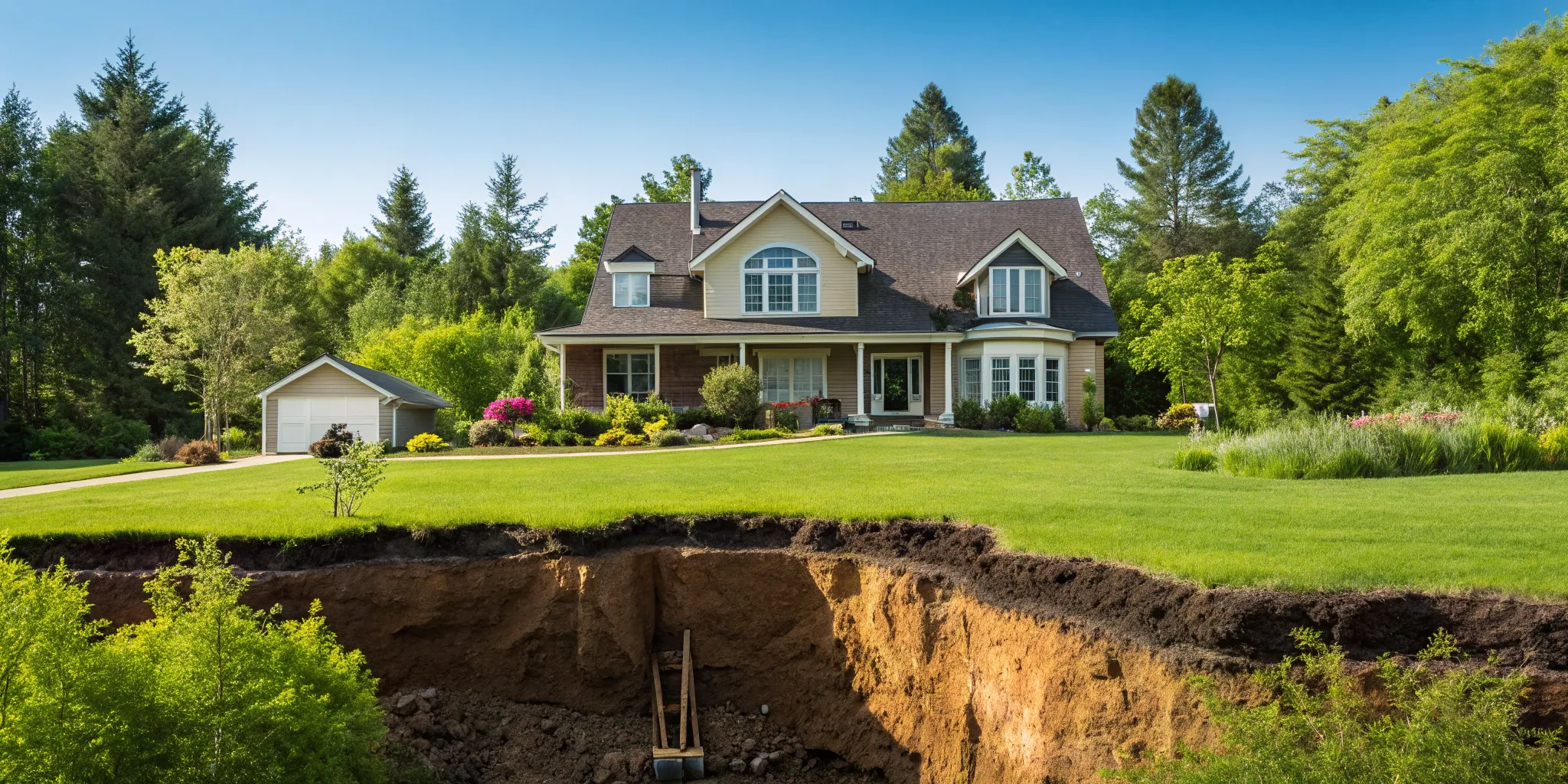
A hairline crack appears in the drywall. A bedroom door suddenly starts to stick. These small annoyances are often the first whispers of a much larger problem brewing below your feet. For any property owner, the health of their home is directly tied to the stability of its foundation. This critical component is responsible for supporting the entire structure, and when it’s compromised, the symptoms show up throughout the house. Before you patch that crack or shave down that door, it’s essential to understand the system holding everything up. This article demystifies building foundations, explaining how they work, what can go wrong, and how you can ensure your home remains safe and secure for years.
Key Takeaways
- Think beyond the concrete slab: Your foundation is an active system with several crucial parts—like footings, rebar, and drainage—that work together to support your home’s weight and keep it dry. When one part struggles, the whole system is affected.
- Your property dictates the design: The best foundation for any building isn’t a matter of choice but a response to specific conditions. Factors like soil type, local climate, and the building’s weight are non-negotiable and determine the right approach from the start.
- Water is your foundation’s biggest enemy: The most effective thing you can do to protect your home is to control moisture. Simple actions like cleaning your gutters, extending downspouts, and ensuring the ground slopes away from the house can prevent major structural issues.
What Is a Building Foundation?
Think of a building’s foundation as the roots of a tree. While you only see the structure above ground, an entire support system is working tirelessly beneath the surface to keep everything stable, strong, and upright. The foundation is the lowest part of any building, connecting the structure directly to the earth. Its primary job is to take the entire weight of your home—from the roof to the floors and everything in between—and transfer that load safely and evenly into the ground.
Without a solid foundation, a building would be vulnerable to shifting soil, moisture, and the simple force of gravity. It provides a level, stable base that the rest of the structure is built upon. Whether it’s a sprawling commercial complex or a cozy single-family home, the integrity of the entire building depends on the strength and stability of what lies beneath. It’s the unsung hero of your property, providing the security and durability you rely on every day. A well-designed and properly constructed foundation is the first and most critical step in ensuring a building will stand the test of time.
What Does a Foundation Do?
A foundation does much more than just hold up your house. It serves several critical functions that are essential for your property’s health and safety. First and foremost, it anchors the entire structure, providing resistance against natural forces like wind, earthquakes, and the lateral pressure from surrounding soil. It also acts as a barrier, preventing groundwater and soil moisture from seeping into your home’s lower levels. This is a key part of effective waterproofing and helps prevent issues like mold, mildew, and rot in basements and crawl spaces. By isolating the building from ground moisture, the foundation protects the structural materials above it from decay and damage.
How Foundations Support Your Structure
The secret to a foundation’s strength lies in its ability to distribute weight. Your home exerts a massive downward force, and the foundation’s job is to spread that force over a large enough area of soil to prevent the building from sinking or settling unevenly. When this system works correctly, your home remains stable, your floors stay level, and your walls remain free of stress cracks. When it doesn’t, you start to see tell-tale signs of trouble like sticking doors, cracked drywall, and sloping floors. A professional foundation repair assessment can determine if the support system is compromised. The right foundation design accounts for the specific soil conditions, the weight of the building, and the local climate to ensure lasting stability.
Common Types of Foundations
Not all foundations are created equal. The right one for your property depends on your soil type, climate, and the size and weight of your building. Think of it like choosing the right shoes for an activity—you wouldn’t wear flip-flops to go hiking. Similarly, a small home on solid ground has very different needs than a large commercial building on soft soil. Understanding the basic categories helps you appreciate why your home was built a certain way and what kind of care it might need down the road.
Engineers generally group foundations into three main types: shallow, deep, and special systems. Each is designed to solve a specific set of challenges to ensure your structure remains safe and stable for years to come.
Shallow Foundations
Shallow foundations are the most common type for single-family homes and smaller buildings. As the name suggests, they are built close to the surface, typically no more than five feet deep. Their popularity comes from being cost-effective and relatively simple to construct, requiring less excavation and fewer materials. Common examples include slab-on-grade foundations and crawl spaces.
While they work perfectly on stable, reliable soil, they aren’t suitable for every situation. If the ground is weak or prone to shifting, a shallow foundation can settle unevenly, leading to structural problems like wall cracks and sticking doors. This is often when homeowners find themselves needing professional foundation repair to correct the issue.
Deep Foundations
When you’re building a taller structure or dealing with weak or unstable soil, you need to dig a little deeper. Deep foundations extend more than five feet into the ground to transfer the building’s weight to stronger, more stable soil or rock layers far below the surface. This approach provides the robust support needed for large buildings or homes in areas with high groundwater levels or seismic activity.
The most common types of deep foundations use piers or piles—long columns that are driven deep into the earth. These systems, like the push and helical piers we install, act like stilts, anchoring the structure securely. They are an excellent solution for preventing settlement and ensuring long-term stability on challenging sites.
Special Foundation Systems
Sometimes, a property presents unique challenges that require a more specialized approach. Pile foundations, a type of deep foundation, use long columns of steel, concrete, or wood to bypass weak surface soil and anchor a building to solid ground far below. This method is incredibly effective for construction in areas with poor soil conditions.
Another special system is a raft or mat foundation. This design involves a large, thick concrete slab that covers the entire footprint of the building, distributing the structure’s weight over a wide area. It essentially “floats” on the soil like a raft, making it ideal for ground that is soft or has low bearing capacity. These advanced systems are crucial for ensuring stability on difficult properties, including those that require hillside stabilization.
How to Choose the Right Foundation
Selecting the right foundation isn’t a one-size-fits-all decision. It’s a critical choice that depends on your specific property, the structure you plan to build, and your local environment. Getting this step right from the beginning prevents costly foundation repairs down the road and ensures your home or commercial building has the stable base it needs to last for generations. Making an informed choice involves looking at several key factors, from the ground beneath your feet to the budget in your bank account. Let’s walk through the essential considerations to help you and your construction team make the best decision for your project.
Start with a Soil Analysis
Before you can build up, you have to know what’s down below. The type of soil on your property is the single most important factor in choosing a foundation. Different soils behave in unique ways—some expand and contract with moisture, while others are loose and less stable. A thorough geotechnical investigation, or soil analysis, will reveal the soil’s properties and its capacity to bear weight. This analysis is the first step in any new construction project because it provides the data needed to design a foundation that can properly support your structure without shifting, settling, or failing over time.
Consider Your Climate
Your local climate plays a huge role in your foundation’s long-term health. In areas with cold winters, the freeze-thaw cycle can cause the ground to heave, putting immense pressure on your foundation. In regions with heavy rainfall, soil can become saturated, which can lead to hydrostatic pressure against your foundation walls. The right foundation design, combined with robust waterproofing, is essential to handle these environmental pressures. Your choice will depend on the local soil conditions, the weight of your building, and your budget, all viewed through the lens of your area’s weather patterns.
Calculate Your Building’s Load
The foundation’s job is to transfer the entire weight of your building—its load—safely to the ground. This includes the weight of the structure itself, its contents, and even environmental loads like snow. A small, single-story home has a very different load requirement than a multi-story commercial building. For taller structures or any building on weak or unstable soil, a standard shallow foundation may not be enough. In these cases, deep foundation systems using push and helical piers might be necessary to transfer the load to more stable soil or bedrock deeper underground.
Assess Your Site’s Unique Features
Every piece of land is unique. Take a close look at your property’s specific characteristics. Is it flat, or does it have a noticeable slope? Proper grading is crucial; you always want the ground to slope away from your foundation to prevent water from pooling around the perimeter. If your property is on a steep incline, you’ll need specialized solutions for hillside stabilization to ensure your foundation remains secure. Proximity to water, the presence of large trees with invasive roots, and existing drainage patterns are all features that will influence your foundation design.
Plan Your Budget
Finally, let’s talk about cost. Foundation work is a significant investment, and prices can vary widely. Most homeowners pay between $5,100 and $19,400 for a new foundation, but this range can change based on the foundation type, site complexity, materials, and labor costs in your area. While it can be tempting to cut corners, your foundation is not the place to do it. A well-built foundation is the bedrock of your property’s value and safety. Think of it as a long-term investment. Get detailed quotes from qualified professionals to understand the costs and ensure you’re building on a solid financial and structural base.
How a Foundation Is Built, Step-by-Step
Building a foundation isn’t just about digging a hole and pouring some concrete. It’s a precise, multi-stage process that sets the stage for the entire structure’s stability and longevity. When you see a house going up, it’s easy to focus on the framing and the roof, but the real hero is the unseen foundation working tirelessly below. This critical component transfers the entire weight of the building to the ground, resists soil and water pressure, and anchors the structure against wind and seismic forces. Each step, from site preparation to the final pour, builds upon the last. Cutting corners at any point can lead to serious problems down the road, like cracks, settling, and water intrusion—issues that are far more complex and expensive to fix later. That’s why understanding this process is so valuable for any property owner. It helps you appreciate what’s holding up your home and why professional expertise is so critical for getting it right the first time. The following steps outline the typical journey from a patch of dirt to a solid base, ensuring a safe and durable home for decades to come.
Prepare and Plan the Site
Before any digging begins, the first step is careful planning. This starts with selecting the right spot on the property, one with stable, well-compacted soil. It’s important to avoid areas with loose soil, sand, or poor drainage that could compromise the foundation later. A professional site evaluation also identifies any potential obstacles hidden underground, like utility lines, pipes, or large tree roots. This initial planning phase ensures the new construction starts on solid ground, literally, and prevents costly surprises once the work is underway.
Excavate and Prepare the Soil
With a solid plan in place, the construction crew marks out the foundation’s perimeter. Then, the excavation begins. They dig trenches for the footings to the exact depth and width specified in the architectural plans. The type of soil often dictates how deep they need to go; looser soils require deeper trenches for stability. Once the trenches are dug, the crew levels and compacts the soil at the bottom. This creates a firm, even base that will properly support the weight of the concrete and the entire structure above it.
Install Support Systems
Concrete is incredibly strong under compression but needs help with tension. That’s where steel reinforcement, commonly known as rebar, comes in. Before any concrete is poured, workers place a grid of steel bars inside the trenches and forms. This rebar acts as a skeleton, giving the concrete the tensile strength it needs to resist cracking and shifting from soil movement or the building’s load. The placement and design of this rebar grid are engineered to provide maximum strength, a core principle that also applies to professional foundation repair when reinforcing an existing structure.
Pour and Cure the Concrete
This is the moment the foundation takes shape. High-quality concrete is mixed and poured into the forms in even layers. As it’s poured, workers use tools to vibrate the concrete, removing any trapped air bubbles that could create weak spots. After the pour is complete and the surface is smoothed, the curing process begins. For at least a week, the concrete must be kept moist to allow it to harden properly. This slow curing is what gives concrete its impressive strength and ensures your foundation can handle decades of pressure without premature cracking or deterioration.
Add Waterproofing and Drainage
A strong foundation is great, but a dry one is even better. The final step is to protect the new concrete from moisture. This involves applying a waterproofing membrane to the exterior foundation walls to block water from seeping through. Additionally, a proper drainage system, like a French drain, is installed around the perimeter to carry water away from the foundation. This two-pronged approach is the best defense against leaks, mold, and water damage in your basement or crawl space, protecting both your foundation and your home.
The Key Parts of a Foundation
A solid foundation is more than just a slab of concrete. It’s a complex system where several key components work together to support your home and protect it from the elements. Understanding these parts helps you appreciate the engineering that keeps your house standing strong. It also equips you to spot potential problems before they become major headaches. From the base that touches the earth to the systems that keep it dry, each piece plays a vital role in your home’s long-term stability.
Footings and Walls: The Core Structure
Think of footings as the foundation’s feet. These wide, concrete bases are the very bottom of the structure, sitting directly on the soil. Their main job is to spread the immense weight of your entire house over a larger area, preventing it from sinking or settling unevenly. Resting on top of the footings are the foundation walls. These walls transfer the load from the house down to the footings and create the enclosure for your basement or crawl space. Together, footings and walls form the essential skeleton of your home’s support system, making their proper design and construction critical for any new construction.
Reinforcement: Adding Strength
Concrete is incredibly strong when you push down on it, but it’s not as tough when it’s pulled or bent. That’s where reinforcement comes in. Before the concrete is poured, a grid of steel bars, commonly known as rebar, is placed inside the forms. This steel gives the foundation tensile strength, helping it resist forces that cause cracking, like shifting soil or water pressure. A well-reinforced foundation can flex slightly without breaking, ensuring it can handle the stresses of changing seasons and ground conditions. When reinforcement fails, it can lead to significant structural issues that require professional foundation repair.
Drainage: Keeping Water Out
Water is one of the biggest threats to a foundation. When soil becomes saturated, it exerts immense pressure—called hydrostatic pressure—against foundation walls, which can lead to cracks, leaks, and even bowing. An effective drainage system is your foundation’s best friend. This often includes exterior French drains or weeping tile systems that collect groundwater and channel it safely away from your home. Even simple things like clean gutters and downspouts that direct water several feet from the house play a huge role. Proper drainage is a key component of a comprehensive waterproofing strategy.
Moisture Barriers: Your First Line of Defense
While drainage systems manage the flow of water in the soil, moisture barriers are designed to stop any water that actually reaches the foundation walls. This is a waterproof membrane or a special coating applied directly to the exterior of the concrete before the area is backfilled with soil. This barrier acts as a raincoat for your foundation, preventing moisture from seeping through the naturally porous concrete and into your basement or crawl space. A reliable moisture barrier is essential for preventing dampness, mold growth, and the musty smells that often signal trouble in below-grade spaces, a common reason for crawl-space repairs.
Meeting Building Code Requirements
Building codes aren’t just bureaucratic red tape; they are essential safety standards that ensure your home is stable, secure, and built to last. When it comes to your foundation, these codes are non-negotiable. They provide a detailed blueprint for construction, covering everything from the depth of your footings to the type of concrete mix used. Following these regulations protects your investment, ensures the safety of your family, and prevents costly legal issues or repairs down the road.
Think of building codes as a set of minimum requirements backed by decades of engineering and scientific research. They are designed to address specific local challenges, such as soil conditions, climate, and seismic activity. A foundation that meets code is one that can properly support your home’s weight, resist moisture intrusion, and stand strong against environmental pressures. Working with a professional who understands these local requirements is the best way to guarantee your project starts on a solid, compliant footing.
Load-Bearing Standards
At its core, a foundation’s main job is to hold up your house and transfer its entire weight—or “load”—safely into the ground. Load-bearing standards are the specific rules that dictate how this must be done. These codes ensure your foundation is designed to support not only the weight of the structure itself (the dead load) but also everything inside it, including furniture, people, and even snow on the roof (the live load). An engineer will calculate these loads to determine the necessary size, depth, and strength for your foundation, ensuring it won’t settle, crack, or fail under pressure. This is a critical step for any new construction foundation.
Environmental Regulations
Your local environment plays a huge role in how your foundation needs to be built. Environmental regulations in building codes address regional challenges like soil type, frost depth, and groundwater levels. For example, in colder climates, codes require foundations to extend below the frost line to prevent shifting and cracking caused by freezing and thawing soil. In areas with expansive clay soil, which swells when wet and shrinks when dry, specific foundation designs are required to prevent movement. Adhering to these rules ensures your foundation is built to withstand local conditions, which includes having proper waterproofing to protect against moisture damage.
Seismic Requirements
If you live in an area prone to earthquakes, your building code will include specific seismic requirements. These rules are designed to help your home withstand the ground-shaking forces of an earthquake without collapsing. Seismic codes often mandate stronger reinforcement materials, like steel rebar, and specific connection techniques to tie the foundation securely to the rest of the house. In some cases, especially on unstable ground, a deep foundation system or specialized hillside stabilization techniques may be required. These measures are absolutely critical for safety and structural integrity in seismically active zones.
The Permit Process
Before any soil is moved, you must go through the permit process. This involves submitting your foundation plans to your local building department for review. An official will check your plans to ensure they comply with all local building codes, from load-bearing standards to environmental regulations. You can’t start construction until you have an approved permit in hand. This step ensures that your project is documented and verified to meet safety standards from the very beginning. To get started, you’ll need to contact your local building office to understand their specific requirements and application process.
How to Protect and Maintain Your Foundation
Once your foundation is in place, the job isn’t over. Think of it as a long-term relationship that needs a little attention to stay strong. Proactive maintenance is your best defense against the elements and the natural settling of your home. By staying on top of a few key tasks and knowing what to look for, you can catch small issues before they turn into major, expensive problems. Protecting your foundation means protecting the value and safety of your entire property.
Create a Regular Inspection Checklist
Making a habit of inspecting your foundation is one of the smartest things you can do as a homeowner. You don’t need to be an expert to spot potential trouble. At least twice a year—once in the spring and once in the fall—walk around the exterior and through your basement or crawl space. Look for new cracks in the concrete, signs of water intrusion, or soil pulling away from the foundation walls. Inside, check for sticking doors or windows and cracks in drywall. Documenting what you find with photos can help you track changes over time. If you notice anything that concerns you, scheduling a professional foundation repair inspection can give you clarity and a plan of action.
Take Preventive Action
The old saying “an ounce of prevention is worth a pound of cure” is especially true for foundations. Ongoing efforts to control moisture and maintain your property will go a long way in preventing serious damage. If you spot a tiny crack, sealing it early can stop water from getting in and making it worse. Ensure your landscaping isn’t causing problems; large tree roots can disrupt the soil and put pressure on your foundation. A comprehensive waterproofing strategy is another key preventive measure, creating a barrier that keeps moisture out of your basement or crawl space. Addressing these minor issues promptly is the best way to avoid a structural crisis down the road.
Manage Your Property’s Drainage
Water is the number one enemy of a healthy foundation. When soil becomes saturated, it expands and puts immense pressure on your foundation walls. That’s why proper drainage is non-negotiable. Start with the basics: keep your gutters clean and free of debris so they can function correctly. Your downspouts should extend at least five feet away from your home, directing water away from the foundation. Also, check the grading of the soil around your house. It should slope gently away from the walls, not toward them. If you have persistent dampness or standing water, you may have perimeter drainage issues that lead to the need for crawl-space repairs or other interventions.
Know the Warning Signs of Foundation Trouble
While small hairline cracks can be normal, some signs point to significant structural problems that need immediate attention. Foundation settlement is a common issue, but if it happens unevenly, it can cause serious damage. Be on the lookout for major red flags like bowing or leaning basement walls, gaps forming between your walls and ceilings, or floors that are noticeably sloping. Large, zigzagging cracks in brickwork or concrete block walls are another clear indicator of trouble. These aren’t cosmetic issues; they signal that your home’s structural integrity is at risk. Solutions like push piers and helical piers are often used to correct these problems, but they require a professional assessment.
When to Call a Foundation Professional
Spotting a crack in your wall or a door that suddenly won’t close properly can be unsettling. While it’s easy to fall down a rabbit hole of online searches, some issues demand a professional eye. The key is knowing when to move from observation to action. If you see large, diagonal cracks in your walls, floors that are noticeably sloping, or doors and windows that stick or refuse to latch, it’s time to make a call. These are classic signs that your home’s foundation might be shifting or settling in a way that needs attention. Water intrusion in your basement or crawl space is another major red flag.
When you do seek help, it’s important to find a true expert. You want an assessment from a specialist who understands the science behind structural integrity, not just a salesperson with a single solution to sell. A qualified professional will evaluate the root cause of the issue, whether it’s soil composition, water damage, or something else entirely. They can perform a thorough inspection to give you a complete picture of your home’s health and recommend a tailored solution. Getting an expert opinion is the first and most critical step toward an effective foundation repair and restoring your peace of mind.
What to Expect from Foundation Services
Contacting a foundation specialist shouldn’t be an intimidating process. The first step is usually a consultation where you can describe the issues you’ve noticed. From there, the company will schedule a detailed on-site inspection. A technician will examine your property inside and out, taking measurements and looking for the source of the problem. Afterward, you should receive a comprehensive report that explains their findings and outlines a clear, step-by-step repair plan. This plan will detail the recommended methods and the reasoning behind them. A reputable company will walk you through their proposal, answer all your questions, and provide a transparent quote for the work.
Common Foundation Repair Methods
Foundation repair isn’t a one-size-fits-all job. The right method depends entirely on your home’s specific issue. For settling foundations, a common solution is underpinning with push or helical piers. These are steel posts driven deep into the ground to reach stable soil, effectively giving your foundation new, stronger legs to stand on. If you have a sinking concrete slab, a professional might use a technique called slab jacking, which involves injecting a polyurethane geotechnical foam underneath to lift it back into place. For cracks in the concrete, modern epoxy and polyurethane sealants can be used for a strong, waterproof seal through a process known as crack injection.
Understanding the Costs
The cost of foundation repair can vary significantly, so it’s helpful to understand what influences the price. The extent of the damage is the biggest factor—a few minor cracks will cost far less to fix than a severely settled foundation. The repair method required, the size of your home, and ease of access to the foundation also play a role. While online estimates suggest a wide range, from a few hundred dollars for simple crack sealing to tens of thousands for major underpinning projects, the only way to get an accurate number is through a professional inspection and quote. Think of it as an essential investment in your property’s safety, stability, and long-term value.
Related Articles
- How Proper Water Drainage Can Protect Your Home’s Foundation
- Foundation Settlement: Causes, Types & Fixes Explained
Frequently Asked Questions
Are all foundation cracks a sign of serious trouble? Not necessarily. It’s common to see tiny, hairline cracks in concrete, which often happen as the material cures and settles naturally over time. The cracks that signal a bigger issue are typically wider than a quarter-inch, run in a zigzag pattern, or are growing longer. You should also pay close attention to horizontal cracks in basement walls or cracks that are wider at one end than the other, as these can indicate significant soil pressure or uneven settling.
What is the single most important thing I can do to protect my foundation? If you do only one thing, focus on water management. Water is the primary cause of most foundation problems. You can make a huge difference by simply keeping your gutters clean and ensuring your downspouts direct water at least five feet away from your house. Also, check that the soil around your home slopes away from the foundation, not toward it. Controlling where rainwater goes is the most effective way to prevent the soil from becoming saturated and putting pressure on your foundation walls.
Why does the cost of foundation repair vary so much? The price range is wide because every foundation issue is unique. The final cost depends on the root cause of the problem and the specific solution required to fix it permanently. Sealing a few minor cracks is a relatively simple and inexpensive job. However, correcting a severely settled foundation by installing deep steel piers is a much more complex and labor-intensive process. The extent of the damage, the accessibility of the site, and the specific materials needed all play a role in the final price.
My house is on a hill. Does that mean my foundation is at greater risk? Homes on sloped properties do face unique challenges, primarily from soil erosion and the constant downward pull of gravity. These forces can put extra stress on a foundation over time. However, this doesn’t automatically mean your foundation is in danger. A foundation that was properly engineered for a hillside from the start can be incredibly stable. The key is to be extra vigilant about drainage and to watch for any signs of soil shifting or new cracks appearing.
Do I need a permit to get my foundation repaired? It depends on the scope of the work. You typically won’t need a permit for minor cosmetic fixes, like sealing small cracks. However, for any project that involves structural changes—such as installing piers, rebuilding a foundation wall, or making significant alterations—a permit is almost always required by local building authorities. A professional and trustworthy foundation repair company will know the local codes and will handle the entire permitting process for you.