
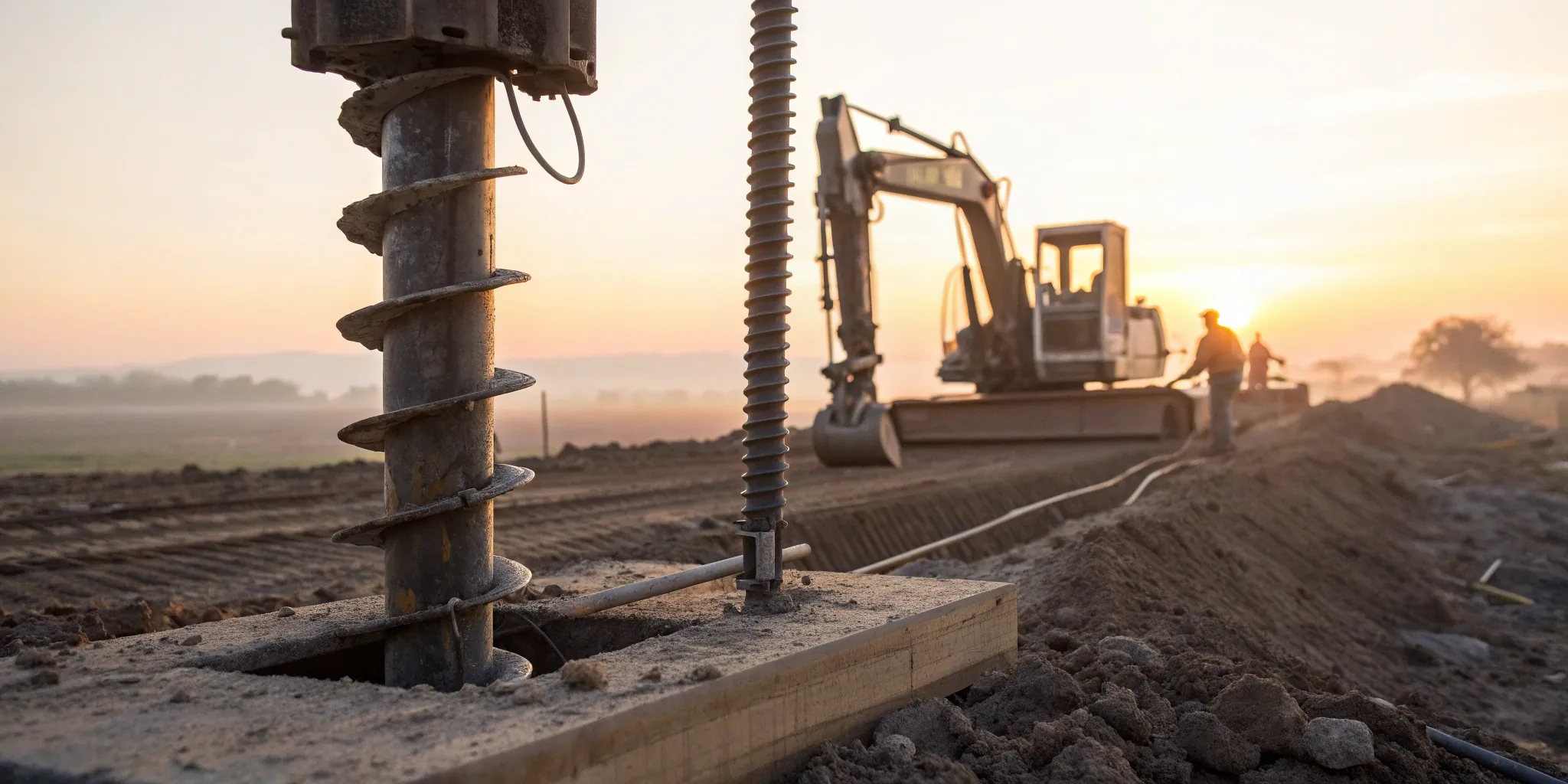
Let’s clear the air about foundation work. Many homeowners worry about destructive installations, questionable durability, and overwhelming costs. Fortunately, many of these fears are based on outdated methods. Helical piers bust these myths by offering a streamlined, powerful, and permanent fix. The installation process is minimally invasive, the galvanized steel piers are built to last for decades, and the long-term value often makes it a more cost-effective choice. This guide will separate fact from fiction, giving you a clear understanding of how helical pier foundation repair provides a modern, reliable solution that protects your home without turning your life upside down.
Key Takeaways
- Get a Permanent Fix by Going Deeper: Helical piers solve foundation settlement at its source by anchoring your home to solid, stable soil far beneath the surface, which stops further sinking and provides lasting support.
- Protect Your Property and Your Time: Unlike disruptive traditional methods, helical pier installation is fast, requires minimal excavation, and can be done in almost any weather, saving your landscaping and getting your life back to normal sooner.
- Partner with an Expert for Lasting Results: The success of a helical pier system depends on a professional assessment and expert installation. After the work is done, you can protect your investment by managing water and drainage around your foundation to prevent future problems.
What Are Helical Piers and How Do They Work?
If you’ve noticed cracks in your walls or floors that seem to be getting worse, you might be dealing with a settling foundation. It’s a stressful situation, but there are modern, effective solutions available. One of the most reliable methods for securing a home’s foundation is using helical piers. Think of them as giant steel screws that are installed deep into the ground to provide permanent support for your home. They are an engineered solution designed to transfer the weight of your house from unstable soil near the surface to solid, load-bearing ground far below.
This process stops your foundation from sinking further and can even allow for it to be lifted back to a more level position. Unlike more disruptive methods that require extensive excavation, installing helical piers is a precise and relatively quiet process that provides a lasting fix. Whether your home is built on soft clay, shifting soil, or is situated on a slope, helical piers offer a versatile and powerful way to restore its structural integrity. Understanding how they function is the first step toward making an informed decision about your property’s future and finding peace of mind.
The Anatomy of a Helical Pier
At first glance, a helical pier looks like an oversized screw. It’s made of a central, galvanized steel shaft with one or more screw-like plates, called helices, welded to it. These helices are what allow the pier to be twisted deep into the earth with hydraulic machinery. The size of the shaft and the number and diameter of the helices are specifically chosen by engineers based on your home’s weight and the soil conditions on your property. This isn’t a one-size-fits-all solution; each pier is selected to ensure it can handle the specific load it needs to support. This precision makes them an excellent choice for both foundation repair and securing foundations during new construction.
How Helical Piers Support Your Foundation
The magic of a helical pier lies in its ability to bypass weak soil. The ground near the surface can be unstable due to moisture, poor compaction, or its natural composition. Helical piers are screwed past these problematic layers until they reach solid, stable soil or bedrock that can support the weight of your home. Once the pier is anchored in this competent soil, a heavy-duty steel bracket is attached to it and secured to your foundation’s footing. This effectively transfers the structural load from the unstable ground to the deeply-embedded pier. This not only prevents any more settling but also gives technicians the ability to carefully lift the foundation, helping to close cracks and level floors.
The Step-by-Step Installation Process
The installation of helical piers is a systematic process that minimizes disruption to your home and yard. First, small areas are excavated at specific points along your foundation. Next, a hydraulic drive head is used to screw the pier sections into the ground, one after another, until the required depth and torque are achieved. This torque measurement is critical, as it confirms the pier has hit stable, load-bearing soil. After the pier is in place, it’s cut to the correct height, and a foundation bracket is attached. The weight of the house is then carefully transferred to the pier system. If lifting is part of the plan, hydraulic jacks are used to gently raise the foundation. Finally, the excavated areas are backfilled, leaving your property looking much like it did before.
Soil Conditions and Load-Bearing Capacity
One of the biggest advantages of helical piers is their versatility across different soil types. Whether your property has expansive clay, soft loam, or other challenging conditions, helical piers are an effective solution. Because they are screwed into the ground, they work well in areas where other methods might fail. During installation, the hydraulic equipment constantly measures the torque required to turn the pier. This data directly correlates to the pier’s load-bearing capacity, providing real-time verification that it can support your home. This makes them an ideal technology for complex jobs like hillside stabilization, where ensuring a solid anchor point is absolutely essential for safety and long-term stability.
Signs Your Foundation Might Need Helical Piers
Your home’s foundation is its bedrock, but it’s not invincible. Over time, shifting soil, water issues, and other factors can cause it to settle or shift, leading to problems that ripple through the entire structure. The good news is that your house usually gives you clues long before a major issue occurs. Learning to spot these early warnings is the first step toward a lasting solution. If you notice any of the following signs, your foundation might be telling you it needs support, and helical piers could be the answer. Catching these problems early can save you from more extensive and costly repairs down the road.
Visual Warning Signs to Look For
Start by taking a slow walk around your property, both inside and out. If your foundation is settling, you might see cracks in the walls. Look for vertical, diagonal, or stair-step patterns in drywall, plaster, or exterior brickwork. Are your floors starting to slope or feel uneven underfoot? Another classic sign is having doors and windows that stick or don’t close properly anymore. This happens when the frames are twisted out of square by the shifting foundation. These aren’t just cosmetic quirks; they’re often the first visible symptoms of a deeper problem that requires a professional foundation repair strategy.
Structural Red Flags You Shouldn’t Ignore
While a small crack might seem easy to ignore, it can be a red flag for serious structural issues. A settling foundation that goes unaddressed can lower your home’s value and create a domino effect of damage. What starts as a sticky door can eventually lead to broken pipes within the walls, significant gaps between walls and ceilings, or severely sloped floors. It’s important to address these problems early before they get worse. A permanent fix is essential for protecting your investment and ensuring your home remains safe and stable for years to come.
Environmental Risk Factors Around Your Property
Sometimes, the problem isn’t the foundation itself but the ground it’s built on. Helical piers are an excellent solution when the soil is soft, unstable, or has poor load-bearing capacity, which makes traditional foundations less effective. Instead of relying on extensive excavation, these piers are screwed deep into the ground until they reach solid, stable soil or bedrock. If your property is on a slope or has soil that expands and contracts with moisture, you may be at a higher risk for foundation settlement. This makes understanding your property’s unique environmental factors a key part of any long-term hillside stabilization and foundation support plan.
When to Call for a Professional Assessment
If you’ve noticed cracked foundations, persistent drywall cracks, or any of the other signs mentioned, it’s time to get an expert opinion. While it can be tempting to wait and see if things get worse, foundation problems rarely fix themselves. A professional assessment will give you a clear picture of what’s happening beneath your home and what it will take to fix it. An experienced contractor can determine the cause of the settlement and confirm if helical piers are the right permanent solution for your property, giving you peace of mind and a solid plan of action.
The Benefits of Choosing Helical Piers
When you discover a problem with your foundation, the number of repair options can feel overwhelming. You want a solution that’s not just effective but also makes sense for your property, your timeline, and your budget. This is where helical piers really shine. They offer a modern, engineered approach to foundation repair that comes with a host of benefits, making them a top choice for homeowners and property managers alike.
Unlike more traditional methods that involve extensive excavation and long curing times for concrete, helical piers provide a streamlined and powerful solution. They are designed to transfer the weight of your home from unstable soil near the surface to solid, load-bearing soil or bedrock deep underground. This process not only stops settlement in its tracks but can often lift your foundation back toward its original position. From the speed of installation to the minimal impact on your landscaping, choosing helical piers means opting for a smart, permanent fix that protects your most valuable asset.
A Quick and Efficient Installation
One of the most significant advantages of helical piers is the speed of installation. Because they are mechanically screwed into the ground like a giant corkscrew, the process is much faster than traditional concrete underpinning. There’s no need for large-scale excavation or waiting for concrete to cure. A trained crew can typically install helical piers in a matter of days, not weeks. This efficiency means less disruption to your daily life and a quicker resolution to your foundation problems, allowing you to get back to normal with the peace of mind that your home is secure.
Minimal Disruption to Your Property
If you’ve ever worried about a foundation repair project turning your yard into a construction zone, helical piers offer a welcome alternative. The installation process requires only small, localized excavation points, leaving your landscaping, driveway, and patios largely untouched. The equipment used is also less invasive than heavy machinery required for other methods. Better yet, helical piers can be installed in virtually any weather condition, any time of year. This flexibility ensures your foundation repair project can move forward without delay, regardless of the season.
Superior Strength and Stability
Don’t let the streamlined installation fool you—helical piers are incredibly strong. Made from high-quality galvanized steel, they are engineered to withstand immense pressure and resist corrosion for decades. Each pier is screwed into the ground until it reaches a specific torque, which verifies that it’s anchored in stable, load-bearing soil. This process ensures the pier has the capacity to support your home’s weight. This engineered approach provides a reliable and measurable level of stability, making helical piers a versatile solution for everything from small homes to large commercial buildings.
A Permanent, Long-Term Solution
When you invest in foundation repair, you want a solution that lasts. Helical piers are designed to be a permanent fix, not a temporary patch. By anchoring your foundation to stable soil or bedrock deep below the surface, they address the root cause of settlement. This provides lasting stability and prevents future movement. In many cases, the installation process can also be used to lift a settled foundation, helping to close cracks and correct issues like sticking doors and windows. This makes them an excellent tool for hillside stabilization and securing homes for the long haul.
Cost-Effective Foundation Support
While any foundation repair is a significant investment, helical piers offer excellent long-term value. Their efficient installation process often translates to lower labor costs compared to more disruptive and time-consuming methods. Because they provide a permanent solution, you also avoid the recurring expenses of temporary fixes that fail to address the underlying problem. By choosing a durable, engineered solution like helical piers, you’re making a smart financial decision that protects your property’s value and prevents more costly structural damage down the road.
Common Myths About Helical Piers, Busted
When you’re facing foundation problems, the last thing you need is misinformation. Helical piers are a fantastic, modern solution for stabilizing foundations, but they’re surrounded by a few persistent myths that can cause confusion. It’s easy to get overwhelmed by conflicting advice, which can stop you from choosing the best path forward for your property. Let’s clear the air and look at the facts.
Understanding the truth about helical piers helps you make a confident, informed decision about your home or commercial building’s structural health. These myths often stem from a misunderstanding of how the technology works or from comparisons to older, more disruptive methods. By breaking down these common misconceptions one by one, you’ll get a much clearer picture of why this method is a trusted choice for so many property owners. We’ll separate fact from fiction so you can feel good about your foundation repair plan.
Myth: They Aren’t a Durable Solution
One of the biggest concerns I hear is about longevity. It’s a fair question—if you’re fixing your foundation, you want it to be a permanent solution. The great news is that helical piers are built to last. They are engineered from high-strength, galvanized steel that is specifically designed to resist corrosion from soil and moisture. This isn’t a temporary patch; it’s a long-term stabilization system. Think of them as steel roots drilled deep into the earth to permanently support your home. When properly installed, helical piers provide a durable and reliable fix that withstands the test of time and changing environmental conditions.
Myth: The Installation Process is Destructive
Many people picture foundation work and immediately think of huge excavations, ruined landscaping, and a property that looks like a construction zone for weeks. While that can be true for some traditional methods, helical pier installation is surprisingly low-impact. The equipment used is much smaller and more agile, which means we can work in tight spaces with minimal disturbance to your yard, garden, or patios. The piers are screwed into the ground rather than hammered, which creates less vibration and noise. The whole process is cleaner, faster, and far less invasive, letting you get back to normal life much sooner.
Myth: They’re Too Expensive
Sticker shock is real, and any foundation repair is a significant investment. However, the idea that helical piers are the most expensive option isn’t accurate when you look at the big picture. The upfront cost is often competitive with other methods, but the long-term value is where they truly shine. Because the installation is so efficient and requires less heavy machinery and labor, you can save on those costs. More importantly, helical piers provide a permanent solution that prevents further, more catastrophic damage down the line. Investing in a solid repair now can save you tens of thousands of dollars in future structural problems.
Myth: They Only Work in Certain Soil Types
Another common misconception is that helical piers are only suitable for one or two specific types of soil. In reality, their versatility is one of their greatest strengths. Helical piers are an effective solution across a wide variety of soil conditions, from loose, sandy soils to dense, heavy clay. The design can be customized—with different numbers and sizes of helical plates—to achieve the exact load-bearing capacity needed for your property’s specific geology. This adaptability makes them a reliable choice for countless situations, even in challenging environments that require specialized solutions like hillside stabilization.
How Helical Piers Compare to Other Repair Methods
When you discover a foundation problem, you’ll find there are several ways to address it. Helical piers are a popular and effective solution, but it’s helpful to see how they measure up against other common methods. Understanding the differences will help you feel more confident when discussing your options with a foundation specialist. Each method has its place, and the right choice depends entirely on your home’s specific needs, the soil it sits on, and the nature of the foundation issue. The goal is always to find a permanent solution that restores your home’s stability and gives you peace of mind.
Choosing a repair method can feel overwhelming, but it boils down to a few key comparisons: installation process, suitability for your property, and long-term reliability. Helical piers, push piers, and older methods like concrete underpinning all aim to support your foundation, but they get there in very different ways. Some are better for heavy buildings, while others excel in unstable soil. Some involve major excavation, while others are minimally invasive. By looking at these methods side-by-side, you can get a clearer picture of the technology and make an informed decision. Let’s break down how helical piers compare to the alternatives so you can see why they are often the preferred choice for modern foundation repair.
Helical Piers vs. Push Piers: What’s the Difference?
Think of a helical pier as a giant steel screw. It’s twisted deep into the ground using hydraulic machinery until it reaches stable, load-bearing soil. Because it’s actively screwed in, it doesn’t rely on the weight of your house for installation. This makes helical piers incredibly versatile, especially for lighter structures like porches or additions, or for new construction projects where there isn’t an existing structure to push against.
Push piers, on the other hand, work more like a nail. These steel tubes are hydraulically pushed into the ground one section at a time, using the weight of your home as leverage. They are driven down until they hit bedrock or a similarly dense layer that refuses to budge. Both are excellent push and helical pier systems, but their installation mechanics make them suitable for different scenarios.
How They Stack Up Against Traditional Concrete Piers
Before steel piers became the industry standard, foundation repair often involved pouring concrete piers. This method, called underpinning, requires extensive excavation to pour concrete footings beneath the existing foundation. It’s a much more disruptive, time-consuming, and labor-intensive process. The outcome can also be less predictable, as the quality of the repair depends heavily on the on-site concrete mixing and curing process.
Helical piers offer a more modern, engineered approach. They are manufactured in a controlled environment, ensuring consistent quality and strength. Because they are installed deep into stable soil, they provide a permanent solution that isn’t affected by the problematic soil near the surface. In many cases, helical piers can even be used to lift a settled foundation back toward its original level, a feat that is much more difficult with traditional concrete methods.
Choosing the Right Solution for Your Foundation
So, which pier is right for you? The answer almost always comes down to a professional evaluation. The best method depends on factors like your soil conditions, the type of foundation you have, and the weight of your home. Helical piers are often the go-to for properties with tricky or unstable soil, as their helical plates are designed to grip the earth firmly. Push piers are a great fit for heavier structures that can provide the necessary resistance for installation.
Ultimately, you want to work with a contractor who is an expert in multiple repair methods. A company that offers both helical and push piers can give you an unbiased recommendation based on what your property truly needs, rather than pushing the only solution they know how to install. A thorough site assessment is the first step to creating a tailored repair plan.
Comparing the Costs and Long-Term Value
Foundation repair is a significant investment, so it’s natural to wonder about the cost. While prices vary based on the number of piers needed and the complexity of the job, helical piers are a cost-effective solution when you consider their long-term value. They provide a permanent fix that protects your property’s value and prevents future issues, saving you from more expensive repairs down the road.
Many homeowners see helical piers as the gold standard for fixing a settling foundation, partly because they often come with extensive warranties. At Bristol FX, we stand behind our work with a lifetime warranty on pier installations. This guarantee ensures your foundation is secure for the long haul, making the initial cost a worthwhile investment in the safety and stability of your home.
Planning Your Helical Pier Project
Once you’ve decided that helical piers might be the right solution for your property, the next step is to plan the project. A successful foundation repair depends on careful preparation, from the initial assessment to understanding the fine print. Knowing what to expect can make the entire process feel much more manageable and ensure you’re making a confident, informed decision for your home or commercial building. This phase is all about gathering information, choosing the right team, and getting clear on the details before any work begins.
What to Expect from a Site Evaluation
The first step in any foundation repair project is a thorough site evaluation. A qualified technician will visit your property to assess the extent of the damage and determine the best course of action. This isn’t just a quick look-around; it’s a detailed inspection. Expect the expert to take precise measurements using tools like laser levels to identify exactly how much your foundation has settled and where the problem areas are. They will also examine the soil conditions around your property to plan the right type of pier and installation depth. This evaluation provides the blueprint for the entire repair, ensuring the solution is tailored specifically to your property’s needs.
How to Choose a Qualified Contractor
Choosing the right contractor is the most critical decision you’ll make. The long-term success of your foundation repair hinges on the expertise of the installation team. An inexperienced crew can make costly mistakes, like causing the piers to bend or fail under pressure. When vetting companies, ask about their experience specifically with helical piers. Look for a contractor who is licensed, insured, and has a portfolio of completed projects. A reputable company will be transparent about their process and confident in their ability to ensure the system is properly installed to provide lasting support for your foundation.
Understanding Permits and Regulations
Depending on where you live, foundation work often requires building permits from your local municipality. This is a standard part of the process and ensures that the repair meets all safety and building codes. A professional and experienced contractor will handle the entire permitting process for you, from submitting the engineering plans to scheduling final inspections. Before hiring anyone, it’s always a good idea to verify that the company is in good standing with organizations like the Better Business Bureau (BBB). This due diligence protects you and ensures the work is done correctly and legally from start to finish.
Making Sense of Your Warranty Options
A strong warranty is a sign that a contractor stands behind their work. Since helical piers are designed to be a permanent solution, they should come with a comprehensive, long-term warranty. Many of the best foundation repair companies offer lifetime warranties on their pier installations that are often transferable to future homeowners. Be sure to read the warranty documents carefully to understand what is covered. Does it cover materials, labor, or both? A clear and robust warranty provides peace of mind, assuring you that your investment is protected for the long haul.
Protecting Your Foundation After the Repair
Getting your foundation repaired is a huge step toward securing your property’s value and your peace of mind. Now that the heavy lifting is done, the focus shifts to keeping it that way. Think of it like this: you wouldn’t buy a new car and then skip the oil changes. A little proactive care goes a long way in protecting your investment and preventing future issues from cropping up. The good news is that you don’t need to be an expert to do it.
Most post-repair maintenance revolves around one main culprit: water. Uncontrolled water around your foundation is what likely caused the initial problem, and it remains the biggest threat. By managing moisture, performing simple visual checks, and being mindful of your landscaping, you can ensure the foundation repair you just invested in lasts a lifetime. These next few steps will walk you through exactly what to do to keep your foundation solid, stable, and secure for years to come.
Simple Maintenance for a Healthy Foundation
Your most important task is to control the water around your home. Saturated soil expands and puts immense pressure on foundation walls, while dry, shrinking soil can cause it to settle unevenly. The goal is to maintain consistent moisture levels. After a heavy rain, take a walk around your property. Do you see water pooling near the foundation? If so, that’s a red flag. Water should always be flowing away from your house, not toward it. Simple fixes, like cleaning your gutters or adjusting a downspout, can make a world of difference in preventing water from collecting at the base of your home.
The Importance of Proper Drainage
Effective drainage is your foundation’s best friend. It’s the system that actively diverts water away from your home before it has a chance to soak into the ground and cause trouble. This starts with the basics: clean, functional gutters and downspouts that extend at least four to six feet away from the foundation. You should also check the grading, or slope, of the soil around your house. It should gently slope downward and away from the walls. For more persistent water issues, professional waterproofing and systems like French drains can offer a more robust and permanent solution to keep your basement or crawl space dry.
How to Conduct Regular Self-Inspections
You don’t need special equipment to keep an eye on your foundation’s health. Once or twice a year, take some time to do a thorough walkthrough. Inside, look for new cracks appearing in drywall, especially around door and window frames. Check if any doors or windows have become difficult to open or close, as this can be a sign of shifting. Head down to your basement or crawl space and look for damp spots, musty smells, or visible cracks in the concrete. Taking a few minutes to inspect your crawl-space can help you spot a small issue before it becomes a major headache.
Strategies for Long-Term Foundation Health
Thinking long-term involves looking at the bigger picture of your property. Your landscaping plays a surprisingly large role in your foundation’s stability. Large trees with extensive root systems should be planted a safe distance away—ideally, their mature height away from the house. Thirsty tree roots can draw moisture out of the soil, causing it to shrink and leading to settlement. Similarly, flower beds right up against the house can trap moisture against the foundation. Creating a small, sloped buffer zone between your landscaping and your home can help ensure water drains properly and roots don’t become a problem down the road.
Related Articles
Frequently Asked Questions
How long does a typical helical pier installation take? One of the best parts of using helical piers is the efficiency of the process. Unlike older methods that can drag on for weeks, a standard helical pier installation is usually completed in just a few days. Because there’s no need for large-scale digging or waiting for concrete to cure, a professional crew can secure your foundation quickly, which means less disruption to your life.
Can helical piers actually lift my house back to its original position? Yes, in many cases, helical piers can be used to carefully lift a settled foundation. After the piers are installed deep into stable soil, hydraulic jacks are used to transfer the weight of the house onto the piers. From there, the structure can be gently raised to close cracks, level floors, and help sticking doors and windows function properly again. The primary goal is always to stabilize your home permanently, and the potential for lifting is a significant added benefit.
Will the installation process destroy my yard and landscaping? This is a very common concern, but you can relax. Helical pier installation is a surprisingly low-impact process. It doesn’t require the massive excavation pits that older methods do. Instead, the crew only needs to dig small, targeted areas to install the piers. The equipment is also smaller and more precise, so your lawn, garden beds, and patios will remain largely undisturbed.
How do I know if helical piers are the right solution for my specific problem? That’s a great question, and the answer depends on a professional assessment. Helical piers are incredibly versatile and work well in a wide range of soil conditions, but they aren’t the only solution. Factors like the weight of your home and the specific soil geology determine the best approach. A thorough evaluation by an expert will confirm if helical piers, or perhaps another method like push piers, is the ideal fit to permanently solve your foundation issue.
What kind of warranty should I expect for this type of work? A foundation repair is a major investment in your property, and it should be protected by a serious warranty. Since helical piers are designed to be a permanent fix, you should look for a company that offers a lifetime warranty on the installation. This shows that the contractor is confident in their materials and workmanship, and it gives you lasting peace of mind that your home is secure for the long haul.