
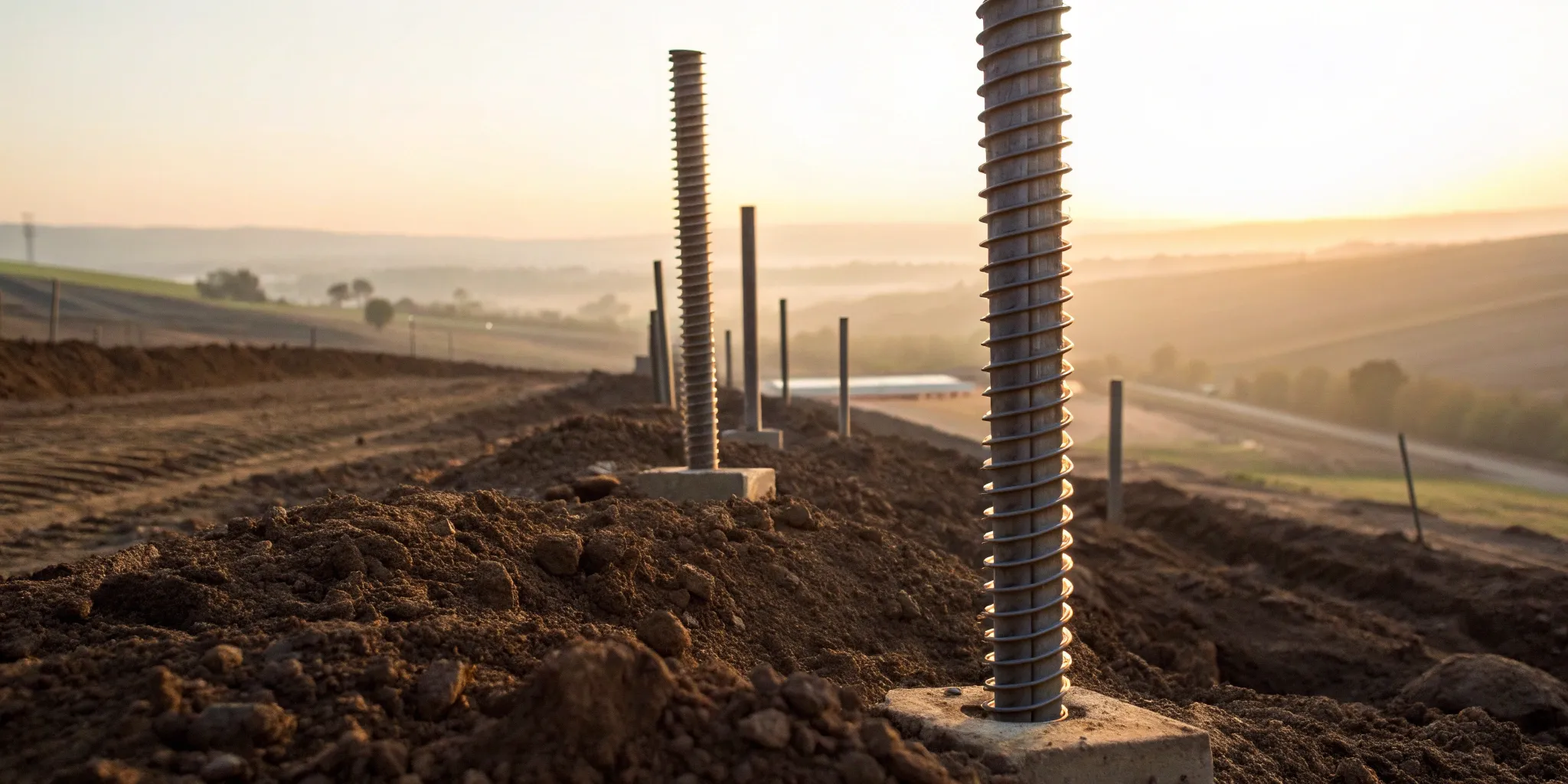
The strength of any building starts from the ground up. When the soil beneath your home or commercial property is unstable, the entire structure is at risk. You need a solution that doesn’t just patch the problem but addresses the root cause. While traditional concrete piers have been an option, they often come with significant drawbacks, including long timelines and major disruption. A helical pier offers a more advanced and reliable approach. It’s an engineered steel foundation pin that bypasses weak soil to anchor your structure to solid ground. This article will walk you through the key advantages of this technology and explain why choosing a helical pier is a superior investment in your property’s long-term stability.
Key Takeaways
- Anchor Your Foundation to Solid Ground: Helical piers act like steel screws, transferring your home’s weight past unstable surface soil and onto solid, load-bearing earth deep below. This provides a permanent, engineered fix for settlement issues.
- Protect Your Time and Your Yard: The installation process is significantly faster and less invasive than traditional methods, requiring minimal excavation. This saves you from a lengthy, messy project and the extra cost of landscape repair.
- Expert Installation is Non-Negotiable: The success of helical piers depends entirely on the skill of the installer. Always choose a certified team with proven experience, proper equipment, and a strong warranty to ensure your foundation is secure for life.
What Are Helical Piers?
If you’re dealing with foundation issues, you’ve likely heard the term “helical piers.” So, what exactly are they? In simple terms, helical piers are a modern and highly effective deep foundation solution. Think of them as giant steel screws that are installed deep into the ground to support a structure. They are designed to transfer the weight of your home or building from unstable soil near the surface to more solid, load-bearing soil or bedrock far below. This process stabilizes your foundation, preventing further settlement or movement and providing a permanent fix for a wide range of structural problems.
Breaking Down a Helical Pier
Let’s get a closer look at the pier itself. A helical pier is made of galvanized steel to resist corrosion and ensure a long lifespan. It consists of a central steel shaft with one or more screw-like plates, called helices, welded to it. These helices are the key to the pier’s function; they are what allow it to be screwed into the ground with minimal soil disturbance. The size of the shaft and the number and diameter of the helices are specifically engineered based on your property’s soil conditions and the load requirements of the structure. This customization ensures that the push and helical piers provide the precise support your foundation needs.
How Do Helical Piers Work?
The genius of a helical pier is in its simple, effective design. During installation, hydraulic machinery rotates the pier, screwing it deep into the earth. As it turns, the helical plates pull the pier downward, much like a screw being driven into wood. The installation continues until the pier reaches a predetermined depth or the torque required to turn it indicates it has hit stable, load-bearing soil. At that point, the weight of the structure is transferred from the failing foundation, down the steel shaft, and onto the pier anchored in solid ground. This effectively bypasses the weak soil and provides a stable base for your home or building.
The Installation Process, Step-by-Step
The installation of helical piers is a precise, engineered process that causes very little disruption to your property. First, a professional team determines the exact placement points around your foundation. Small areas are excavated at these points to expose the foundation footing. Then, using specialized hydraulic equipment, the piers are slowly and carefully screwed into the ground. The machinery continuously measures the torque to ensure the pier is anchored in competent soil. Once the target depth and torque are achieved, a steel bracket is attached to the pier and secured to your foundation, completing the load transfer and stabilizing the structure for good.
Common Myths About Helical Pier Strength
A couple of common misconceptions about helical piers can cause homeowners to hesitate. One myth is that they are only suitable for light loads. This couldn’t be further from the truth. Helical piers are an engineered solution that can be designed to support immense structural loads, making them a reliable choice for everything from residential homes to large commercial buildings. Another myth is that they are always more expensive than traditional methods. While costs vary, the efficient and less invasive installation process often makes helical piers a more cost-effective and faster solution for foundation repair, saving you time, money, and landscaping headaches.
Where Are Helical Piers Used?
One of the best things about helical piers is their incredible versatility. They aren’t a one-size-fits-all solution but rather a highly adaptable technology used across a wide range of projects. From securing a small family home to providing support for massive industrial structures, helical piers offer a reliable foundation in places where other methods might fall short. Their unique design allows them to be installed in various soil conditions and tight spaces, making them a go-to for both new builds and complex repair jobs. Whether you’re dealing with a settling foundation or planning a new project on tricky terrain, there’s a good chance helical piers are the right answer.
Supporting Residential Foundations
For homeowners, foundation issues can be a source of major stress. Helical piers offer a reliable and often more affordable way to stabilize your home’s foundation, whether you’re fixing an existing problem or building from scratch. They are an ideal solution for foundation repair because the installation process causes minimal disruption to your home and landscaping. Unlike more invasive methods, there’s no need for large-scale excavation. This means your yard stays intact and the project is completed much faster. They are especially effective for homes built on unstable soil, providing the deep, stable support needed to prevent future settling and give you lasting peace of mind.
Securing Commercial and Industrial Buildings
The same principles that make helical piers great for homes also apply to larger structures, just on a bigger scale. Commercial and industrial buildings require immense foundational strength to support their weight and operational demands. Helical piers are engineered to handle these heavy loads, making them a trusted solution for everything from warehouses and retail centers to multi-story office buildings. They are used to correct foundation settlement in existing structures and to provide deep support for new commercial construction. The efficiency of the helical pier installation process also means less downtime for businesses, which is a critical factor in any commercial project.
Starting New Construction Projects Right
When you’re building something new, the last thing you want is to worry about foundation problems down the road. Helical piers can be used to support foundations from the very start, which is especially important when building on weak or unpredictable soil. By installing helical piers during the new construction phase, you anchor the structure to stable, load-bearing soil deep underground, bypassing any problematic layers near the surface. This proactive approach ensures the building has a solid base from day one, preventing the costly and frustrating issues that can arise from foundation settlement later on. It’s a smart investment in the long-term integrity of your property.
Repairing and Stabilizing Foundations
One of the most common applications for helical piers is to stabilize and lift foundations that have started to settle. This settling is often caused by changes in soil moisture or poor soil compaction when the home was built. If you’re seeing signs like cracks in your drywall, sticking doors, or uneven floors, helical piers can address the root cause. They are screwed into the ground beneath the foundation until they reach solid soil or bedrock. Hydraulic jacks are then used to carefully lift the foundation back toward its original position, closing cracks and correcting structural issues. This method provides a permanent solution for hillside stabilization and other complex settlement problems.
How They Perform in Different Soil Types
Not all soil is created equal, and that’s where helical piers truly shine. They are engineered to perform exceptionally well in a variety of challenging soil conditions, including expansive clay, soft soil, and areas with a high water table. Because the piers are screwed deep into the earth, they transfer the structure’s weight past the weak upper layers of soil to a more stable stratum below. This makes them far more reliable than shallow foundations in poor soil. Their design also allows for installation with minimal soil disturbance, which is a huge advantage in environmentally sensitive areas or tight spaces where heavy excavation equipment can’t go. This flexibility makes them a superior choice for addressing foundation issues caused by soil expansion and settling.
Why Choose Helical Piers? The Key Advantages
When you’re facing a foundation problem, the solution you choose has a lasting impact on your property’s stability and your peace of mind. While traditional methods have been around for years, modern engineering offers more efficient and reliable alternatives. Helical piers stand out as a premier choice for both foundation repair and new construction, delivering a powerful combination of strength, speed, and sustainability.
Choosing the right foundation support system is about more than just fixing a crack; it’s about investing in the long-term health of your home or commercial building. From their minimal impact on your property to their engineered precision, helical piers offer a suite of benefits that make them a smart, forward-thinking solution. Let’s look at the key advantages that set them apart.
Faster, Less Disruptive Installation
One of the biggest headaches with traditional foundation work is the sheer disruption it causes. Extensive excavation can tear up your landscaping, create a noisy mess, and drag on for weeks. Helical piers offer a much cleaner and quicker alternative. Because they are hydraulically screwed into the ground, they require minimal digging and far less heavy equipment.
This streamlined process means your project can be completed much faster, often in a matter of days, not weeks. You can get back to your normal routine without a prolonged construction zone in your yard. Plus, installation isn’t dependent on perfect weather; helical piers can be installed in any season, allowing you to address foundation issues without delay.
A More Eco-Friendly Solution
If you’re concerned about the environmental impact of a construction project, helical piers are an excellent choice. The installation process creates very little soil disturbance, which helps preserve the surrounding ecosystem and your landscaping. Unlike concrete piers that require large-scale excavation and soil removal, helical piers leave a much smaller footprint.
This makes them an ideal solution for projects in environmentally sensitive locations, such as properties near water or on delicate terrain. By minimizing ground disturbance, you protect local vegetation and soil structures. This approach aligns with modern, sustainable building practices, ensuring your foundation solution is as responsible as it is effective, especially for complex projects like hillside stabilization.
Engineered for Superior Support
The design of a helical pier is simple yet brilliant. Think of it like a giant steel screw. The pier is driven deep into the earth until its helical plates, or blades, anchor firmly into stable, load-bearing soil. This effectively transfers the weight of your structure off the weak or shifting soil near the surface and onto a solid, reliable base.
This method provides predictable, engineered support that you can count on. Each pier’s capacity is measured using torque-to-capacity calculations during installation, ensuring it can handle the specific load of your structure. This precision removes the guesswork, providing a level of certainty that other methods can’t always match. It’s a scientifically validated approach to securing your property’s foundation for good.
A Smart, Cost-Effective Investment
While the initial cost is a factor in any major repair, helical piers often prove to be a highly cost-effective investment over the long term. The faster, less-invasive installation process can lead to significant savings on labor costs and landscape restoration. You won’t have to spend extra money replanting your garden or fixing your lawn after the work is done.
More importantly, helical piers provide a permanent solution. By addressing the root cause of foundation settlement—poor soil conditions—they prevent future issues and the need for repeated, costly repairs. Protecting your property’s value is the ultimate goal, and investing in a reliable foundation system is one of the smartest financial decisions you can make for your home or business, especially for new construction projects.
Built for Long-Term Reliability
Your home is your biggest asset, and you need a foundation solution that will stand the test of time. Helical piers are manufactured from high-strength, galvanized steel to resist corrosion and degradation, even in harsh soil conditions. They are designed to last for decades, with some historical applications showing a lifespan of over 100 years.
This incredible durability means you can have confidence that your foundation is secure for life. At Bristol FX, we stand behind this reliability by offering a lifetime warranty on our pier installations. This gives you ultimate peace of mind, knowing that your investment is protected. Whether you’re addressing a sinking floor or reinforcing a crawl space, you can trust that helical piers will provide lasting support.
Meeting Strict Engineering Standards
Helical piers aren’t just a clever idea; they are a thoroughly tested and proven technology. This foundation system is recognized and approved by major building codes and engineering bodies across the United States, Canada, and Europe. They have undergone rigorous testing to verify their load-bearing capacities and long-term performance in a wide variety of soil types and conditions.
Choosing a solution that meets these strict standards ensures your project complies with local regulations and is built to the highest safety specifications. It confirms you are using a reliable, professionally accepted method for securing your property. When you work with a certified installer, you can be confident that your foundation repair is based on sound engineering principles.
What to Expect During Installation
Knowing what to expect can make the foundation repair process feel much more manageable. The installation of helical piers is a precise, engineered process designed for maximum efficiency and minimal disruption to your property. From the initial site check to the final cleanup, here’s a look at what happens each step of the way.
The Importance of Site and Soil Evaluation
Before any work begins, a thorough site and soil evaluation is essential. This isn’t just a quick look-around; it’s a critical assessment to understand the specific conditions of your property. Professionals will analyze the soil composition—whether it’s soft, sandy, or expansive clay—to determine the right type and depth for the piers. This step ensures the entire foundation repair plan is tailored to your home’s unique needs. Unlike traditional methods that require major excavation, this targeted approach allows for a solution with minimal disturbance to your landscaping and daily life. It’s the blueprint for a successful and lasting repair.
The Right Tools and Expertise for the Job
Helical pier installation is not a DIY project—it requires specialized equipment and certified technicians. Our teams use hydraulic machinery to screw the push piers and helical piers deep into the ground. As the pier turns, the equipment continuously measures the torque, or rotational force. This data tells the installers exactly when the pier has reached stable, load-bearing soil. It’s a scientific process that removes guesswork and confirms how much weight each pier can safely support. This precision is key to guaranteeing a stable foundation for years to come, all handled by trained experts who know how to manage the equipment safely and effectively.
Overcoming Potential Installation Hurdles
One of the biggest strengths of helical piers is their ability to perform in challenging soil conditions where other methods might fall short. If your property has weak or unstable upper soil layers, helical piers are designed to bypass them completely. They act like giant screws, transferring the weight of your home or building down to solid ground or bedrock deep below the surface. This makes them an incredibly effective solution for everything from settling foundations to complex hillside stabilization projects. By anchoring your structure to a stable geological layer, they provide a permanent fix, preventing future movement and giving you peace of mind.
Considering Site Access and Pier Depth
Every property is different, and logistics play a big role in the installation plan. During the initial consultation, our team will assess site access to determine the best way to bring in the necessary equipment with minimal impact. Factors like fences, landscaping, and proximity to neighboring properties are all taken into account. The required depth of the piers, which is determined by the soil evaluation, also influences the project’s scope and timeline. A clear plan for these variables is established upfront, so you know exactly what to expect. This careful planning ensures the installation process is as smooth and efficient as possible from start to finish.
Simple Maintenance for Lasting Results
Once helical piers are installed, you can essentially forget about them. They are engineered from galvanized steel to resist corrosion and are designed to last for the life of your structure—some have been in the ground for over 150 years. There is no required upkeep on your part. We stand by our work with extensive warranties, including lifetime warranties on our new construction pier installations, giving you confidence in the long-term stability of your foundation. While they don’t need maintenance, a professional inspection every few years can offer continued assurance that your foundation remains secure. It’s a one-time solution built for permanent results.
Helical Piers vs. Other Foundation Methods
When you’re dealing with foundation issues, you want to know you’re choosing the best solution. While traditional methods have been around for a long time, helical piers offer some distinct advantages that make them a superior choice for many projects. Let’s break down how they compare to other common foundation methods, especially traditional concrete piers, so you can see why they’ve become a go-to for modern construction and repair. We’ll look at everything from installation and cost to environmental impact and strength, giving you a clear picture of your options.
How They Stack Up Against Traditional Concrete Piers
Traditional concrete piers require extensive excavation, creating a lot of mess and disruption on your property. Once the holes are dug, concrete is poured and needs time to cure, which can delay your project. Helical piers, on the other hand, are a much cleaner and more versatile solution. They can be installed in virtually any soil condition—from soft sand to expansive clay—with minimal disturbance to your landscape. Because they are screwed into the ground rather than poured, they provide an immediate, engineered foundation without the wait. This modern approach to foundation repair makes them a more efficient and adaptable choice for both residential and commercial properties.
A Head-to-Head Cost Comparison
It’s a common myth that helical piers are the more expensive option, but when you look at the total project cost, that’s rarely the case. While the materials for concrete might seem cheaper upfront, the process involves significant labor costs for excavation, pouring, and cleanup. Helical pier installation is much faster and requires less heavy machinery, which translates to major savings on labor. There’s no need to haul away excavated soil or wait for concrete to cure, further reducing project time and expenses. When you factor everything in, push piers and helical piers are often the more cost-effective solution, delivering superior results without the hidden costs of traditional methods.
Comparing Installation Timelines
If you want your project completed quickly, helical piers are the clear winner. The installation process is incredibly efficient—piers are simply screwed into the ground until they reach stable soil, and they are ready to bear weight immediately. This means your foundation can be stabilized or your new structure can be built upon right away. Concrete piers, in contrast, can take days or even weeks. You have to account for excavation, pouring, and the crucial curing time before any load can be applied. Helical piers can also be installed in any season and aren’t affected by weather conditions like rain or high water tables, keeping your new construction project on schedule.
Which Option Has a Smaller Environmental Footprint?
For property owners who prioritize sustainability, helical piers are the more eco-friendly choice. The installation process involves minimal soil displacement, which means your yard and the surrounding ecosystem are left largely undisturbed. There’s no need for large-scale excavation or heavy equipment, reducing the carbon footprint of the project. Unlike concrete, which requires large amounts of water and energy to produce and transport, helical piers are a clean, low-impact solution. This makes them an ideal choice for environmentally sensitive areas, such as properties near water or on steep slopes requiring hillside stabilization. They can even be removed and reused, further minimizing their environmental impact.
Analyzing Load-Bearing Capabilities
Some people mistakenly believe that helical piers aren’t suitable for heavy loads, but this couldn’t be further from the truth. Helical piers are engineered to support immense weight and are used for everything from residential homes to large commercial buildings. The load-bearing capacity of each pier is precisely measured during installation using hydraulic pressure gauges. This process verifies that the pier has reached a stable, load-bearing soil layer and can support the structure’s specific weight requirements. This data-driven approach ensures a level of precision and reliability that you simply don’t get with traditional methods. You can trust that helical piers provide a strong, stable, and lasting foundation for your property.
How to Choose the Right Helical Pier Installer
Choosing the right helical pier installer is just as critical as the technology itself. The best piers in the world won’t perform correctly if they aren’t installed with precision and expertise. A foundation is the literal base of your property, so this isn’t a decision to take lightly. You’re not just hiring a contractor; you’re partnering with a team of specialists who will be responsible for the long-term stability of your home or building.
The right installer brings more than just equipment to the job site. They bring a deep understanding of soil mechanics, structural engineering principles, and local building codes. They can assess your property’s unique challenges and develop a customized plan that ensures the piers are driven to the correct depth and torque to provide lasting support. A great company will be transparent about their process, answer all your questions, and provide clear documentation for the work performed. When you vet potential installers, you’re looking for a combination of technical skill, proven experience, and a commitment to quality. This diligence upfront will ensure your foundation repair is a permanent solution, not a temporary fix.
Verify Certifications and Training
Installing helical piers isn’t a simple DIY project—it’s a specialized trade that requires specific training. The technicians use powerful hydraulic machinery to screw the piers deep into the ground until they reach stable, load-bearing soil. A certified team knows how to read the equipment’s feedback to determine exactly when a pier has reached the right depth and tightness to support a specific weight. Ask any potential installer about their certifications and the training their team receives. A reputable company will be proud to show that their crew is qualified and up-to-date on the latest industry standards and safety protocols.
Look for Proven Technical Expertise
The technology behind helical piers has advanced significantly, and so have the installation techniques. You want a team with a track record of successful projects similar to yours. An experienced installer will have encountered a wide variety of soil conditions and foundation issues, giving them the practical knowledge to handle any challenges that arise. They can accurately diagnose the root cause of your foundation problem and recommend the most effective solution. When you speak with a contractor, ask about their experience with push and helical piers and request to see examples of their past work. This expertise is what separates a quick fix from a lasting solution.
Ask About Their Equipment
The right tools make all the difference. Modern installation equipment is designed to be both powerful and compact, allowing for installation in tight spaces with minimal disruption to your property. Unlike traditional concrete work, there’s no need for large-scale excavation or pouring messy concrete. This means your landscaping stays largely intact, and the project can be completed much faster. Ask the installer what kind of equipment they use. A professional team will have well-maintained, specialized machinery that ensures an efficient and clean installation process, whether it’s for a repair or a new construction project.
Understand Your Warranty Options
A warranty is a direct reflection of a company’s confidence in its work and the products it uses. Don’t hesitate to ask for detailed information about the warranties they offer on both materials and labor. Some of the best manufacturers in the industry back their helical piles with 25-year warranties, but a top-tier installer often provides even more comprehensive coverage. For example, at Bristol FX, we stand behind our work with a lifetime warranty on pier installations. This level of assurance shows that the company is committed to providing a permanent solution and will be there to support you for years to come.
Inquire About Installation Support
A great installer doesn’t just show up, do the work, and disappear. They provide comprehensive support from the first phone call to the final inspection and beyond. This includes a thorough initial assessment, a clear and detailed proposal, and open communication throughout the project. The best companies are also backed by their manufacturers, receiving ongoing training and technical support that keeps them at the forefront of the industry. This ensures that even the most complex projects, like hillside stabilization, are handled with the highest level of expertise and care. You should feel confident and informed every step of the way.
Confirm Their Quality Control Process
The long-term performance of your foundation repair depends on the quality of the materials used. Ask potential installers where they source their helical piers and if those products meet or exceed industry standards and local building codes. High-quality piers are made from galvanized steel to prevent corrosion and feature fully welded components for maximum strength and stability. A company committed to quality control will only use materials from trusted manufacturers and will have a rigorous process to ensure every installation is performed to exact specifications, preventing issues like future crack injection or corrosion repair.
Related Articles
Frequently Asked Questions
How do I know if helical piers are the right solution for my specific foundation problem? That’s the most important question to ask. Helical piers are incredibly versatile, but they shine in specific situations. If you’re seeing symptoms like cracks in your walls, sticking doors, or uneven floors, it’s likely due to your foundation settling into unstable soil. Helical piers are designed to solve this exact problem by bypassing the weak soil and anchoring your home to solid ground. They are also an excellent choice for new construction projects on properties with poor soil conditions, ensuring a stable base from the very beginning. The best way to know for sure is to have a professional come out and assess your property’s unique soil and structural needs.
Will the installation process damage my yard or landscaping? This is a huge concern for most homeowners, and thankfully, the answer is no. One of the main advantages of helical piers is how little they disturb your property. Unlike traditional methods that require massive excavation, helical pier installation uses smaller, specialized equipment. We only need to dig small access holes at each pier location, so your lawn, garden beds, and patios remain largely untouched. The whole process is designed to be as clean and efficient as possible, so you won’t be left with a major landscaping project once we’re done.
Are helical piers a permanent fix, or will I need more repairs later? Helical piers are absolutely designed to be a permanent, one-and-done solution. They work by transferring the weight of your home to stable, load-bearing soil deep underground, which addresses the root cause of the settlement. The piers themselves are made from heavy-duty galvanized steel to prevent corrosion and are engineered to last for the life of your home. When you invest in a helical pier system, you are investing in a lasting repair that is backed by a lifetime warranty, giving you confidence that your foundation is secure for good.
How long does a typical helical pier installation take? You’ll be surprised at how quickly the work is completed. While every project is unique, a standard residential foundation repair using helical piers usually takes just a few days. This is a major difference from traditional concrete work, which can drag on for weeks due to excavation, pouring, and waiting for the concrete to cure. Because the installation is so efficient and isn’t delayed by weather, you can get your home—and your life—back to normal much faster.
Can helical piers actually lift my settled foundation back to its original level? Yes, in many cases, they can. After the piers are securely anchored in stable soil, hydraulic jacks are attached to the foundation brackets. This allows for a slow, controlled lift of the settled areas of your home. The goal is to raise the foundation back toward its original position as much as is safely possible. This process can close up cracks in your brick and drywall, fix uneven floors, and allow doors and windows to function properly again, effectively reversing the signs of settlement.