
Noticing a crack in your wall or a door that suddenly sticks can be unsettling. These are often the first signs that your home’s foundation is shifting, a problem that won’t fix itself. When you start looking for solutions, you’ll likely come across a term that sounds technical but is actually a straightforward, brilliant fix: helical piers. Think of them as giant steel screws that are expertly driven deep into the ground to find stable soil. They transfer the weight of your home onto this solid base, providing a permanent solution to foundation settlement. This guide will explain exactly what they are and how this modern, engineered approach provides a lasting fix for your property.
Key Takeaways
- A Permanent Fix for Sinking Foundations: Helical piers work like giant steel screws, bypassing weak surface soil to anchor your home to solid, load-bearing ground, which effectively stops foundation settlement.
- Installation That Respects Your Property: The process uses specialized hydraulic equipment for a fast and targeted installation, avoiding the large-scale excavation and mess associated with traditional concrete methods.
- Engineered for Lasting Peace of Mind: Made from corrosion-resistant galvanized steel and backed by a lifetime warranty, helical piers are a one-time, maintenance-free solution that secures your property’s value and structural health.
What Exactly Is a Helical Pier?
If you’ve ever heard the term “helical pier,” you might picture something complex, but the concept is surprisingly straightforward. Think of a helical pier as a giant, heavy-duty steel screw. These engineered piers are a modern and highly effective solution for deep foundation support, designed to secure a building’s foundation by transferring its weight from unstable, shallow soil to solid, load-bearing ground far below. This is a permanent solution for problems like foundation settlement, which can cause cracks in your walls, sticking doors, and uneven floors.
Whether you’re dealing with an existing home or ensuring a solid base for new construction, helical piers provide a reliable and lasting fix. Unlike some traditional methods that require extensive excavation and waiting for concrete to cure, helical piers are installed with minimal disruption and are ready to bear weight immediately. They are a go-to solution for a wide range of foundation issues, offering a precise and engineered approach to keeping your property stable and secure for years to come.
The Anatomy of a Helical Pier
At its core, a helical pier has two main parts: a central steel shaft and one or more spiral-shaped plates, called helices, welded to it. The shaft is a strong steel pipe that provides the structural core, while the helices are what allow the pier to be screwed into the ground. The size of the shaft and the number, diameter, and spacing of the helical plates are not random; they are carefully engineered based on your property’s specific soil conditions and the weight of the structure that needs support. This custom-fit approach ensures that each pier is perfectly designed to do its job effectively.
How Do They Support Your Foundation?
Helical piers work by acting like an anchor. Using hydraulic machinery, the pier is rotated and driven deep into the earth, much like a screw into wood. It passes through the soft, unstable layers of soil near the surface that are causing your foundation problems. The installation continues until the pier reaches a solid, stable soil layer or bedrock that can support the structure’s weight. At this point, the helical plates are firmly embedded in the load-bearing soil, and the weight of your home is transferred onto the pier. This process provides immediate stabilization for your foundation repair project, preventing further settling.
Where Are Helical Piers Most Effective?
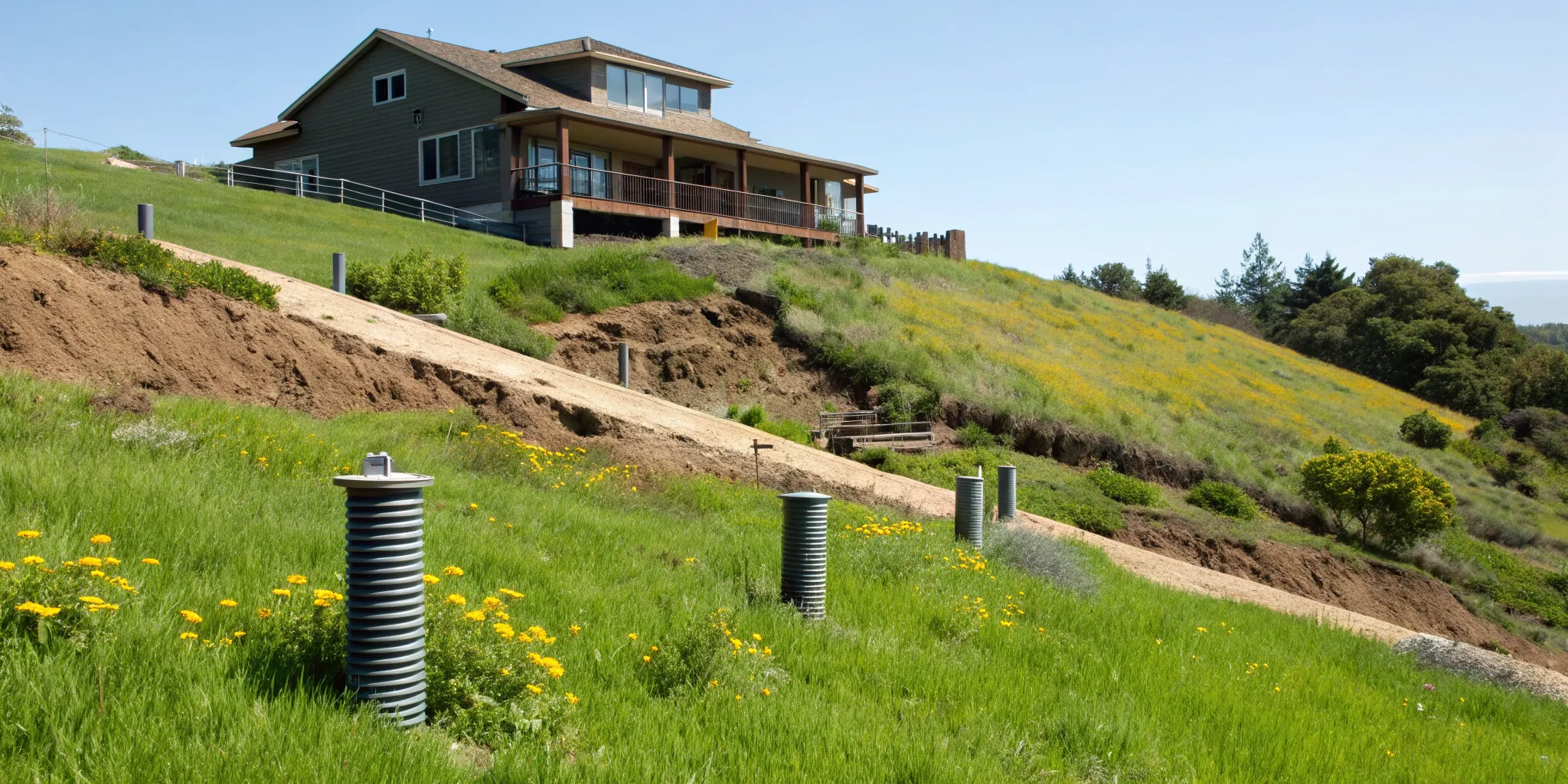
Helical piers are incredibly versatile, but they truly shine in challenging soil conditions. They are an ideal solution for properties with loose, sandy, or wet soil where a traditional shallow foundation would be at risk of shifting or settling. Because they can be installed to great depths, they can bypass these problematic upper layers to find solid ground. This makes them perfect for a wide range of projects, from supporting decks and home additions to securing the foundations of entire residential and commercial buildings. They are also a key component in more complex projects like hillside stabilization, where preventing soil movement is critical.
The Engineering That Makes Them Work
The reliability of a helical pier comes down to precise engineering and professional installation. This is not a DIY project. Trained technicians use specialized hydraulic equipment to install each pier. During this process, the machinery constantly measures the torque—or rotational force—required to drive the pier deeper. This torque reading directly correlates to the pier’s load-bearing capacity, allowing us to verify in real-time that it meets the project’s specific engineering requirements. Once installed, these galvanized steel Push Piers and Helical Piers are designed to last a lifetime, resisting corrosion and the forces of nature like frost heave.
The Helical Pier Installation Process
Seeing your foundation repaired might seem like a massive, disruptive project, but the helical pier installation process is surprisingly streamlined and efficient. It’s a precise, engineered solution that gets straight to the root of the problem without turning your property into a major construction zone. The key is a methodical approach that starts long before the first pier touches the ground. From a thorough site analysis to the final checks, every step is designed for maximum stability and minimal fuss. Let’s walk through what you can expect when professionals install helical piers to secure your home.
Step 1: Site and Soil Assessment
Before any work begins, a successful foundation repair project starts with a detailed assessment of your property and the soil beneath it. This isn’t just a quick look-around; it’s a critical diagnostic step. Our team analyzes the soil composition, density, and moisture levels to understand the specific conditions we’re working with. This information tells us exactly how deep the piers need to go to reach stable, load-bearing soil and what kind of twisting force, or torque, will be required. Careful planning at this stage ensures the entire installation is tailored to your property’s unique needs, setting the foundation for a lasting solution.
The Tools Needed for the Job
Installing helical piers requires specialized equipment operated by trained experts. You won’t see a big, messy excavator digging trenches in your yard. Instead, we use powerful hydraulic machinery that’s compact enough to access tight spaces with minimal disruption. This equipment is designed to twist the helical piers deep into the earth like a screw. As the pier is installed, the machinery continuously measures the torque. This real-time data is crucial because it tells our technicians exactly when the pier has reached stable soil and can support the required weight, ensuring a precise and reliable installation every time.
A Step-by-Step Guide to Installation
Once the planning is complete, the installation process is remarkably straightforward and clean. First, we perform minimal excavation at each pier location, just enough to expose the foundation footing. Next, the hydraulic equipment screws the helical pier into the ground until it reaches the predetermined depth and torque. This method avoids the large holes and excess dirt associated with traditional foundation work, keeping your landscaping intact. After the pier is securely in place, a heavy-duty steel bracket is attached to it and secured to your home’s foundation, immediately transferring the structure’s weight to the stable soil below.
How We Guarantee a Quality Job
A quality job means a solution that lasts a lifetime. Helical piers are engineered from high-strength, galvanized steel to resist corrosion and stand up to the elements for decades. They are specifically designed to be unaffected by issues like frost heave or the water damage that can compromise other types of foundations. At Bristol FX, we stand behind our work with extensive warranties, including a lifetime warranty on our pier installations. This commitment to quality materials and expert installation gives you peace of mind that your home is permanently secured. Our waterproofing solutions can also complement these repairs for comprehensive protection.
Why Professional Standards Are Non-Negotiable
When it comes to your home’s foundation, there’s no room for error. The safety and stability of your entire structure depend on the proper installation of every single pier. That’s why expert, certified installation is absolutely essential. An improperly installed pier won’t just fail to solve the problem—it could make it worse. Our technicians are highly trained professionals who adhere to strict engineering standards and safety protocols. From initial assessment to final inspection, we ensure every aspect of the job is done right, providing a secure foundation you can trust for years to come, whether it’s a repair or part of a new construction project.
Comparing Your Foundation Repair Options
When you discover a foundation issue, it’s easy to feel overwhelmed by the different repair methods out there. But understanding the key differences between your options is the first step toward making a confident decision for your property. Helical piers are a modern, engineered solution, but how do they stack up against other common techniques like concrete piers or push piers? Let’s break down the comparisons so you can see why one method might be a better fit for your specific situation than another. We’ll look at everything from soil conditions and installation time to long-term value.
Helical Piers vs. Traditional Concrete Piers
For a long time, concrete piers were the go-to for foundation support. This method involves digging large holes, pouring concrete, and waiting for it to cure. It’s a familiar process, but it comes with significant drawbacks. Traditional concrete methods are slow, messy, and can be easily damaged by weather like frost or excess water during the curing process.
Helical piers, on the other hand, offer a more modern and reliable approach. They are engineered steel piles that are screwed into the ground, so there’s no waiting for concrete to set. This makes the foundation repair process much faster and less disruptive to your property. Unlike concrete, steel isn’t vulnerable to the same weather-related issues, providing a more stable and predictable outcome from the start.
Helical Piers vs. Push Piers: What’s the Difference?
Helical piers and push piers are both excellent, modern solutions, but they are designed for different conditions. Think of helical piers as giant screws that are twisted into the ground. Their helical plates (the “blades” of the screw) provide anchoring force, making them ideal for lighter structures or new construction.
Push piers, also known as resistance piers, are hydraulically driven into the soil using the weight of the structure itself. They are pushed straight down until they hit bedrock or stable, load-bearing soil. Because of this, push piers can often power through very dense or rocky ground where helical piers might struggle. The choice between push and helical piers isn’t about which is “better” overall, but which is perfectly suited for your home’s weight and the soil beneath it.
Which Solution Is Right for Your Soil?
The ground your house sits on is the single most important factor in choosing a foundation repair method. Soil isn’t uniform; it can be loose, dense, wet, rocky, or expansive. Helical piers are especially effective in loose or wet soil because their design allows them to be screwed deep down to reach solid ground or bedrock, providing stability where the surface soil is weak. The helical plates act like anchors, gripping the competent soil layers.
However, if your property has extremely dense, rocky soil, or layers of debris, driving a push pier might be the more effective route. A professional assessment is crucial here. An expert can analyze your soil composition and determine which pier system will provide the most secure and lasting support for your foundation.
A Look at Installation Speed and Disruption
One of the biggest concerns for any property owner is how much a major repair will disrupt their daily life. This is where helical piers truly shine. The installation process is surprisingly fast and clean. Using hydraulic equipment, each pier can often be installed in just minutes with very little noise or vibration. There’s no need for large-scale excavation, which means your landscaping stays largely intact.
Compare this to traditional concrete work, which involves digging, hauling dirt, pouring concrete, and waiting for it to cure—a process that can take days or even weeks. With helical piers, the disruption to your property is minimal, allowing you to get back to normal life much faster without sacrificing the quality of the repair.
Debunking Common Foundation Repair Myths
A common myth is that advanced solutions like helical piers are prohibitively expensive. While they might seem more expensive at first glance than a simple concrete patch, helical piers often save money in the long run. They provide a permanent, engineered solution that prevents future issues, saving you from repeated repair costs down the road. Concrete methods can fail over time, leading to more work and more expense.
Investing in a high-quality foundation repair with helical piers means you’re investing in the long-term structural integrity of your property. It’s not just a quick fix; it’s a lasting solution that protects your home’s value and gives you peace of mind.
A Closer Look at Technical Specs
When you’re dealing with your home’s foundation, the details matter. Understanding the technical side of helical piers can give you confidence in the solution you’re choosing. Let’s get into the specifics of what makes these components so effective for foundation repair and stabilization. From their core design to the quality of the steel, every element is engineered for strength and longevity. Knowing what to look for helps you ensure you’re getting a high-quality, lasting fix for your property.
Key Design Features and Components
At first glance, a helical pier looks like a giant steel screw. That simple design is what makes it so brilliant. Each pier consists of a central steel shaft with one or more helix-shaped plates welded to it. These plates, also called helices, are what allow the pier to be screwed deep into the ground with minimal disturbance to your property. The size and number of these plates are specifically chosen based on your soil conditions and the weight of your home, ensuring a custom fit for your foundation’s needs. This targeted approach is a core part of our push and helical pier installation process.
How They Transfer and Manage Weight
The primary job of a helical pier is to provide a stable base for your foundation. They accomplish this by transferring the weight of your structure off of weak, unstable soil near the surface and onto solid, load-bearing soil or bedrock deep underground. As the pier is screwed into the earth, it passes through the problematic soil layers until it reaches a stratum that can support the load. The helical plates anchor firmly into this stable soil, effectively creating a new, deep foundation that stops settlement and secures your home for the long term.
Built to Withstand the Elements
Your foundation is constantly exposed to the elements, and any repair solution needs to be tough enough to handle it. Helical piers are made from high-strength, galvanized steel to prevent corrosion and ensure they last. They are designed to be a permanent solution, resistant to common issues like water damage and frost heave—the process where soil expands and contracts as water freezes and thaws. By anchoring below the frost line, helical piers aren’t affected by this seasonal movement, providing consistent support year after year. This durability is crucial for any long-term waterproofing and foundation strategy.
Quality Standards and Certifications to Look For
Not all steel is created equal. For a critical structural component like a helical pier, the quality of the materials is non-negotiable. Reputable installers use steel that meets strict industry benchmarks, such as those set by the American Society for Testing and Materials (ASTM). These standards ensure the steel has the required strength and durability to support your home safely. When you work with a professional team, you can be confident that all materials and installation practices comply with local building codes and engineering best practices, giving you a repair that’s built to last.
Understanding Your Warranty Coverage
A warranty is more than just a piece of paper; it’s a company’s promise that they stand behind their work. When it comes to foundation repair, you should look for a comprehensive, long-term warranty. Many leading manufacturers offer extensive coverage on their products, and a confident installer will back their labor as well. At Bristol FX, we provide a lifetime warranty on our pier installations because we use the best materials and adhere to the highest standards. This gives you peace of mind knowing your investment is protected for the life of your home.
The Pros and Cons of Helical Piers
When you’re facing foundation issues, you want a solution that’s both effective and reliable. Helical piers are a popular and powerful tool in modern foundation repair, but like any method, they have specific strengths and weaknesses. Understanding these helps you make the best decision for your property. It’s all about matching the right technology to your unique situation, from the type of soil you have to the specific structural challenges you’re facing. Let’s walk through the key points to consider when evaluating helical piers.
The Main Advantages for Your Property
One of the biggest benefits of helical piers is their versatility. They are a flexible solution that works for a wide range of buildings, from single-family homes to large commercial sites. Whether you’re laying a foundation for new construction or fixing an existing problem, they can be adapted to fit the need. Helical piers are especially effective for correcting common foundation issues like settlement, sinking, and wall cracks that often result from poor soil conditions or excess moisture. By anchoring deep into stable soil, they provide a solid base to support and even lift your foundation back into place, offering a precise and dependable fix.
How They Perform in Different Soil Conditions
Soil is the single most important factor in a foundation’s stability, and helical piers are designed to work exceptionally well in certain types. They are the go-to choice for properties with loose, sandy, or water-saturated soils where other methods might fail. The screw-like design allows them to be turned deep into the ground, bypassing the weak upper layers to reach solid, load-bearing strata. However, they do have limitations. In very dense, rocky, or obstruction-filled ground, it can be difficult or impossible to screw the piers to the required depth. In these cases, an alternative like push piers might be a more suitable solution.
Potential Installation Challenges to Know
While helical piers are incredibly effective, the installation process can present some challenges. The equipment needed to screw the piers into the ground is larger than that used for other methods, which can make installation difficult in tight or confined spaces. If your home has narrow side yards, extensive landscaping, or limited interior access for something like crawl-space repairs, it could complicate the job. The installation process also tends to be more time- and labor-intensive, which can influence the overall project cost. A thorough site assessment is crucial to determine if helical piers can be installed efficiently at your property.
A Look at Long-Term Reliability
When you invest in foundation repair, you want it to last. This is where helical piers truly shine. Made from galvanized steel to resist corrosion, they are engineered for incredible longevity, with an estimated lifespan of over 150 years in typical soil conditions. Once installed, they provide constant, unwavering support that prevents future settling and shifting. This long-term stability protects your property’s value and gives you peace of mind. It’s not just a temporary patch; it’s a permanent solution designed to secure your home’s foundation for generations to come, which is why we can offer a lifetime warranty on our installations.
What to Expect for Maintenance
Here’s some great news: once helical piers are properly installed, they are virtually maintenance-free. They are designed to withstand the elements, including issues like frost heave and damage from soil moisture, without needing any upkeep from you. The key is correct installation by a qualified team. When an experienced company like Bristol FX handles the project, the piers are driven to the right depth and secured to your foundation according to strict engineering standards. This professional approach ensures the system performs as designed for its entire lifespan, making the chances of experiencing further foundation problems extremely low.
Breaking Down the Cost and Value
Let’s talk about the numbers. When you’re facing a foundation issue, the cost is often the first thing on your mind, and that’s completely understandable. It’s a significant investment in your property, and you want to be absolutely sure you’re making a smart choice. Seeing a quote can be daunting without context, which is why we believe in being transparent about what goes into the price of a helical pier installation. Our goal is to help you see it not just as a repair cost, but as a long-term investment in your home or building’s safety, stability, and overall value. A solid foundation is everything, and choosing the right solution means you won’t have to worry about this problem again.
The real value of a professional foundation repair goes far beyond the initial price. It’s about the peace of mind that comes from knowing your property is secure. It’s about protecting your biggest asset from further damage and preserving its market value. In this section, we’ll break down all the factors that shape the final cost, from the materials themselves to the unique specifics of your property. This will give you a clearer picture of what to expect and help you evaluate the incredible long-term benefits of choosing a modern, engineered solution that’s built to last a lifetime.
What Goes Into the Price?
When you receive a quote for helical piers, you’re not just paying for pieces of steel. The price reflects a complete, engineered solution. The material itself, high-strength galvanized steel, is a primary component, with costs often ranging from $10 to $30 per foot. But the total price also includes the specialized hydraulic equipment needed for installation, the expertise of the certified crew, and the initial site assessment and engineering plan. Think of it as a package that covers everything from diagnosis to the final, secure installation, ensuring the job is done right the first time.
Factors That Influence Your Final Cost
No two foundation repair projects are exactly alike, so the cost can vary. Several key factors will influence your final quote. The size and load-bearing capacity of the helical piers needed for your specific structure play a big role. Your property’s soil conditions are also critical; denser or rockier soil can require more time and effort. The depth we need to reach to find stable, load-bearing soil is another major factor—deeper installations require more materials and labor. Finally, site accessibility can impact the cost if the work area is difficult to reach with our equipment.
How Project Size Impacts the Budget
The overall scope of your project is one of the biggest drivers of cost. A small, isolated issue requiring only a few piers will naturally be less expensive than stabilizing an entire side of a building. A typical residential project might need one pier placed every six to nine feet along the affected foundation wall. The total number of piers, combined with the required depth of each one—which can range from 10 feet to over 100 feet—determines the project’s scale. Our team performs a thorough assessment to map out exactly what’s needed for a permanent fix.
Is It a Good Investment for Your Property?
Absolutely. While the upfront cost of helical piers might seem higher than some older, more traditional methods, they often save you money in the long run. The installation process is much faster and involves far less excavation, which means less disruption to your property and landscaping. Unlike concrete, helical piers can be installed in nearly any weather condition, preventing costly delays. Most importantly, they provide a permanent solution that drastically reduces the risk of future foundation movement, cracking, or settling. This protects your property’s value and gives you invaluable peace of mind.
The Long-Term Value of a Secure Foundation
A foundation repair is something you should only have to do once. Helical piers are engineered to last a lifetime, providing a stable base that resists common issues like frost heave and water damage. When installed correctly by a certified team, the chances of experiencing further foundation problems are extremely low. That’s why we stand behind our work with extensive warranties, including a lifetime warranty on our pier installations. This isn’t a temporary patch; it’s a permanent solution that secures your property’s structural integrity for the future, making it one of the smartest investments you can make in your home or commercial building.
Related Articles
Frequently Asked Questions
How long does a typical helical pier installation take? While every project is different, you might be surprised by how quickly we can secure your foundation. For most residential homes, the entire installation process is completed in just a few days. Because there’s no concrete to pour or wait on to cure, the work is streamlined and efficient, allowing you to get back to your normal routine much faster than with traditional methods.
Will the installation process damage my landscaping? We understand how much your home’s curb appeal matters, which is why our process is designed for minimal disruption. Instead of digging large, messy trenches, we only need to create small, targeted excavation points right next to the foundation. Our equipment is compact and maneuverable, allowing us to work carefully around your existing plants, patios, and walkways.
Can helical piers actually lift my foundation back to its original level? Yes, in many situations, helical piers can be used to carefully lift a settled foundation. After the piers are installed and anchored in stable soil, a hydraulic system is used to gradually raise the structure. The goal is always to achieve the maximum practical recovery, closing cracks and leveling floors without putting unnecessary stress on your home.
Are helical piers always the best solution for foundation problems? Helical piers are an incredibly effective and versatile solution, but the right method always depends on your specific property. They perform exceptionally well in loose or wet soils. However, for homes on extremely dense or rocky ground, a push pier system might be a better fit. A thorough soil and site assessment is the only way to determine the perfect, permanent solution for your home.
What makes your lifetime warranty on piers so important? Our lifetime warranty is our promise that this is a permanent fix. It reflects our confidence in the high-quality, galvanized steel materials we use and the precision of our certified installation process. It means you’re not just paying for a repair; you’re investing in a lasting solution that protects your property’s value and gives you complete peace of mind for the future.