
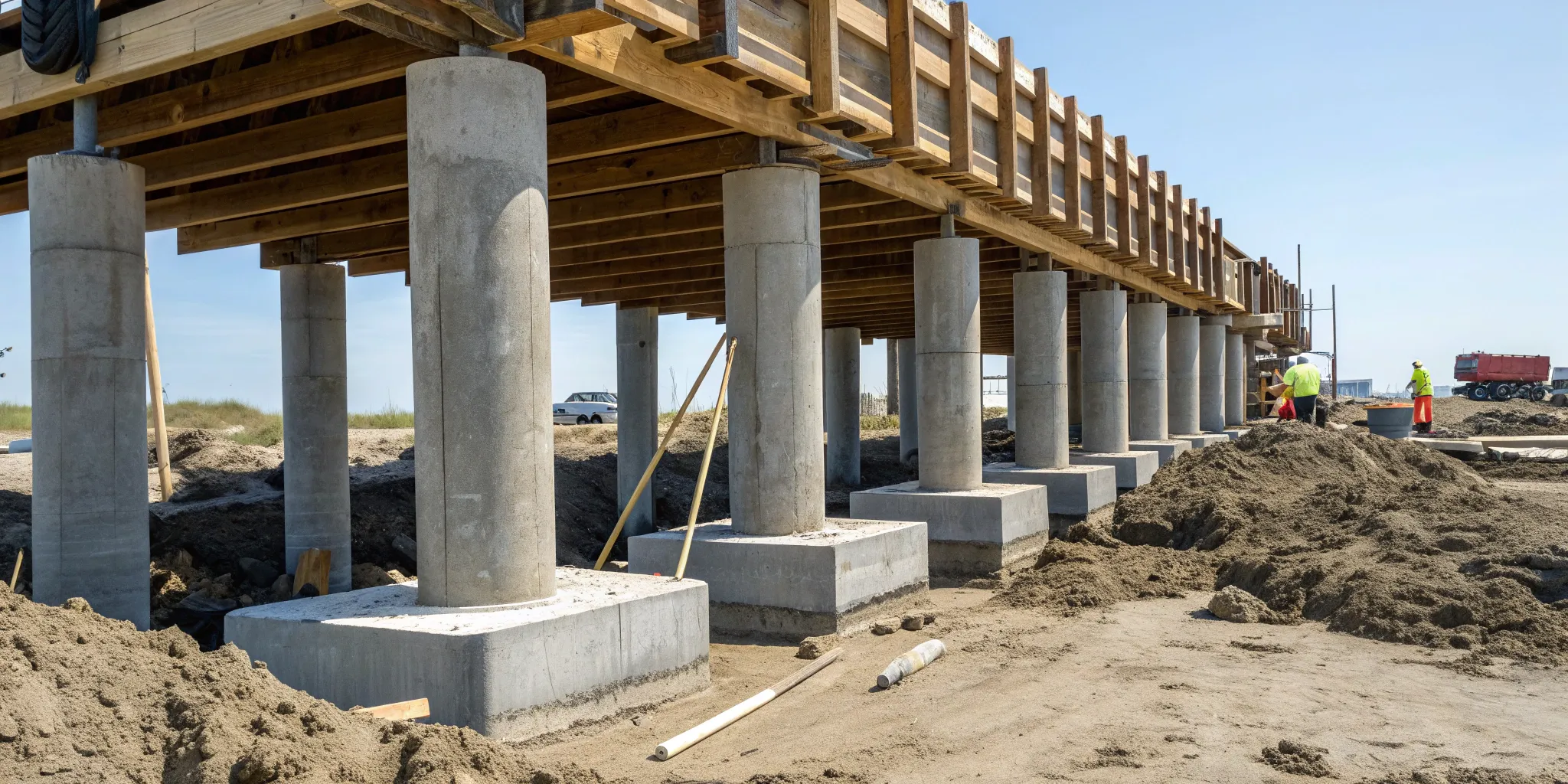
Building on a hillside or on land with soft, unreliable soil presents a unique set of challenges. A standard slab foundation often isn’t an option, as it can’t provide the necessary stability against shifting and settling. This is where a pier foundation truly shines. It is an engineered solution designed specifically for these difficult conditions, using deep columns to bypass weak soil and anchor the structure directly to bedrock or a stable stratum. This makes even the most complex sites buildable and secure. We’ll explore how this technology works, the different systems available for hillside stabilization, and the critical phases of pier foundation construction that turn a challenging lot into a solid homesite.
Key Takeaways
- Anchor Your Home on Solid Ground: Pier foundations bypass weak surface soil by transferring your home’s weight deep down to a stable layer of earth or bedrock. This makes them an ideal solution for properties with expansive clay, poor soil, or on steep slopes.
- Choose the Right Pier for the Job: Not all piers are the same. The best system for your property—whether it’s push piers, helical piers, or another type—depends on your home’s weight and specific soil conditions. A professional evaluation is non-negotiable to ensure a lasting repair.
- Proactive Maintenance is All About Water Control: Protecting your foundation is simpler than you think. Your primary role is to manage water by keeping gutters clean and ensuring the ground slopes away from your home. Watch for new cracks or sticking doors, as these are early signs that it’s time to call an expert.
What is a Pier Foundation?
If you’ve ever seen a house that looks like it’s standing on a series of sturdy legs, you’ve likely seen a pier foundation. Think of it as a system of deep, underground columns that support your home’s weight. Instead of a single, solid concrete slab that rests directly on the ground, a pier foundation uses strategically placed pillars to transfer the entire load of the structure down to stable, solid ground far below the surface. This approach is a game-changer for properties where the topsoil is weak, expansive, or otherwise unstable. By bypassing those problematic upper layers, the piers anchor your home to a much more reliable layer of earth or bedrock, preventing the settling and shifting that can lead to cracked walls and uneven floors. This design creates a strong, stable base and also lifts the structure, creating a crawl space underneath. This space is not just for old boxes; it provides crucial ventilation to prevent moisture buildup and offers easy access for plumbing and electrical work. For properties with challenging soil conditions, a pier foundation is often the most effective and reliable solution for long-term structural integrity.
How Pier Foundations Work
The magic of a pier foundation lies in its ability to reach deep into the ground. The columns, or piers, are driven or drilled past the weak, shifting topsoil until they hit a layer of load-bearing soil or bedrock. Once anchored, they act like stilts, holding your home steady and secure. This process effectively transfers the building’s weight from the unstable surface to the solid ground below, preventing the settling and shifting that can cause major structural damage. This design also elevates your home, creating a crawl space that offers several benefits. It helps protect the structure from ground moisture and pests while allowing air to circulate, which can prevent issues like mold and wood rot. Having this accessible space also makes it much easier for professionals to perform inspections and crawl-space repairs on your home’s essential systems without major disruption.
The Core Components of a Pier System
A pier foundation isn’t a one-size-fits-all solution; its components can vary based on the building’s needs and the soil conditions. The piers themselves are typically made from reinforced concrete, steel, or sometimes masonry. Each material offers different strengths and is chosen based on the specific demands of the project. For example, concrete piers are known for their durability and compressive strength, making them a common choice for many homes. In modern foundation repair, engineered steel piers have become a go-to solution. These include options like push piers, which are hydraulically driven into the ground, and helical piers, which are screwed into the earth like a giant corkscrew. These advanced systems provide incredible stability and can be installed with precision to lift and support a settling foundation.
How Piers Transfer Your Home’s Weight
The primary job of any foundation is to safely distribute the weight of your home—what engineers call the “super-imposed load”—onto the ground. A pier foundation does this by channeling that weight down through each individual column. Because these piers extend deep into the earth to what’s known as “firm strata,” they can bypass the soft or expansive soils near the surface that cause so many foundation problems. Think of it this way: if you were to stand in soft mud, you’d sink. But if you stood on stilts that reached solid ground beneath the mud, you’d remain stable. That’s exactly what push piers and helical piers do for your home. They provide a direct connection to stable earth, ensuring that the immense weight of your house is supported by a layer that won’t shift, sink, or swell with changing moisture levels.
Exploring the Types of Pier Foundations
Not all foundation piers are created equal, and choosing the right one is critical for a lasting repair. The best type of pier for your property depends on several factors, including your soil conditions, the weight of your structure, and the specific foundation issue you’re facing. Think of it like choosing the right tool for a job—you wouldn’t use a hammer to turn a screw. Similarly, a pier designed for a light residential home won’t work for a heavy commercial building.
Understanding the main categories of piers can help you feel more confident when discussing your project with a foundation specialist. The most common options you’ll encounter are push piers, helical piers, concrete piers, and drilled caissons. Each is engineered for a different purpose, from lifting a sinking corner of your house to supporting a brand-new high-rise. A professional assessment will determine the ideal solution, but knowing the basics empowers you to ask the right questions and understand the proposed foundation repair plan for your property.
Push Piers vs. Helical Piers
When it comes to residential foundation repair, the conversation often comes down to two popular steel systems: push piers and helical piers. Push piers are strong steel tubes that are hydraulically driven through unstable soil until they hit solid bedrock or a load-bearing stratum. They use the weight of your home as resistance to achieve this depth. On the other hand, helical piers look like giant corkscrews. They are screwed into the ground with hydraulic machinery, which makes them excellent for lighter structures or for use in new construction projects where there isn’t an existing structure to provide counterweight. Both are fantastic, long-term solutions for stabilizing and lifting a foundation.
Concrete and Steel Piers
Beyond the installation method, piers can also be categorized by their material. Concrete piers are exactly what they sound like: columns made of concrete. They are incredibly strong under compression, resistant to fire and pests, and require very little maintenance over their lifespan. Steel piers, which include the push and helical types we just discussed, are prized for their ability to be driven deep into the earth to bypass weak or shifting soil layers. They are the go-to choice for stabilizing large structures or homes on properties with particularly challenging soil conditions. The choice between them often depends on the specific load requirements and the geotechnical profile of your land.
Drilled Caissons for Heavier Loads
For the biggest and heaviest jobs, we turn to drilled caissons. These are heavy-duty, high-capacity piers created by drilling a large-diameter hole deep into the ground and filling it with reinforced concrete. Think of them as super-sized piers designed to support immense weight, which is why you often see them used for bridges, retaining walls, and large commercial buildings. If you’re dealing with a massive structure or need to build on a steep incline, drilled caissons provide the uncompromising stability needed for a safe and permanent foundation. This method is a key part of modern hillside stabilization and large-scale construction.
The Pros and Cons of Pier Foundations
Deciding on the right foundation system for your property is a big deal. Pier foundations are a fantastic solution in many situations, but like any construction method, they come with their own set of advantages and potential challenges. Understanding both sides of the coin helps you make an informed choice that ensures your home or building stays stable and secure for years to come. Let’s walk through what makes pier foundations a great option and what you need to keep an eye on.
Why Choose a Pier Foundation?
The biggest advantage of a pier foundation is its ability to provide incredible stability on less-than-ideal ground. Instead of resting on surface-level soil, which can be weak or unstable, piers act like stilts. They are driven deep into the earth to transfer the building’s entire weight onto solid, load-bearing soil or bedrock. This makes them a go-to solution for large structures or homes built on tricky terrain. They also elevate the structure, which is a huge plus for protecting it from flood damage. If you live in an area with expansive soil that shrinks and swells with moisture changes, a pier foundation helps isolate your home from that movement, preventing future foundation repair headaches.
Potential Drawbacks to Consider
While piers are incredibly effective, they aren’t without potential downsides, especially if not installed correctly. The space created underneath the house, known as a crawl space, can be a magnet for moisture. Without proper ventilation and sealing, this dampness can lead to wood rot, mold growth, and can even attract pests. Over time, improperly supported floors might begin to sag, or support beams could shift. This is why professional installation is non-negotiable. An expert team can address these risks from the start with proper crawl-space repairs and moisture barriers, ensuring the space stays dry and your foundation remains solid.
Balancing Upfront Cost and Long-Term Value
From a budget perspective, pier foundations often have an edge. They typically require less excavation and material—specifically concrete—than a continuous slab or full basement foundation. This can save you both time and money during the initial construction phase. The key is to view it as a balance between upfront savings and long-term maintenance. While you might need to invest in waterproofing and regular inspections to manage the crawl space, you gain easier access for plumbing and electrical repairs down the road. When installed correctly, a pier foundation offers a cost-effective and durable solution that provides lasting value and peace of mind.
A Step-by-Step Look at Pier Foundation Construction
Building a strong pier foundation isn’t just about digging holes and pouring concrete. It’s a precise, multi-stage process that ensures your property has the stable support it needs for decades to come. Each step, from the initial soil test to the final quality check, plays a critical role in the foundation’s long-term performance and durability. Let’s walk through the key phases of construction to understand how a reliable pier system comes to life.
Preparing the Site and Analyzing the Soil
Before any digging begins, the first step is a thorough site preparation and soil analysis. This phase is all about planning and making sure the ground can support the structure. Crews will clear the area of any vegetation, debris, or obstacles and precisely mark where each pier will be located. More importantly, a geotechnical engineer might be brought in to assess the soil’s load-bearing capacity. This analysis determines the right type, size, and depth for the piers, ensuring they are anchored in stable soil. Think of it as creating a detailed blueprint that prevents future settling and structural issues. This foundational work is essential for any successful new construction project.
The Excavation and Drilling Process
Once the plan is set, the physical work starts with excavation. Using specialized equipment, technicians drill or dig cylindrical holes at the marked locations. The depth of these holes is critical; they must extend past soft, unstable topsoil to reach a solid layer of soil or bedrock. This ensures the foundation has a firm footing to transfer the building’s weight. For smaller projects, this might be done by hand, but for most residential and commercial jobs, mechanical augers are used for efficiency and precision. The goal is to create clean, uniform shafts that are ready for the piers, which is a key part of installing push and helical piers.
Installing Piers with Precision
With the holes prepared, the next step is installing the piers themselves. Depending on the project, this could involve lowering precast concrete piers into place or building them on-site with formwork and rebar. Precision is key. Each pier must be perfectly level, plumb, and aligned with the others to properly support the structure’s beams and floor joists. Piers are typically built to extend about a foot or more above the ground. This elevation creates a crawl space and helps protect the building’s wooden components from ground moisture, a common cause of problems that lead to crawl-space repairs.
Pouring and Curing the Concrete
For cast-in-place piers, this stage is where the foundation gains its strength. After a cylindrical formwork or mold is set in the hole, a cage of steel rebar is placed inside. This rebar provides tensile strength, helping the concrete resist cracking under pressure. Next, high-grade concrete is poured into the form, making sure to eliminate any air pockets. The concrete then needs to cure, a chemical process where it hardens and gains strength over several days or weeks. Proper curing is vital for the foundation’s durability and ability to handle the structural load. Rushing this step can compromise the integrity of the concrete, leading to future needs for crack injection or repair.
Final Inspections and Quality Checks
The final step is a comprehensive inspection to ensure everything was built to specification. A structural engineer or foundation specialist will verify that the piers are correctly placed, properly cured, and capable of supporting the intended load. They check for any signs of defects, ensure the alignment is perfect, and confirm that all local building codes have been met. This quality check provides peace of mind and confirms that the foundation is sound and secure. If you ever have concerns about an existing pier foundation, it’s always best to call professionals for a thorough foundation repair inspection.
Essential Materials and Equipment for Pier Construction
Building a foundation that lasts a lifetime starts with using the right materials and machinery. A pier foundation isn’t just about digging holes and pouring concrete; it’s a precise engineering process where every component plays a critical role. From the specific grade of concrete to the powerful hydraulic drivers, the quality of the materials and equipment directly impacts the stability and longevity of your home’s foundation. This is why professional teams rely on a specific set of industrial-grade tools and supplies to get the job done right.
Think of it as a combination of brute strength and surgical precision. The strength comes from high-grade steel and specially formulated concrete designed to withstand immense pressure and the test of time. The precision comes from advanced machinery that can drive piers deep into the earth to exact specifications, monitor soil resistance, and ensure perfect alignment. Without both of these elements working in harmony, a foundation can fail before its time. Understanding these essential components helps you appreciate the expertise that goes into a proper foundation repair or installation. It’s the difference between a temporary patch and a permanent solution that secures your property for decades to come. In the following sections, we’ll break down the key materials and equipment that form the backbone of a reliable pier foundation.
High-Grade Concrete and Reinforcement
When we talk about concrete for pier foundations, we’re not talking about the standard mix you’d find at a home improvement store. Professional-grade concrete is specifically formulated to achieve a certain compressive strength, ensuring it can handle the immense weight of your property without cracking or degrading. To give it tensile strength—the ability to withstand stretching or bending forces—we embed steel reinforcement bars (rebar) within the concrete forms before pouring. This combination creates an incredibly robust pier that resists fire, pests, and the constant pressure from the surrounding soil. This attention to material science is a core component of a comprehensive foundation repair strategy, ensuring the fix is permanent.
Steel Anchors and Support Systems
For many foundation repairs, steel piers are the heroes working deep beneath the surface. These aren’t just simple metal posts; they are engineered support systems designed to bypass weak, unstable soil. Systems like push piers and helical piers are hydraulically driven into the ground until they reach solid bedrock or a stable, load-bearing soil layer. This process effectively anchors your home to solid ground, transferring its weight to a stratum that won’t shift or settle. To ensure they last for generations, these steel components are typically galvanized or coated to prevent corrosion from soil and moisture, providing a truly long-term solution for foundation settlement.
The Right Tools for the Job
Installing a pier foundation correctly requires some serious hardware. The process begins with excavation equipment to clear the area, followed by powerful augers or drills to create the necessary holes. For helical piers, specialized hydraulic drivers are used to twist the piers deep into the earth with immense torque. We also use custom formwork to shape the concrete piers and ensure they are uniform and properly sized. Throughout the installation, precision instruments are used to monitor depth, alignment, and pressure, guaranteeing that each pier is installed exactly to engineering specifications. This level of precision is essential for any project, especially for new construction where the foundation sets the stage for the entire structure.
Critical Safety Gear and Protocols
Foundation work is complex and carries inherent risks, which is why safety is always the top priority. Every member of a professional crew is equipped with personal protective equipment (PPE), including hard hats, steel-toed boots, safety glasses, and heavy-duty gloves. Beyond individual gear, strict site protocols are essential. This includes securing excavation sites to prevent collapses, following lockout/tagout procedures for heavy machinery, and managing the site to control water and soil stability. A key part of a safe and effective project is also implementing proper waterproofing measures to protect both the crew during the work and the foundation for years to come, preventing future issues from arising.
Common Pier Construction Mistakes to Avoid
A pier foundation is an excellent choice for many properties, but its strength is only as good as its installation. Even small shortcuts or oversights during construction can lead to major headaches down the road, from uneven floors to serious structural damage. Knowing what can go wrong is the first step to making sure everything goes right. Here are some of the most common—and costly—mistakes to avoid when building a pier foundation.
Rushing Site Preparation
Think of site preparation as the essential first chapter of your foundation’s story. If you rush it, the rest of the plot falls apart. Proper site prep involves more than just clearing the land; it means ensuring the ground is perfectly graded and the soil is stable enough to support the structure. When this step is hurried, you risk building on an unstable base, which can cause piers to shift or settle unevenly over time. A solid foundation repair strategy always begins with meticulous groundwork, creating a solid platform that ensures the integrity of the entire project from day one.
Incorrectly Placing Anchor Bolts
Anchor bolts are the critical connection between your home and its foundation. Their job is to hold everything securely in place, and their placement is a matter of precision, not guesswork. When anchor bolts are installed incorrectly—or worse, overlooked—the entire structure is vulnerable. It can shift on the foundation, leading to instability that compromises the building’s ability to handle stress from wind, soil movement, or seismic events. Professional installation of systems like push and helical piers requires exact adherence to engineering plans to ensure every component is perfectly aligned and secured for maximum strength and safety.
Overlooking Moisture Control
Water is a foundation’s number one enemy. If moisture isn’t managed correctly, it can wreak havoc on a pier system. Poor drainage can lead to soil erosion around the piers, causing them to lose support and shift. Water can also cause the soil to expand and contract, putting constant pressure on the foundation. Over time, this water-induced movement can lead to uneven settling and structural strain. Implementing a robust waterproofing and drainage plan from the start is non-negotiable. It protects the piers, prevents moisture from seeping into your crawl space, and preserves the long-term stability of your home.
Compromising on Material Quality
When it comes to your foundation, the quality of the materials used is not the place to cut corners. Using low-grade concrete or untreated steel might save a little money upfront, but it will cost you far more in the long run. Inferior concrete is more porous and prone to cracking, while cheap steel can corrode and weaken, compromising the pier’s strength. The entire system relies on the durability of its components. That’s why insisting on high-quality materials is essential for any new construction foundation project. It ensures your foundation can withstand the elements and the test of time, giving you a secure and lasting base for your property.
Is a Pier Foundation Right for Your Property?
Deciding on the right foundation is one of the most critical choices you’ll make for your property. A pier foundation offers incredible stability, but it isn’t a one-size-fits-all solution. Whether it’s the right match for your home or commercial building depends entirely on your property’s unique characteristics. To figure this out, you need to look at four key areas: the ground beneath your feet, the weight of your structure, the surrounding environment, and even the local climate. Let’s walk through each of these factors so you can make an informed decision.
Assessing Your Soil Conditions
The first step is always to look down. The type of soil on your property is the single most important factor in foundation design. Some soils, like expansive clay, swell and shrink dramatically with moisture changes, while sandy soils can shift or wash away. Pier foundations are particularly effective when the topsoil is weak, as they can reach deeper, more competent soil or bedrock. A professional assessment is key here. A geotechnical engineer can analyze soil samples to determine the load-bearing capacity, which tells us how much weight the ground can safely support. This scientific approach ensures your foundation repair plan is built on solid data, not guesswork.
Calculating Your Structure’s Load
Next, you need to consider the weight of the building itself, also known as the structural load. A small, single-story home exerts far less pressure on the ground than a large commercial building or a multi-story residence. Pier foundations excel at supporting heavy structures because they transfer the building’s entire weight past unstable soil layers directly to a solid base. Think of them as stilts for your house, firmly planted on solid ground. Properly engineered push and helical piers are designed to handle specific loads, ensuring your property remains stable and secure for decades, regardless of its size or the soil conditions at the surface.
Factoring in Environmental and Site Conditions
Your property is more than just a patch of dirt; its entire environment plays a role. Is your home built on a slope? Is there a high water table or poor drainage? These conditions can put unique stresses on a foundation. Pier systems are an excellent solution for complex sites, especially for hillside stabilization projects where a traditional slab foundation isn’t feasible. They are also ideal when the soil has a low capacity to hold water, as this reduces the risk of piers sinking over time. By evaluating the complete picture—topography, water flow, and soil layers—we can determine if piers will provide the necessary long-term stability for your specific location.
Understanding Frost Lines and Seasonal Shifts
If you live in an area with cold winters, you can’t ignore the frost line. This is the depth to which the ground freezes during the winter. When water in the soil freezes, it expands, and this upward pressure—known as frost heave—can lift a shallow foundation right out of the ground. To prevent this, piers must be installed so their bases sit well below the local frost line. This anchors the foundation in soil that remains unfrozen and stable year-round, protecting your property from seasonal movement. It’s a fundamental requirement for any new construction or repair project in a cold climate, ensuring your foundation stays put through every freeze and thaw cycle.
How to Maintain Your Pier Foundation for the Long Haul
Pier foundations are built for strength and longevity, providing incredible stability by anchoring your home to solid ground. They are a fantastic solution, especially in areas with challenging soil conditions. But just like any other major component of your property, a little proactive care can make a huge difference in its performance over the decades. Think of it as simple preventative health for your home’s structure. The good news is that maintaining a pier foundation isn’t complicated or time-consuming. You don’t need to be an engineer to keep an eye on things.
By creating a simple maintenance routine and knowing what to look for, you can catch small issues before they turn into major headaches. Most of the work involves observation—paying attention to how your home behaves and managing the environment directly around it, particularly water. These regular checks will give you peace of mind and help protect your investment for the long haul. Below, we’ll walk through a straightforward checklist for inspections, tips for managing drainage, and the signs that tell you it’s time to call in a professional for a closer look. A little attention now can prevent the need for significant foundation repair down the road.
Your Regular Inspection Checklist
A few times a year, take a walk around and inside your property with a specific focus on your foundation’s health. Look for tell-tale signs that something might be shifting. Are your floors uneven or do they feel bouncy when you walk across them? Check your windows and doors—if they’ve started sticking or have become difficult to close, it could indicate movement. One of the most obvious signs is new cracks appearing in your drywall, ceilings, or exterior brickwork, especially those that run diagonally from the corners of doors and windows. These symptoms are your home’s way of telling you that it’s experiencing stress. Keeping a simple log of your observations can help you track changes over time.
Tips for Drainage and Waterproofing Upkeep
Water is the number one enemy of any foundation. For pier systems, excess moisture can saturate the soil, reducing its stability and increasing pressure on your foundation. The best defense is a good offense: manage water effectively. Start with the basics by keeping your gutters and downspouts clear of debris so they can function properly. Make sure your downspouts extend at least five feet away from your home to direct water away from the foundation. The ground around your property should also have a gentle slope away from the walls. For more robust protection, consider professional waterproofing solutions, which can prevent water from ever reaching and compromising the areas around your piers.
Monitoring Soil and Pressure Changes
Your pier foundation was designed to transfer your home’s weight to stable soil layers deep underground. However, significant changes to the soil closer to the surface can still impact the system. Be mindful of events that can alter the landscape and soil pressure around your home. This includes major landscaping projects, nearby construction, or even extreme weather patterns like a long drought followed by heavy rains. These events can cause the soil to expand, contract, or shift, which can put new stresses on your foundation. On sloped properties, this is even more critical, as soil movement can be a constant factor. Understanding these dynamics is key to long-term hillside stabilization and foundation health.
When to Call in the Experts
While regular inspections are something you can do yourself, foundation fixes are not a DIY project. If you spot any of the warning signs from your checklist—like widening cracks, sticking doors, or sloping floors—it’s time to call a professional. Don’t wait for the problem to get worse. A foundation repair expert can perform a thorough inspection to identify the root cause of the issue and recommend the right solution. Getting a professional opinion early can save you a significant amount of stress and money. An expert assessment is the first and most important step toward any necessary foundation repair, ensuring your home remains safe and secure for years to come.
Related Articles
Frequently Asked Questions
How can I tell if my home’s foundation issues could be solved with piers? If you’re seeing symptoms like diagonal cracks in your drywall, doors that stick, or floors that have started to slope, your home is telling you it’s under stress. These are classic signs of a settling foundation, which is often caused by unstable soil. Pier systems are specifically designed to solve this exact problem by bypassing the weak soil and anchoring your home to solid ground, providing a permanent fix for the root cause of the issue.
Can foundation piers actually lift my house back into place? Yes, in many situations, foundation piers can lift a settled portion of your home back toward its original position. During the installation process, hydraulic jacks are used to carefully raise the structure. The goal is to achieve the maximum practical recovery without causing any new stress to your home. A professional assessment will determine the potential for lifting and what you can realistically expect from the repair.
Is installing foundation piers a messy and disruptive process for my property? It’s natural to worry about your yard and home during a major repair, but the process is often much less invasive than people imagine. Professional crews use specialized, compact equipment and work in targeted areas to minimize the impact on your landscaping. While it is a construction project, the focus is on being as efficient and clean as possible so you can get back to enjoying your home quickly.
My house is on a concrete slab. Can pier systems still be used for repairs? Absolutely. Pier systems are a versatile solution that works for homes with slab foundations as well as those with crawl spaces. For a slab-on-grade home, technicians create small, strategic access points through the concrete slab to install the piers directly underneath. Once the foundation is stabilized, these areas are carefully patched and repaired.
How long do steel pier repairs last? When installed correctly by a professional team, steel piers are considered a permanent solution. They are engineered from high-strength, galvanized steel to resist corrosion and are driven deep into the earth until they reach stable, load-bearing soil or bedrock. This means they are designed to last for the entire life of your home, providing you with lasting stability and peace of mind.