
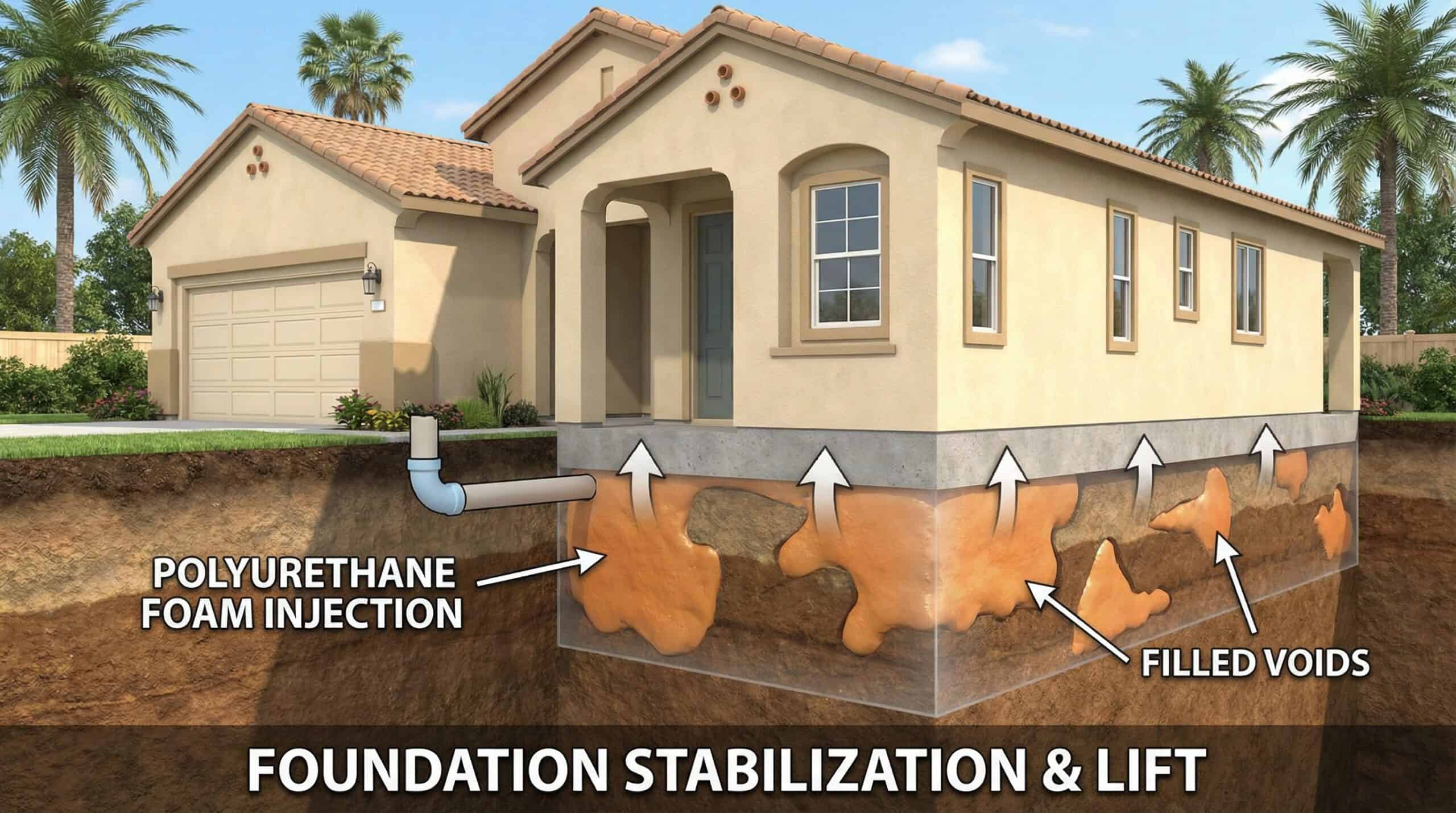
An unstable sub-grade — the soil beneath your home or business — can cause your foundation to crack or unevenly settle. Foundation repair foam offers a fast, permanent fix.
Foundation repair foam is one of the cleanest, fastest ways to fix a sinking foundation. Also known as polyurethane foam foundation leveling, this method is injected under your concrete slab, where it expands to fill voids, stabilize soil, and gently lift the slab back into place — often in a matter of hours.
Furthermore, in this guide you’ll learn how foundation repair foam works, what it costs, the technical specs that matter, and whether it’s the right fix for your home or business.
What Is Foundation Repair Foam?
Foundation repair foam — more technically known as polyurethane geotechnical foam — is a 2-part polymer synthesized from a chemical reaction between polyols and isocyanates. When combined at the correct temperature and pressure, these chemicals expand to form a dense but lightweight foam.
Since its creation in the early 1940s, polyurethane foam has been used in industries around the world for cushioning, insulation, packaging, and refrigeration. However, in the context of concrete polyurethane foam injection, it’s specially engineered to raise sinking concrete sidewalks, foundations, and slabs of almost any type.
Foundation Repair Foam: Technical Specs by the Numbers
Not all foundation repair foam is created equal. Professional-grade geotechnical polyurethane foam is engineered with specific performance properties that separate it from hardware-store spray foam. Here’s what the science actually says.
- Compressive strength: 40 to 120 PSI depending on density — strong enough to support highway traffic and heavy commercial loads (tested per ASTM D1621 standards).
- Density: 2.5 to 4 pounds per cubic foot — roughly 40 times lighter than mudjacking slurry, which weighs 130 to 150 pounds per cubic foot.
- Expansion ratio: Up to 25× its liquid volume, allowing small amounts of material to fill large voids precisely.
- Cure time: Reaches 90% strength within 15 minutes. Traffic-ready the same day.
- Closed-cell structure: Hydrophobic (water-repelling) — will not absorb groundwater or erode over time.
- Chemical stability: Inert once cured. Non-toxic and non-leaching, and safe for long-term soil contact.
- Service life: Professionally installed foundation repair foam is designed to last the life of the structure.
According to published research in civil engineering journals, high-density polyurethane foams maintain structural integrity under the cyclic loading typical of highway, commercial, and residential applications.
What Foundation Repair Foam Can Do
Void Filling
Poor drainage can cause the soil beneath a foundation to wash away, leaving gaps or voids that make the soil less dense and less stable. Technicians use polyurethane foam to fill these voids and restore stability to weak and loose subgrade.
Stabilizing Slabs
When a slab lacks sufficient support and can’t bear the load of the building atop it, it can sink or crack. In these situations, the foam fills voids in the soil, provides extra support, and eliminates movement.
Repairing Seawalls
Technicians can also use polyurethane foam to repair seawalls on seaside properties. Over time, seawalls wear down from constant tidal action and the chemical attack of salty seawater. Cracks and breaks in seawalls allow water through, and this water can wash away the soil near a building’s foundation. Polyurethane injection seals leaks in seawalls and fills voids to restabilize loose soil.
How Foundation Repair Foam Is Injected
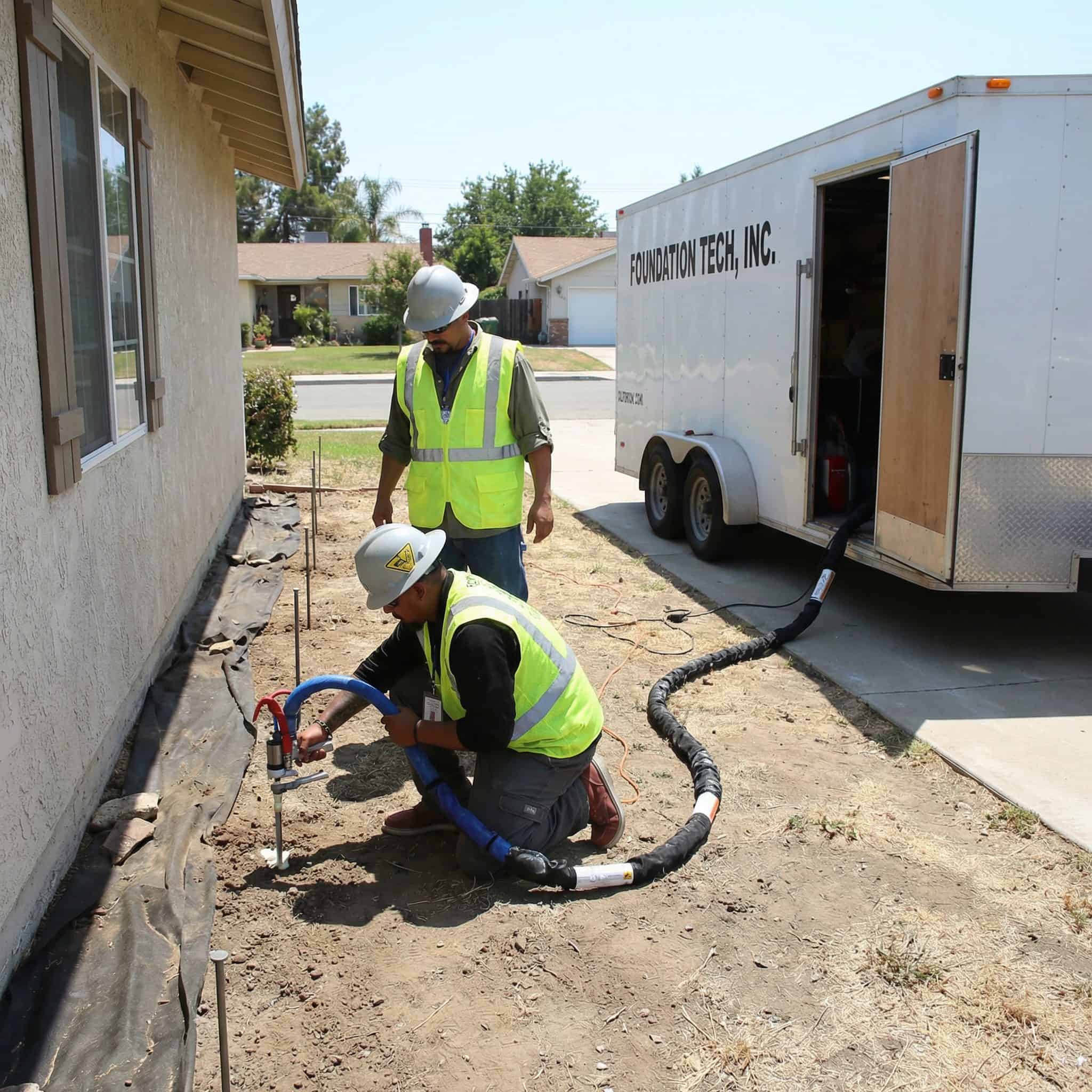
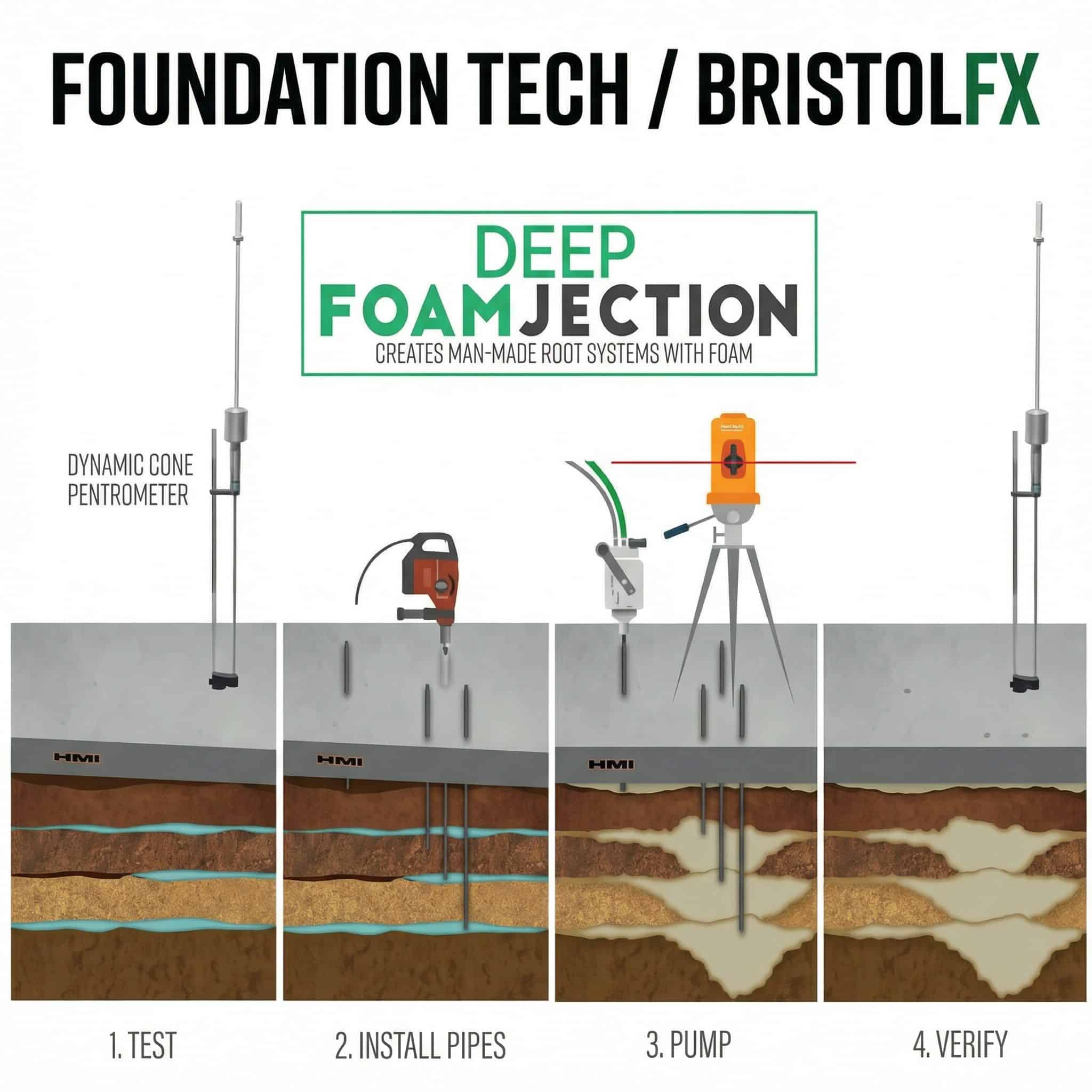
Foundation repair foam is specially engineered for use with concrete slabs. It’s powerful — the expansion exerts enough pressure to push cracked or shifted concrete back into its original position. During the foam leveling process, small, dime-sized holes, roughly 5/8 of an inch, are drilled into a concrete slab. Next, a technician places tapered ports into these holes and attaches a foam pump or gun to the ports.
These pumps are loaded with polymer liquid. Once injected through the port, the liquid rapidly expands into foam. As a result, the pressure created by this expansion compresses loose soil and raises the concrete slab back into place. Finally, the technician removes the pumps and ports and patches the small injection holes with grout or concrete. Once patched, the slab looks almost as good as new.
The Benefits of Foundation Repair Foam
Why choose foundation repair foam over comparable solutions like mud jacking? It’s a reliable, permanent fix with countless benefits.
It’s Cost-Effective
Additionally, this repair method is budget-friendly and costs less than half the price of replacing a slab entirely. On average, it costs between $7.00 and $12.00 per pound of foam to lift and level a foundation.
It’s Environmentally Friendly
Furthermore, in its cured state, polyurethane foam is inert and non-toxic. It won’t leach corrosive chemicals into the ground or groundwater.
It’s Moisture Tolerant
The cured foam is hydrophobic — basically waterproof. When exposed to moisture, it remains hard and immobile, making it a sturdier option than slurry or mud, which can wash away. When injected, the foam actually pushes water out of the area as it expands. It has zero shrinkage after curing.
It Cures Quickly
Moreover, polyurethane foam hardens within 2–3 minutes of injection and reaches full cure in about 15 minutes. That means the repaired surface is traffic-ready the same day.
It’s Long-Lasting
This foam is a synthetic polymer engineered for permanence. In most cases, it provides a long-term solution to foundation settlement or sinking.
It’s Lightweight
In contrast, mud jacking slurry weighs 130–150 pounds per cubic foot, and that heavy load can cause the foundation to gradually sink again. Polyurethane foam weighs just 2.5 to 4 pounds per cubic foot — it won’t put excessive strain on the soil beneath your foundation.
It’s Non-Invasive
There’s no need to vacate your home or business during the injection process. Occupants can continue to live or work normally while the contractor drills and injects. The leveling process doesn’t involve heavy, loud machinery or excavation, and typically takes just a few hours from start to finish.
How Foundation Repair Foam Works — Step by Step
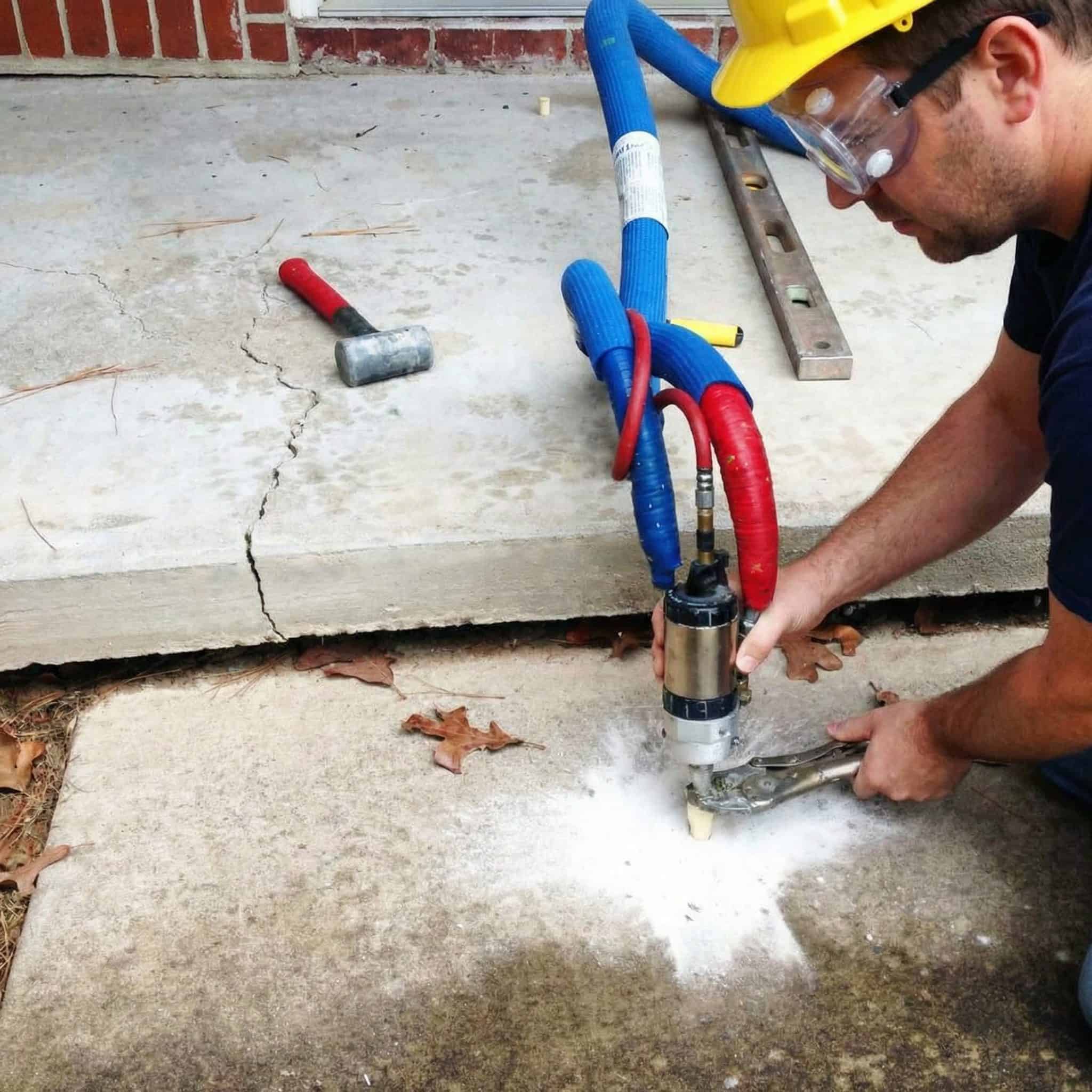
Foundation repair foam uses a simple principle: lift and level a sinking foundation with expanding polymer foam. The process starts when a technician drills small holes into the sunken slab. Next, they inject professional-grade geotechnical polyurethane foam under the foundation.
Bristolfx experts use advanced equipment to ensure the foam expands evenly. As the foam grows, it fills empty spaces in the soil. This gentle pressure slowly raises the slab back into position. Within minutes, the foam hardens and provides durable support that lasts for years. Homeowners appreciate that repaired areas can be used the same day.
This modern method is far different from older techniques like mudjacking. Mudjacking pumps a heavy slurry under the slab to lift it. While it can work, the material may wash out over time and require repeat repairs. Polyurethane foam, on the other hand, is lightweight, waterproof, and designed for long-term durability. It resists erosion and adds stability without adding extra weight to weak soil.
Another major advantage is precision. The expanding foam allows technicians to control the lift carefully, making it easier to achieve even floors, aligned doors, and stable walls.
Signs You Need Foundation Repair Foam
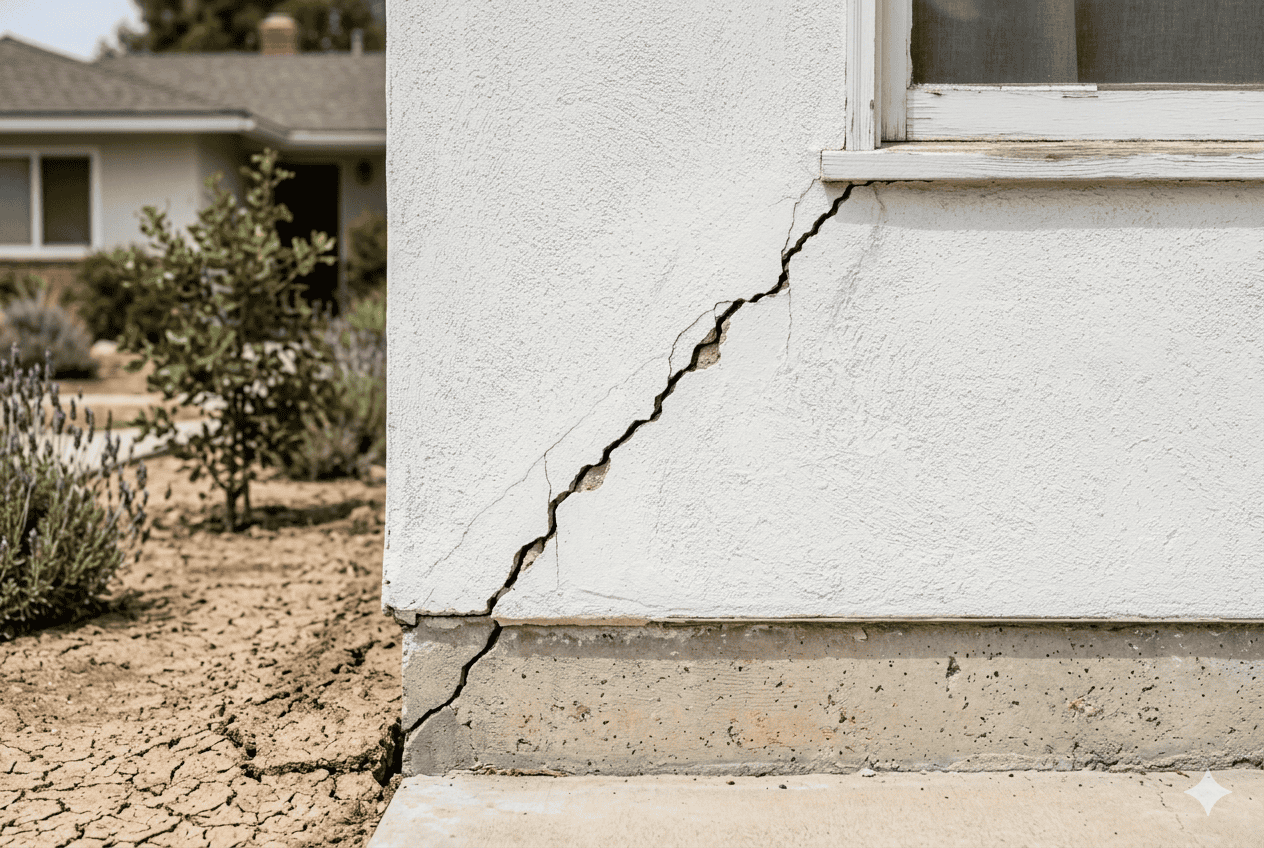
Your home often shows warning signs when the foundation starts to settle. Paying attention early can save thousands in prevented damage.
Uneven Floors
One of the first signs is uneven or sloping floors. You may notice furniture leaning or objects rolling across the room. These changes happen when the foundation shifts — a strong candidate for polyurethane foam leveling.
Sticking Doors and Windows
If doors or windows suddenly become hard to open or close, it may point to foundation movement. Frames twist out of shape as the slab sinks. The treatment can bring doors and windows back to proper alignment.
Wall Cracks
Cracks in walls — especially stair-step cracks in brick or stucco, and diagonal cracks near the corners of doors and windows — are clear warnings. They often start small but grow over time. These cracks signal stress on the structure that requires professional foundation leveling.
Sinking Slabs
Garage floors, patios, or sidewalks that dip or sink are strong indicators. These areas are common trouble spots because the soil beneath them erodes. Polyurethane foam injection lifts these slabs back up and makes them safe again.
Foundation Repair Foam vs. Mudjacking vs. Slab Replacement
When comparing foundation settlement solutions side by side, foundation repair foam consistently wins on speed, weight, and disruption.
| Factor | Foundation Repair Foam | Mudjacking | Slab Replacement |
|---|---|---|---|
| Typical Cost | $2,000 – $7,500 | $3,000 – $6,000 | $10,000 – $25,000+ |
| Project Duration | 2 – 4 hours | 4 – 8 hours | 3 – 7 days |
| Cure Time | 15 minutes | 24 – 72 hours | 28 days (full strength) |
| Material Weight | 2.5 – 4 lbs/ft³ | 130 – 150 lbs/ft³ | 145 lbs/ft³ |
| Injection Hole Size | ⅝ inch | 1½ – 2 inches | N/A (demolition) |
| Water Resistance | Hydrophobic (waterproof) | Erodes over time | Waterproof when sealed |
The only scenario where full slab replacement makes sense is when the concrete itself is severely damaged beyond repair. For the vast majority of settlement issues, polyurethane foam is faster, cleaner, and more cost-effective.
Why Choose Foundation Repair Foam
Overall, when it comes to foundation repair, polyurethane foam is one of the most trusted solutions in the industry today. Homeowners and engineers alike choose it for its proven strength, reliability, and long-term value.
Durability
First and foremost, this foam is built to last. Once injected, it hardens quickly and creates a solid base. It holds up well against soil shifts, heavy loads, and everyday use.
Waterproofing
Moisture is one of the biggest causes of foundation problems. Traditional methods can fail when exposed to water. Polyurethane foam is water-resistant and helps block water from seeping into weak soil — this protection reduces erosion and keeps the foundation steady.
Eco-Friendliness
Because the foam is lightweight, less material is needed to stabilize the foundation. The process requires fewer resources, smaller holes, and less energy compared to concrete replacement — reducing waste and the environmental footprint of the repair.
Is Foundation Repair Foam Right for My Home or Business?
This is a versatile technique that delivers immediate results — but how do you know if it’s right for your property? Consulting an experienced contractor is the best way to determine the proper fix for your specific foundation issues.
If you want to learn more about our residential and commercial professional polyurethane foam injection service and schedule a free inspection, contact Bristolfx. With years of hands-on experience, we have the professional tools and expertise to fix your foundation quickly, correctly, and permanently. Our free inspection pinpoints the cause of your foundation problems and gives you a clear plan that fits your building and your budget.
If concrete lifting is necessary, we use the highest-quality and longest-lasting polyurethane foams on the market. We source our geotechnical polyurethanes from HMI and NCFI Geotechnical, whose foams are specially formulated for optimal density, performance, and longevity — so you can be confident our repairs will hold up.
FAQs About Foundation Repair Foam
How much does foundation repair foam cost? The cost of this repair method varies depending on the size and severity of the problem. On average, homeowners can expect to pay between $2,000 and $7,500. Small slab lifts may cost less, while larger structural repairs may cost more. Polyurethane foam is often more affordable long-term because it lasts longer and requires less maintenance than traditional methods. Always request a professional inspection for an accurate estimate.
How long does foundation repair foam last? Polyurethane injection foam is built to last for decades. Once injected under the slab, the foam hardens and creates a durable base that resists erosion and water damage. Many professional foundation leveling projects last 20 years or more with proper soil conditions and drainage.
Does foundation repair foam actually work? Yes, it works very effectively for sinking slabs and uneven floors. The expanding foam fills empty spaces under the foundation and lifts it back into place. This method is faster, cleaner, and less invasive than concrete replacement. Homeowners often see immediate results, with floors, doors, and walls returning to proper alignment.
Is epoxy or foundation repair foam better for foundation cracks? Epoxy and polyurethane serve different purposes. Epoxy is best for structural cracks because it bonds strongly to concrete. Polyurethane is better for cracks that allow water to enter since it expands and seals against leaks. For foundation leveling and lifting, foundation repair foam is the superior choice, providing strength, waterproofing, and long-term stability.
How fast does foundation repair foam cure? The foam begins hardening within 2–3 minutes of injection and reaches approximately 90% of its final compressive strength within 15 minutes. Repaired areas can typically be used the same day the work is completed.