
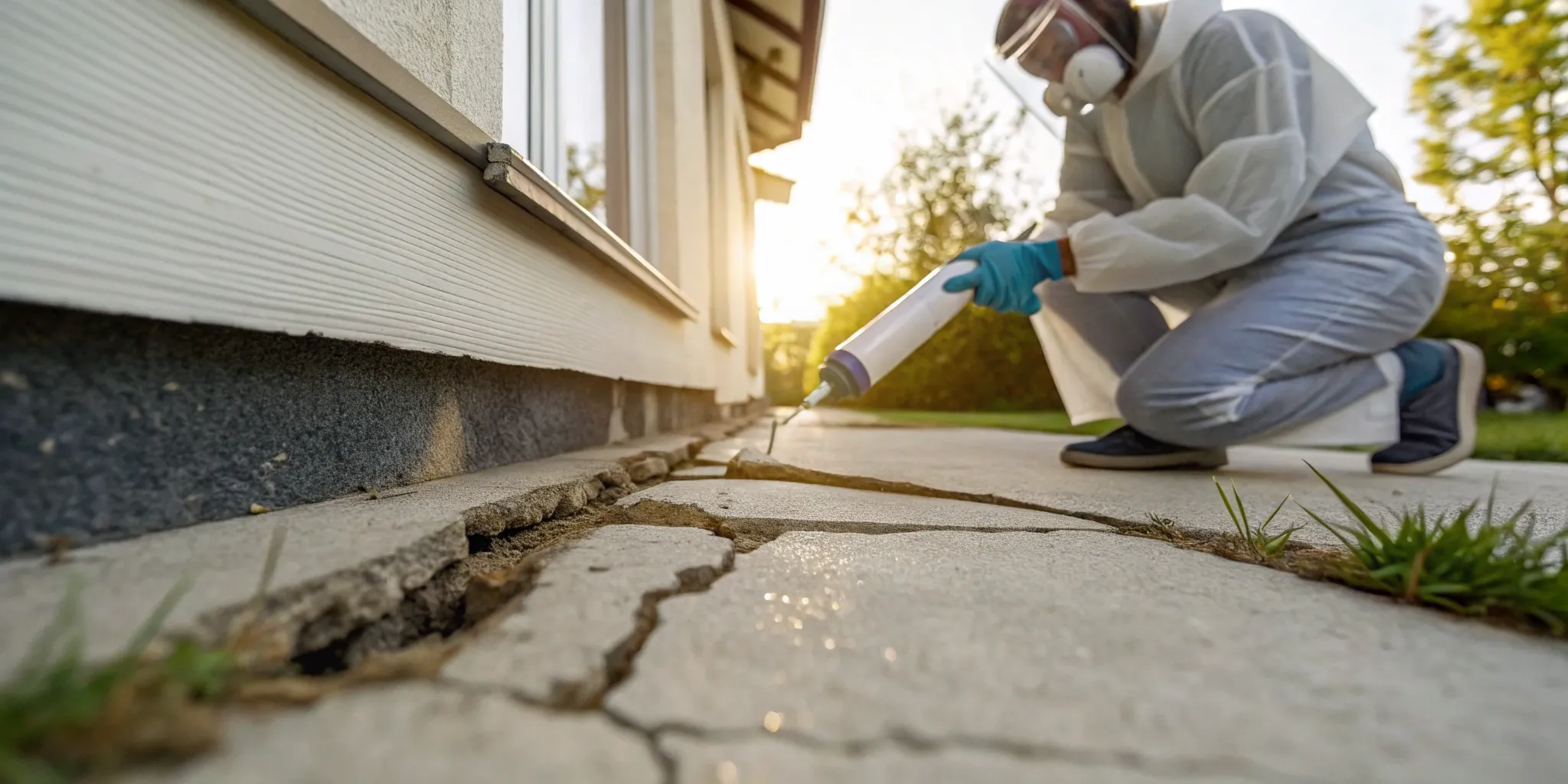
Not all foundation cracks are created equal. Some are harmless signs of concrete curing, while others signal a serious structural problem or an active water leak. The key to a lasting repair is a correct diagnosis. This is where foundation crack injection comes in, but it’s not a one-size-fits-all fix. The right approach depends entirely on the type of crack you have. Using a rigid epoxy on a leaking crack or a flexible polyurethane on a structural issue can lead to failure. This guide will empower you with the knowledge to understand your specific problem, ask contractors the right questions, and choose the best repair method.
Key Takeaways
- Match the Injection Material to the Problem: Use high-strength epoxy to structurally “weld” concrete back together, restoring its integrity. For active water leaks, choose flexible polyurethane, which expands to create a durable, watertight seal that can accommodate subtle foundation movement.
- Address the Root Cause, Not Just the Symptom: A foundation crack is often a sign of a deeper issue like soil settlement or external water pressure. A professional assessment is crucial to diagnose the underlying problem, ensuring the repair is a permanent solution, not a temporary patch.
- Prioritize a Professional Repair for Long-Term Value: While DIY kits seem cheaper, professional services provide superior materials, expert installation, and a lasting repair backed by a comprehensive, transferable warranty. This protects your home’s structural integrity and provides peace of mind.
What is Foundation Crack Injection?
Finding a crack in your home’s foundation can feel alarming, but it’s often a problem with a straightforward solution. Foundation crack injection is a modern repair method designed to seal cracks in poured concrete foundations. Think of it as a highly targeted, permanent fix. By injecting a specialized material—usually a strong epoxy or a flexible polyurethane—directly into the crack, we can bond the concrete back together and create a waterproof barrier. This process not only stops existing leaks but also prevents future water intrusion, protecting your home’s structural integrity from the ground up. It’s a precise and effective way to handle common foundation issues without major excavation.
How Does Crack Injection Work?
The process is less invasive than you might think. A technician starts by cleaning the crack and drilling a series of small holes along its length. Small plastic ports are then placed into these holes. From there, a specialized resin is injected into the ports under pressure, starting from the bottom and working up. This ensures the material penetrates the entire depth and length of the crack, filling every void. The injected material then cures and hardens, forming a permanent seal that’s often stronger than the original concrete. This method of crack injection and corrosion repair is a long-lasting solution that restores the strength and stability of your foundation wall.
Signs You Need Foundation Crack Injection
You don’t have to be an expert to spot the warning signs of a foundation issue. The most obvious clue is a visible crack in your basement walls or concrete slab. You might also notice damp spots on the walls, puddles on the floor, or a persistent musty smell, which all point to water getting in. Other, more subtle signs can appear elsewhere in your home. For instance, if your doors or windows suddenly start sticking or you notice that your floors are becoming uneven, it could be a sign of foundation movement. Addressing these issues early with a professional foundation repair can prevent them from turning into bigger, more expensive problems down the road.
What Are the Best Crack Injection Methods?
When you find a crack in your foundation, the first question is usually, “How do I fix it?” The answer isn’t one-size-fits-all. The best method for crack injection depends entirely on the crack itself—its size, location, and whether it’s letting in water or compromising your home’s structure. The two most common and effective materials used are epoxy and polyurethane. Each serves a very different purpose, and choosing the right one is the key to a successful, long-lasting repair. Understanding the difference will help you see why a professional assessment is so important before any work begins.
Using Epoxy for Structural Repairs
Think of epoxy as a powerful structural adhesive for your foundation. When a crack threatens the stability of your concrete wall, an epoxy injection is often the best solution. This method involves injecting a high-strength, low-viscosity resin that seeps deep into the crack. Once cured, it becomes incredibly rigid and is often stronger than the original concrete. This process essentially “welds” the concrete back together, restoring its structural integrity. Epoxy is ideal for dormant, dry cracks that aren’t actively leaking. Because it creates such a rigid bond, it’s a permanent fix for structural issues, ensuring the crack injection and corrosion repair will hold for years to come.
Using Polyurethane to Stop Leaks
If you have a crack that’s actively leaking water into your basement or crawl space, polyurethane is the hero of the story. Unlike rigid epoxy, polyurethane is a flexible foam that reacts with water and expands to fill the entire void, from front to back. This expansion creates a watertight, flexible seal that stops leaks in their tracks. Because it remains flexible after curing, polyurethane can accommodate the natural, subtle movements of your foundation due to temperature changes or soil settlement. This makes it the go-to choice for non-structural cracks where the primary goal is effective waterproofing and preventing moisture from getting inside your home.
Our Advanced Approach to Crack Injection
Choosing between epoxy and polyurethane isn’t a simple DIY decision. A successful repair starts with a correct diagnosis. Is the crack structural or just a source of leaks? Is it still moving? Our team takes an advanced approach by first analyzing the specific characteristics of your foundation crack. We determine the cause and nature of the crack to select the precise material and injection technique required for a permanent solution. We don’t just offer a product; we provide a tailored repair strategy. This expert assessment ensures that whether we use epoxy, polyurethane, or a combination of methods, the fix is designed to last, protecting your property’s value and your peace of mind.
How Much Does Foundation Crack Injection Cost?
When you spot a crack in your foundation, one of the first questions that comes to mind is, “How much will this cost to fix?” The truth is, the price can vary quite a bit. On average, homeowners might spend around $4,500 for professional crack injection and corrosion repair. Most projects fall somewhere between $2,300 and $6,700.
Of course, not every crack requires a massive investment. A simple, minor crack might only cost between $300 and $1,000 to seal. However, if the crack is a symptom of a larger structural issue, the cost could be higher. The final price tag depends on a few key factors, which is why getting a professional assessment is so important. It’s the only way to know for sure what your specific repair will involve and what you can expect to pay.
What Affects Professional Service Pricing?
The quote you receive from a foundation specialist isn’t just a random number. It’s a careful calculation based on the unique conditions of your property. The size of your home and the extent of the damage are the most obvious factors—a long, deep crack will naturally cost more to repair than a small, hairline fracture.
Accessibility also plays a big role. If the crack is in a tight crawl space or behind a finished basement wall, it requires more labor to reach and repair properly. The type of soil around your home can also influence the complexity and cost of the job. Because so many variables are at play, a thorough inspection is the first step in any professional foundation repair project.
DIY Kits vs. Professional Services: A Cost Breakdown
It’s easy to see the appeal of a DIY crack injection kit from the hardware store. They seem like a quick and affordable fix. However, this is one area where cutting corners can lead to bigger problems down the road. Many DIY kits use lower-quality materials that prioritize convenience over durability. One of the most common DIY repair mistakes is using a product that can’t properly fill the entire void behind the crack, causing the repair to fail.
Professional services use superior materials, like high-strength epoxies and flexible polyurethane geotechnical foam, that aren’t available to the public. While the upfront cost is higher, you’re paying for a permanent solution, not a temporary patch.
The Long-Term Value of a Professional Repair
Investing in a professional foundation repair is about more than just fixing a crack—it’s about protecting your home’s value and your peace of mind. When an expert handles the job, they don’t just seal the visible damage; they diagnose and address the root cause of the problem. This is a critical step that DIY solutions almost always miss.
A professionally injected crack, done correctly, can last for the lifetime of your house. If the underlying issue, such as water pressure against the foundation, isn’t resolved, that crack will likely reappear or new ones will form. By addressing the source of the problem, often through services like exterior waterproofing, a professional ensures the fix is permanent. This comprehensive approach saves you money and stress over the long term.
Which Crack Injection Products Should You Choose?
Walking down the aisle of a hardware store or browsing online, you’ll find a dizzying number of crack repair products. They all promise a quick fix, but the reality is that not all injection materials are created equal. The right product depends entirely on the type of crack, its location, and whether it’s a structural issue or a simple leak. Choosing the wrong one can lead to a failed repair and more headaches down the road.
As professionals, we’ve seen it all. We know which materials stand up to pressure and time and which ones are just temporary patches. While DIY kits have their place, understanding the difference between professional-grade solutions and off-the-shelf options is the first step toward a lasting repair. Let’s look at some of the products available and what you should consider before making a choice for your home’s foundation.
The Professional-Grade Materials We Trust
When we perform a crack injection repair, we rely on materials that deliver permanent results. That’s why we often use a special two-part urethane. Unlike cheaper, single-part foams you might find in a big-box store, this professional-grade urethane doesn’t absorb water and is formulated for incredible longevity. It chemically reacts to form a flexible, watertight seal deep within the concrete. This ensures the crack is completely filled and can withstand the natural expansion and contraction of your foundation without failing, giving you peace of mind that the repair is built to last.
A Look at Applied Technologies Solutions
If you’re exploring the market, you’ll likely come across Applied Technologies. They offer a range of epoxy kits designed for repairing cracks in concrete basement walls. These products are popular with both DIY-savvy homeowners and professional contractors because they are engineered for strong adhesion and durable results. Epoxy is fantastic for structural repairs, as it essentially “welds” the concrete back together, restoring its original strength. Their kits provide a versatile solution for various repair needs, making them a trusted name for homeowners looking to tackle concrete cracks.
A Look at RadonSeal Products
For homeowners determined to handle the repair themselves, RadonSeal’s DIY Foundation Crack Repair Kit is another popular option. This kit is designed for non-structural cracks in poured concrete walls, like those you’d find in a basement or crawl space. It uses a specialized liquid urethane that gets injected into the crack and then expands to fill the entire void from the inside out. This process not only seals the crack to stop current leaks but also creates a formidable barrier against future water intrusion, helping you maintain a dry and healthy basement.
Key Features to Look for in Any Product
Before you buy any product, it’s critical to correctly identify the type of crack you’re dealing with. The injection repair method is highly effective, but it isn’t a universal solution. For instance, it’s generally not suitable for hairline cracks, as the material can’t properly penetrate such a narrow space, leading to an ineffective seal. You need to ensure the product you choose is designed for the specific width and depth of the crack in your wall. If you’re unsure whether a crack is structural or simply a leak, it’s always best to get a professional foundation assessment.
How Do Epoxy and Polyurethane Injections Compare?
When you’re looking at foundation crack repair, you’ll likely hear about two main players: epoxy and polyurethane injections. Both are powerful solutions for sealing cracks and restoring your foundation’s integrity, but they aren’t interchangeable. Think of them as specialized tools in a professional’s toolkit, each designed for a specific job. Epoxy is the structural powerhouse, essentially gluing the concrete back together with a bond that can be even stronger than the concrete itself. It’s what you use when the crack compromises the wall’s strength. On the other hand, polyurethane is the flexible waterproofer. It reacts with water and expands to create a durable, watertight seal that can move slightly with the foundation, which is perfect for stopping active leaks.
Both methods are known for their durability and can be incredibly effective when applied correctly. The key is understanding which type of crack you have and what you need the repair to accomplish—structural reinforcement or moisture control. Choosing the right one is the first step toward a lasting fix for your foundation, and it’s a decision that requires a professional eye to get right.
Which Method is Right for Your Crack?
So, how do you choose between the two? It really comes down to the crack itself. If you’re dealing with a structural issue—a horizontal or wide diagonal crack that threatens the stability of your foundation—epoxy is almost always the answer. It creates a rigid, high-strength bond that restores the wall’s structural integrity. However, if you see water seeping through a vertical or non-structural crack, polyurethane is the hero. For cracks that have water coming through them, its flexible nature allows it to expand and form a gasket-like seal that stops leaks in their tracks. It’s important to know that injection repair isn’t a one-size-fits-all solution; it’s not typically suited for very fine hairline cracks, which might need a different approach.
A Closer Look at Durability and Performance
Both epoxy and polyurethane injections are designed to be long-term repairs, often lasting for many years. But here’s the crucial part: a repair is only as good as the diagnosis. If a crack appeared because your foundation is still settling or shifting, simply filling it won’t solve the problem for good. A foundation crack repair might not last long if the root cause isn’t fixed. That’s why a professional assessment is so important. We don’t just patch the crack; we investigate why it happened. By addressing the underlying issue, whether it requires installing stabilization piers or improving drainage, we ensure the crack repair is a permanent solution, not just a temporary patch.
Comparing the Costs of Each Method
Let’s talk about budget. The cost of crack injection can vary quite a bit depending on the length and depth of the crack, the material used, and the complexity of the job. While a single epoxy injection can cost between $300 and $1,000, the national average cost for more extensive projects is significantly higher. While DIY kits might seem like a cheaper option upfront, they often lack the professional-grade materials and high-pressure equipment needed for a permanent fix. Investing in a professional crack injection service is about more than just patching a crack; it’s about protecting the long-term value and safety of your home. A professional job ensures the right material is used correctly, preventing more expensive problems down the road.
Should You DIY or Hire a Professional?
When you spot a crack in your foundation, the temptation to grab a DIY kit from the hardware store is understandable. It seems like a quick, budget-friendly fix. And while I love a good weekend project, foundation repair is one area where a DIY approach can create bigger, more expensive problems down the road. The structural integrity of your home isn’t something to gamble on.
Understanding the difference between a simple patch and a professional, long-term solution is key. A professional foundation repair addresses not just the visible crack but also the underlying cause, ensuring your home remains safe and stable for years to come. Let’s look at the common pitfalls of DIY repairs and when it’s time to put down the caulk gun and call an expert.
Common DIY Mistakes to Avoid
One of the biggest issues with DIY kits is the quality of the materials. They’re often designed for convenience, not for the high-pressure, long-lasting seal your foundation requires. The most common reason these repairs fail is that they don’t account for the cavity behind the crack, which can lead to repeated leaks and damage. Many kits are also not suitable for certain types of cracks, like hairline fractures, and using them can actually worsen the problem. It’s easy to misdiagnose the severity of a crack, and what looks like a simple fix could be a symptom of a much larger structural issue that a surface-level patch just can’t solve.
When to Call a Professional for an Assessment
If you see a crack—any crack—it’s always a good idea to have a professional take a look. An expert can accurately identify the cause and determine the right materials and methods for a permanent solution. You should call for an assessment immediately if you notice other warning signs around your home. Are your doors or windows suddenly sticking and hard to open? Do your floors seem uneven or sloped? Are your walls starting to bow or look warped? These are classic signs of foundation settlement, and they signal a problem that goes far beyond what a DIY crack injection kit can handle.
Why Safety and Quality Come First
Your home is your biggest investment, and its safety starts with a solid foundation. While a DIY kit might save you money upfront, a failed repair can lead to serious consequences like water infiltration, mold growth, and critical structural damage. Professional-grade materials, like the two-part epoxies and polyurethanes we use, are chemically engineered to bond with concrete and expand to fill the entire void, creating a seal that is stronger than the concrete itself. This professional approach ensures a permanent waterproofing solution and restores the structural integrity of your foundation, giving you peace of mind that the job was done right.
How Do You Choose the Right Foundation Repair Company?
Choosing a contractor to work on your home’s foundation is a big decision. This isn’t just a simple patch job; it’s about protecting the structural integrity of your biggest investment. A poor repair can lead to even bigger, more expensive problems down the road, so it’s worth taking the time to find a team you can truly trust. Think of it as an interview process. You’re hiring a specialist to ensure your home is safe and stable for years to come. The right partner will not only fix the immediate issue but also provide a lasting solution and the peace of mind that comes with it. They should be able to explain the problem clearly, outline a logical solution, and stand behind their work with a solid warranty. Let’s walk through exactly what to look for, from essential credentials to the specific questions that separate the true experts from the rest.
Must-Have Qualifications and Credentials
Before you even schedule a consultation, you can do a quick background check for some non-negotiables. First and foremost, confirm the company is fully licensed and insured in your state, carrying both general liability and worker’s compensation coverage. This is for your protection. Next, look for a company with a long-standing history in your area. A team with years of local experience understands the specific soil conditions and building practices that affect your home’s foundation. They should have skilled professionals who can accurately diagnose the problem and recommend an effective foundation repair solution. Don’t hesitate to ask about their team’s training and certifications, as this demonstrates a commitment to quality and industry best practices.
Critical Questions to Ask Any Contractor
Once a contractor is at your home for an assessment, it’s your turn to ask some direct questions. Trust and transparency are critical, and a good contractor will be happy to explain their process. Start with these:
- “Can you walk me through your proposed repair plan and explain why it’s the right solution for this specific crack?”
- “What materials will you use and why do you prefer them?”
- “What does your warranty cover, and for how long?”
- “Can you provide references from recent, local projects?”
A reputable company will be proud to share their past work and connect you with satisfied customers who can speak to their professionalism and the quality of their work.
Our Expertise and Proven Track Record
We believe that effective crack injection and corrosion repair begins with a precise diagnosis. We don’t use one-size-fits-all solutions, because we know that some methods aren’t suitable for every type of crack. Our team applies the latest scientific methodologies to identify the root cause of the problem before recommending a solution tailored to your home. This commitment to getting it right the first time is why we stand behind our work with extensive warranties, including lifetime warranties on pier installations and up to 20-year warranties on below-grade waterproofing. Our track record is built on providing durable, long-term solutions that give homeowners confidence in the safety and stability of their property.
What Can You Learn from Customer Reviews?
When you’re facing a foundation crack, turning to customer reviews can feel like getting advice from hundreds of homeowners who have been in your exact situation. They offer a real-world look at what works, what doesn’t, and what you can expect from different repair methods. Reading through them helps you spot patterns, whether it’s a company’s consistent professionalism or the common pitfalls of a DIY product.
Think of reviews as your research library. They provide unfiltered feedback on everything from a contractor’s communication style to the long-term durability of a specific injection material. While a single glowing or negative review might not tell the whole story, the collective voice of past customers can guide you toward a solution that offers genuine peace of mind. By paying attention to the details people share, you can move past the marketing claims and understand the actual results you can expect from a professional crack injection service versus a kit from the hardware store.
How to Read Reviews for Professional Services
When looking at reviews for a foundation repair company, go deeper than the star rating. Look for comments that describe the entire experience. Did the team show up on time and communicate clearly about the process? Did they respect the property and clean up the work area afterward? These details speak volumes about a company’s professionalism and customer care. Pay special attention to reviews written months or even years after the service was completed, as they provide the best insight into the repair’s durability. A company that actively responds to reviews—both positive and negative—is also a good sign, as it shows they value customer engagement and are committed to getting it right.
What Users Say About DIY Product Effectiveness
Reviews for DIY crack injection kits often tell a story of mixed results. While many users are initially drawn in by the low cost and convenience, their feedback frequently highlights the limitations of these products. A common theme is that the kits work best on very small, simple, non-structural cracks. Reviews often reveal that the repair failed because the void behind the foundation wall was larger than anticipated or had multiple points of failure that the kit couldn’t address. Users also expose common misconceptions about these kits, such as the belief that they provide an instant, permanent fix for any type of crack, which is rarely the case for anything beyond a minor issue.
Common Themes in Customer Satisfaction
Ultimately, customer satisfaction in foundation repair boils down to one thing: a lasting solution. Reviews for professional services often center on the peace of mind that comes from knowing the job was done correctly by an expert using high-quality materials. Homeowners express relief in having a warranty and a reliable company to call if issues arise. In contrast, reviews for DIY kits frequently mention frustration. Many of the DIY mistakes people report stem from kits that are designed for convenience rather than performance, leading to repairs that fail over time. The most satisfied customers are those whose problem was solved for good, preventing future water damage and structural concerns.
What Warranties Should Come with Crack Injection?
A warranty is more than just a document; it’s a company’s promise to stand behind its work. When you’re investing in a repair as critical as your foundation, the warranty provides peace of mind and protects your home for years to come. It’s a clear indicator of a contractor’s confidence in their materials and methods. A strong warranty shows that the company is committed to a long-term solution, not just a quick fix. Before signing any contract, it’s essential to understand exactly what the warranty covers, how long it lasts, and what the terms are.
Understanding the Industry Standard Warranty
When you start getting quotes, you’ll find that most foundation repair companies offer some kind of warranty, but they aren’t all created equal. The industry standard often covers the repair of cracks that reopen or grow beyond a specific size, like a quarter of an inch. While this provides a basic level of protection, it can leave you vulnerable if the crack leaks again without meeting that exact size requirement. It’s a good starting point, but you should see it as the bare minimum. Always ask contractors to clarify the specific conditions that would trigger a warranty claim so you know exactly what you’re getting.
A Guide to Our Extended Warranty Programs
At Bristol FX, we believe a standard warranty isn’t enough. We provide extensive warranties because we are confident in the quality of our crack injection and corrosion repair services. Our goal is to give you a permanent solution, and our warranties reflect that commitment. For many of our services, we offer protection that goes far beyond the industry standard, including lifetime warranties on pier installations and long-term coverage for waterproofing. We also ensure our warranties are transferable, which adds significant value to your property if you decide to sell. This shows a future buyer that the foundation has been professionally repaired and is protected for the long haul.
What Your Warranty Should Cover
A truly comprehensive warranty should be clear, detailed, and cover the things that matter most. Look for a warranty that explicitly protects against future water seepage through the repaired crack, not just its size. It should also cover both the labor and materials used in the initial repair. A transferable warranty is a huge plus, as it can be passed on to the next homeowner. Be sure to read the fine print for any exclusions or homeowner maintenance requirements. A reputable company will be transparent and happy to walk you through every detail of their warranty, ensuring you feel completely secure in your investment.
What Are Common Myths About Foundation Crack Injection?
When you find a crack in your foundation, it’s easy to fall down a rabbit hole of online advice. Unfortunately, a lot of that information is based on common myths that can lead to improper repairs and bigger problems down the road. Getting the facts straight is the first step toward a lasting solution, saving you time, money, and stress. Believing a myth could lead you to choose the wrong material for a leak or apply a patch that fails in a few months, leaving you right back where you started.
Let’s clear up a few of the most persistent misconceptions about crack injection and corrosion repair so you can make an informed decision for your home. Understanding the truth behind these myths will help you choose the right method and materials, ensuring your foundation stays strong and dry for years to come. A proper repair isn’t just about filling a gap; it’s about restoring the integrity of your home’s structure.
Myth: Epoxy Can Fix Active Water Leaks
Many people believe that a strong epoxy injection is all it takes to seal a crack that’s actively leaking water. While epoxy is fantastic for structural reinforcement, it’s not designed to stop a flow of water. Epoxy needs a dry surface to bond correctly and takes time to cure, so applying it to a wet, leaking crack often results in a failed repair. As one homeowner noted, simply filling cracks with epoxy from the inside often won’t stop water from getting into your basement. For active leaks, flexible polyurethane foam is the superior choice. It reacts with water to expand rapidly, filling the entire crack and creating a durable, watertight seal even while water is present. This makes it the go-to solution for effective waterproofing.
Myth: All Cracks Can Be Repaired from the Inside
The idea of fixing a foundation crack without any exterior excavation is appealing, and for many situations, an interior injection is a perfectly effective solution. However, it’s a myth that all cracks can be permanently fixed this way. If a crack is caused by significant external water pressure or soil movement, an interior-only repair might not be enough to solve the problem for good. For a more complete fix, a professional may need to dig down to the foundation from the outside to apply a waterproof membrane and address the source of the problem. A thorough assessment is key to determining the right approach for a long-term foundation repair that truly lasts.
Myth: Crack Injections Are Only a Temporary Fix
There’s a common fear that crack injection is just a bandage, not a permanent solution. The truth is, the longevity of the repair depends entirely on whether the underlying cause of the crack has been addressed. If the foundation is still settling or shifting, any repair is likely to fail over time. As one expert explains, a foundation crack repair can last a lifetime or it can fail, and the difference is fixing the root cause. That’s why a comprehensive evaluation is so important. If foundation movement is the culprit, the structure may need to be stabilized with solutions like push and helical piers before the crack is repaired. When done correctly as part of a complete solution, a crack injection is a permanent fix.
Related Articles
- Crack Injection / Corrosion Repair – Professional Foundation Repair
- Crack Injection Repair – Professional Foundation Repair
- Underpinning vs Deep Injection: Which Repair Method Is Best? – Professional Foundation Repair
Frequently Asked Questions
Does a foundation crack always mean I have a serious problem? Not necessarily. Many small, vertical cracks are a normal part of a home settling over time. However, any crack is a potential entry point for water and can be a sign of underlying pressure on your foundation. The key is to understand why the crack appeared. That’s why it’s always best to have a professional take a look, even if it seems minor. An expert can tell you if it’s a simple fix or a symptom of a larger issue that needs attention.
Why can’t I just use a DIY kit for a small crack? While it’s tempting to grab a kit from the hardware store, those products are often a temporary patch, not a permanent solution. They typically use lower-grade materials and can’t fill the entire depth of the crack the way professional, high-pressure injection equipment can. More importantly, a DIY fix doesn’t address the root cause of the crack, which means it’s likely to fail or reappear, potentially leading to more significant water damage and costlier repairs later on.
How do I know if a crack needs epoxy for structure or polyurethane for leaks? This is the central question in any crack repair, and the answer requires a professional diagnosis. Generally, epoxy is like a structural weld for concrete, used when a crack is compromising the wall’s strength. Polyurethane is a flexible, expanding foam that’s perfect for creating a watertight seal in non-structural cracks that are leaking. A trained technician will analyze the crack’s width, location, and cause to determine the precise material needed for a lasting repair.
Is the crack injection process disruptive to my home? Not at all. One of the best things about modern crack injection is that it’s a minimally invasive process. The entire repair is typically handled from inside your basement or crawl space, so there’s no need for loud, messy excavation outside your home. A technician works directly on the crack, and the process is relatively clean and quiet, allowing you to go about your day with very little disruption.
If I get a crack repaired, will it just come back later? When done correctly by a professional, a crack injection is a permanent fix. The reason a professional repair lasts is that it includes diagnosing and addressing the underlying issue that caused the crack in the first place, such as hydrostatic pressure or soil settlement. Simply filling the crack without solving the root problem is what leads to failed repairs. We ensure the entire problem is solved so the crack, and the leak, don’t return.