
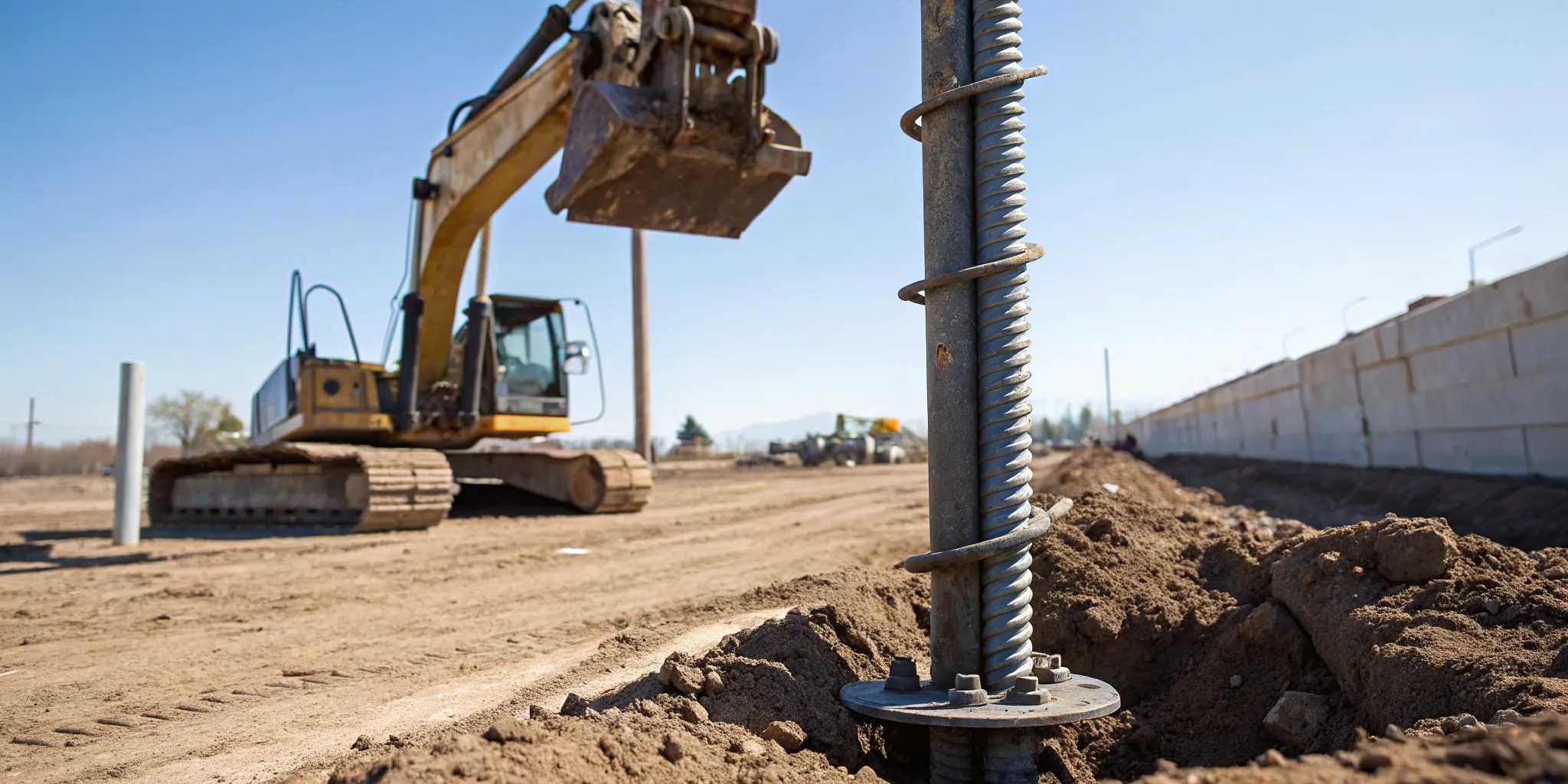
When you hear “foundation repair,” you might picture your yard being torn apart by heavy machinery for weeks on end. It’s a stressful thought, but modern solutions have changed the game entirely. Helical piers provide incredible strength and stability without the massive disruption. Because they are hydraulically screwed into the ground, they require only small, targeted excavations at each placement point. This means your landscaping, driveway, and daily life remain largely undisturbed. The helical pier installation process is clean, fast, and incredibly effective. We’ll show you how this powerful technology can secure your home’s foundation without turning your property into a chaotic construction zone.
Key Takeaways
- Transfer Your Home’s Weight to Solid Ground: Helical piers work like giant steel screws, bypassing unstable surface soil to anchor your foundation to deep, load-bearing earth. This provides a permanent solution to settling and cracking with minimal impact on your landscaping.
- Trust a Process Driven by Precision: Professional installation isn’t a guessing game. Technicians use torque-monitoring equipment to confirm each pier reaches the required depth and strength, ensuring the repair is done right and meets exact engineering specifications.
- Plan for a Maintenance-Free Future: While the project requires initial planning for permits and site access, the result is a foundation solution that needs no future upkeep. A professional installation is a one-time fix that secures your property for the long haul, often backed by a lifetime warranty.
What Are Helical Piers?
If you’re dealing with foundation issues, you’ve likely heard the term “helical piers.” So, what exactly are they? Think of them as giant steel screws designed to support your home’s foundation. They are a modern and incredibly effective solution for stabilizing structures built on unstable or shifting soil. Instead of relying on the unpredictable top layers of dirt, helical piers are twisted deep into the ground until they reach solid, load-bearing soil or bedrock.
This process transfers the weight of your home onto this stable base, preventing further settling, cracking, and other structural damage. Whether you’re fixing an existing foundation or building a new one, helical piers provide a permanent, reliable fix. They are a go-to for everything from residential homes to commercial buildings, especially when you need a solution with minimal disruption to your property.
Key Components and Design
At its core, a helical pier is a simple but powerful piece of engineering. It consists of a central steel shaft with one or more spiral-shaped plates, called “helices,” welded to it. These helices are what allow the pier to be screwed into the ground, much like a corkscrew goes into a cork. The piers are made from high-strength, galvanized steel to resist corrosion and ensure they last for decades underground. The size of the shaft and the number and diameter of the helices are specifically chosen by an engineer to match your property’s soil conditions and the weight of your home, ensuring a custom-fit solution for your foundation. This precise design is what makes push piers and helical piers so effective.
Understanding Load-Bearing Capacity
Load-bearing capacity simply refers to how much weight a helical pier can safely support. This is the most critical factor in any foundation repair project. The capacity isn’t a one-size-fits-all number; it’s determined during installation. As the pier is hydraulically screwed into the earth, the installation equipment measures the torque (or rotational force) required to advance it. A higher torque reading indicates that the pier has reached denser, stronger soil capable of supporting more weight. This data allows our team to verify that each pier has reached its required capacity according to the engineering plan, ensuring your home is secure. While industry benchmarks exist, the final capacity is always confirmed on-site for your specific project.
The Benefits for Foundation Support
Helical piers offer some major advantages for foundation support, especially in areas with challenging soil. Because they reach deep into the ground, they provide lasting stability in loose, wet, or expansive clay soils that cause so many foundation problems. The installation process is also a huge plus. It requires minimal excavation, which means your landscaping, driveway, and patios are left largely undisturbed. This makes them ideal for properties with limited access or established gardens. Helical piers can be installed quickly, often in just a few days, and in any weather. This versatility makes them a top choice for both new construction projects and existing foundation repair.
Are They an Eco-Friendly Choice?
In a world where we’re all trying to be more mindful of our environmental impact, helical piers stand out as a greener choice for foundation work. Their biggest environmental advantage is the minimal soil disturbance they cause. Unlike traditional concrete foundations that require extensive excavation and removal of large amounts of earth, helical piers are simply twisted into the ground. This significantly reduces the project’s carbon footprint by eliminating the need for heavy machinery to haul away soil. This gentle approach also helps preserve the surrounding ecosystem and your landscaping. Furthermore, the steel used in helical piers is often made from recycled materials and is itself recyclable, making it a more sustainable option from start to finish.
The Helical Pier Installation Process, Step-by-Step
Seeing your foundation repaired can feel like a huge undertaking, but the process for installing helical piers is surprisingly straightforward and efficient. It’s a modern engineering solution that relies on precision and powerful, compact equipment rather than large-scale excavation. The goal is to transfer the weight of your home from unstable soil near the surface to solid, load-bearing soil or bedrock deep underground.
Think of it like screwing a giant steel pin into the earth until it hits a stable layer that can support your foundation for the long haul. Each step is carefully planned and monitored to ensure the solution is permanent and reliable. From the initial site prep to the final checks, our team follows a meticulous process to restore your home’s stability with minimal disruption to your property and daily life. We’ll walk you through exactly what to expect when our crew arrives on-site.
Preparing the Site and Testing Soil
Before any piers go into the ground, the first step is careful preparation. Our crew will begin by excavating small, targeted areas around your foundation, typically about three feet by three feet, right where each pier will be installed. This exposes the foundation footing, which is the base your foundation sits on, giving us a clean and clear work area. This minimal digging means we can preserve most of your landscaping. While we prepare the site, we also rely on soil data to guide the project. Understanding the soil composition is critical for a successful foundation repair and helps us determine the depth and torque required for a lasting fix.
The Tools and Equipment for the Job
You won’t see a massive fleet of bulldozers show up at your home. Helical pier installation uses specialized, compact equipment that can fit into tight spaces. The primary machine is often a mini-excavator or a skid steer, which is fitted with a high-torque hydraulic drive head. This hydraulic motor is the real workhorse of the operation; it’s what grips and rotates the pier sections, driving them deep into the ground. This equipment is not only powerful but also precise, allowing our installers to control the speed and force of the installation. This ensures your push piers and helical piers are installed correctly without causing unnecessary disturbance to your property.
A Walkthrough of the Installation
Once the site is prepped, the installation begins. The process starts with a “lead section,” which is a steel shaft with one or more spiral plates, called helices, welded to it. The hydraulic drive head twists this lead section into the ground, much like a screw. After the first section is in, we attach steel extensions and continue driving the pier deeper into the earth. We keep adding extensions until the pier reaches the predetermined depth or the required torque, indicating it has hit stable, load-bearing soil. Finally, a heavy-duty steel bracket is attached to the top of the pier and secured to your foundation’s footing, effectively transferring the structure’s weight onto the pier.
Monitoring for Quality and Precision
This isn’t a guessing game. Throughout the installation, our technicians are constantly monitoring the torque, which is the amount of rotational force required to advance the pier. The hydraulic drive head has a gauge that provides a real-time torque reading. As the pier goes deeper and encounters denser, more stable soil, the torque increases. This data is crucial because it allows us to verify that the pier has reached a soil layer capable of supporting the required load. Each pier is driven to a specific, engineer-approved torque value, ensuring a consistent and reliable outcome for every support point under your foundation, which is especially important for complex jobs like hillside stabilization.
How Long Does Installation Take?
One of the biggest advantages of the helical pier system is the speed of installation. Unlike traditional concrete piers that require extensive excavation and time for concrete to cure, helical piers are ready to be loaded immediately after they’re installed. For a typical home, the entire process can often be completed in just a few days, not weeks. A smaller project might even be finished in a single day. This efficiency minimizes the disruption to your home and family, allowing you to get back to normal quickly. It’s a fast, effective, and permanent solution for securing your foundation, whether for an existing home or as part of a new construction project.
Ensuring a Safe and Successful Installation
When it comes to your home or commercial building’s foundation, there’s no room for error. A successful helical pier installation is about more than just drilling into the ground; it’s a precise engineering process that demands expertise, the right equipment, and a deep commitment to safety. From the initial soil assessment to the final torque test, every step is designed to ensure the solution is not only effective but also permanent and completely safe for your property and everyone in it.
This is why professional installation is non-negotiable. A trained and certified team understands the science behind load capacities, soil mechanics, and structural engineering. They follow strict protocols to protect your property, their crew, and the integrity of the foundation itself. This involves everything from meeting specific engineering standards to implementing rigorous on-site safety measures. A successful project is one that leaves your foundation stronger than ever, with minimal disruption to your property and total peace of mind for you. It’s a guarantee that the job was done right, from the ground up.
Meeting Engineering Specifications
Every helical pier is designed to support a specific amount of weight, and it’s crucial that the installation meets these precise engineering requirements. Think of it like a prescription—the right dose is needed for it to work. For example, a common industry standard for the load-carrying capacity of a helical pier is 6,000 pounds. Adhering to these specifications ensures that the piers can safely support your structure’s load without any risk of failure. Our team uses calculations and on-site data to confirm that each helical pier is installed to the correct depth and torque to meet or exceed these essential safety limits, providing a stable and lasting foundation solution.
Assessing Soil Compatibility
Before a single pier is installed, a thorough soil assessment is one of the most important first steps. The type of soil around your foundation—be it clay, sand, or loam—dramatically impacts how helical piers will perform. We need to know what we’re working with to ensure the piers are the right choice and are designed correctly for the conditions. Helical piers are incredibly versatile and often provide the perfect solution for structures on challenging or unstable ground. By evaluating the soil composition first, we can confidently install piers that will remain stable and secure, providing reliable support regardless of the surrounding soil challenges.
Testing for Strength and Stability
How do we know when a helical pier is secure? It’s all about the data. During installation, we use powerful hydraulic drive heads to rotate the piers deep into the earth. These machines do more than just drill; they provide real-time feedback on the torque being applied. This torque measurement directly correlates to the pier’s load-bearing capacity. We continue driving the pier until it reaches a predetermined torque value, which tells us it has hit a stable, load-bearing soil layer. This meticulous testing process confirms that each pier has the strength and stability needed to properly support your foundation for years to come.
Our On-Site Safety Protocols
A safe work site is an efficient and successful one. Our team’s safety, as well as the security of your property, is our top priority during any installation. We adhere to strict on-site safety protocols, including comprehensive team training on OSHA guidelines and best practices for operating heavy machinery. Every member of our crew is equipped with the right personal protective equipment and understands the procedures for maintaining a secure work area. By prioritizing safety, we ensure the entire process runs smoothly and professionally, giving you confidence that your project is in the hands of true experts.
Protecting Your Property
The thought of heavy equipment operating around your home can be stressful, but a professional team knows how to protect your property. We take great care to minimize our footprint and prevent any unnecessary damage to your landscaping, driveway, and the structure itself. Our specialized hydraulic equipment is not only powerful but also precise, allowing us to work efficiently even in tight spaces like crawl spaces or landscaped areas. We treat your property as if it were our own, ensuring that the only thing we leave behind is a stable, secure foundation.
Overcoming Common Installation Hurdles
Every property comes with its own set of challenges, from tricky soil conditions to tight spaces. A successful helical pier installation isn’t just about having the right equipment; it’s about having the expertise to adapt to the unique demands of your home or building. An experienced team anticipates these hurdles and has a clear plan for addressing them without compromising the quality or safety of the project. This is where professional problem-solving really shines.
Instead of seeing obstacles, we see opportunities to apply a tailored solution. Whether it’s working through a narrow side yard, dealing with dense, rocky soil, or protecting delicate landscaping, the versatility of helical piers makes them an ideal choice for complex situations. The installation process is designed to be flexible, allowing skilled technicians to make real-time adjustments. This ensures that no matter what surprises your property holds, the final result is a stable, secure foundation that’s built to last. We approach every project with a strategy that accounts for your property’s specific layout, structural needs, and ground conditions, ensuring a smooth and efficient installation from start to finish.
Working Through Rocky Soil
Rocky or unpredictable soil can stop other foundation repair methods in their tracks, but it’s a challenge helical piers are built to handle. Their screw-like design allows them to be carefully twisted into the ground, maneuvering around rocks and other obstructions to reach stable, load-bearing soil. Unlike piers that are pushed straight down, helical piers don’t rely solely on the weight of the structure for installation. This makes them incredibly effective for all types of buildings, including lighter, single-story homes where other methods might not work. A professional team can adjust the installation technique on the spot to ensure the piers are anchored correctly, providing reliable support no matter what’s beneath the surface.
Handling Limited-Access Areas
What if your foundation issues are in a spot that’s hard to reach? Many properties have narrow side yards, established gardens, or finished basements that make it difficult to bring in heavy machinery. Helical pier installation equipment is often more compact and portable than traditional excavation tools. This allows technicians to work in tight spaces, including crawl spaces and areas with low overhead clearance, with minimal disruption to your property. This ability to perform crawl-space repairs and other jobs in confined areas means you can get a permanent foundation solution without having to sacrifice your landscaping or parts of your home.
The Importance of Precision
Helical pier installation is a science, and accuracy is everything. The process needs precision to make sure the piers are placed correctly and can support your home’s weight effectively. Each pier must be installed at the right angle and to the correct depth and torque specification to guarantee stability. Professional installers use hydraulic torque motors that continuously measure resistance as the pier is screwed into the ground. This data tells them exactly when the pier has reached solid, load-bearing soil. This commitment to precision is a core part of any professional foundation repair and ensures your home gets the structural support it needs.
How Weather Can Impact the Project
One of the biggest advantages of helical piers is that they can be installed year-round, in almost any weather. While heavy rain, frozen ground, or extreme heat can bring other construction projects to a halt, the helical pier installation process is far more resilient. Since it requires minimal excavation and doesn’t rely on concrete curing times, work can proceed efficiently even in less-than-ideal conditions. This flexibility helps keep your project on schedule and means you don’t have to wait for the perfect season to address critical foundation issues. You can protect your home from further damage without unnecessary delays.
Adapting to Your Property’s Unique Structure
There is no one-size-fits-all solution for foundation support. The number of piers needed, their placement, and their size all depend on your building’s specific design, weight, and the underlying soil conditions. An engineer will create a customized plan for your property. For a typical house, this might mean placing a pier every six to nine feet along the affected foundation walls. This tailored approach ensures that the load of your home is evenly distributed and transferred to the stable soil below. This level of customization is also essential for new construction projects, where helical piers can provide a solid base from day one.
Planning Your Helical Pier Project
Once you’ve decided that helical piers are the right solution for your property, it’s time to plan the project. Thinking through the logistics, from budgeting to site preparation, will help the entire process run smoothly. A good plan ensures there are no surprises and that you feel confident from the first day of work to the last. Let’s walk through the key steps to get your project organized and ready for a successful installation.
Factoring Costs and Creating a Budget
Understanding the cost of a helical pier installation is the first step in creating a realistic budget. While every project is different, we can look at some typical numbers. Generally, helical piers cost between $10 to $30 per foot for the material itself. When you factor in labor and equipment, the average cost for a single pier installation is around $900 to $1,300. Most full foundation repair projects require between five and ten piers, bringing the total investment to anywhere from $5,000 to $30,000. The final price depends on factors like the number of piers needed, the required depth to reach stable soil, and your property’s specific site conditions.
Permits and Building Codes to Know
Before any work begins, your project needs to be approved by your local municipality. This involves creating detailed engineering plans and securing the necessary permits, a process that ensures the work meets all safety standards and building codes. Don’t worry—this isn’t something you have to handle on your own. A professional installation company will manage the entire process for you. It’s helpful to know the timeline, though. After you sign a contract, it typically takes about three to four weeks to finalize the engineering plans and another four to twelve weeks to receive the permits. This timeline is standard and accounts for the administrative steps required for a safe, compliant installation.
Choosing the Right Professional Installer
Selecting the right contractor is the most important decision you’ll make for your foundation project. You need a team with proven expertise in helical pier installation. A qualified helical pier contractor will do more than just install the piers; they will assess your property’s unique needs, analyze the soil conditions, and design a custom solution with the right size and type of piers for your project. When vetting companies, look for licensed and insured professionals with a strong track record. Ask about their experience, check reviews, and make sure they provide a comprehensive warranty for their work. This ensures your foundation is in capable hands.
How to Prepare Your Property
Getting your property ready for installation day is straightforward and helps the project go off without a hitch. The installation crew will need clear access to the areas of your foundation where the piers will be installed. This usually means clearing a path of about five to ten feet around the work zone. You may need to move things like patio furniture, grills, planters, or vehicles. The crew will dig small holes, typically about 3×3 feet wide and 18-24 inches deep, at each pier location. These access points are usually spaced about every six feet along the foundation. Taking a little time to prepare the area makes the process faster and more efficient for everyone.
Long-Term Care and Maintenance
One of the best things about helical piers is that they are a permanent, set-it-and-forget-it solution. Once professionally installed, they require no ongoing maintenance from you. They are designed to be a long-lasting way to fix foundation problems and keep a house stable for decades to come. The steel piers are resistant to corrosion and are installed deep into stable soil, so they aren’t affected by the shifting surface soils that caused the initial problem. At Bristol FX, we stand behind our work with extensive warranties, including a lifetime warranty on our pier installations, giving you complete peace of mind that your home is secure for the long haul.
Related Articles
Frequently Asked Questions
How do I know if helical piers are the right solution for my home? Helical piers are incredibly versatile, but they shine in specific situations. They are an excellent choice if your home is showing signs of foundation settlement, like sticking doors or cracks in your drywall, especially if your property has poor or unstable soil. They are also ideal for lighter structures, like single-story homes or additions, where other methods might not be as effective. The only way to know for certain is to have a professional engineer or foundation specialist evaluate your property’s specific conditions.
Will the installation process destroy my landscaping? This is a common concern, and the answer is almost always no. One of the biggest benefits of helical piers is that the installation process is designed to be as low-impact as possible. Instead of digging a massive trench around your home, our crew only needs to excavate small, targeted areas where each pier will be installed. We use compact equipment that can be carefully maneuvered to protect your lawn, garden beds, and patios.
Can helical piers actually lift my house back to its original level? The primary goal of installing helical piers is to permanently stabilize your foundation and prevent any further settling. Once the piers are secure, we can often attempt to lift the foundation back toward its original position. This can help close cracks and level floors. However, the main objective is to secure the structure for the long term. Stabilization is the guaranteed outcome, while any lifting is carefully managed to ensure the structural integrity of your home.
How are helical piers different from push piers? Think of it as the difference between a screw and a nail. Helical piers are screwed into the ground using a hydraulic motor, which allows them to be installed without relying on the weight of the house. This makes them great for lighter structures and varied soil conditions. Push piers, on the other hand, are hydraulically pushed into the ground using the weight of the structure as resistance. They are often used for heavier buildings where deep, stable soil is present.
Is this really a permanent solution? Yes, a helical pier installation is designed to be a permanent fix. The piers transfer the weight of your home off the unstable surface soil and onto solid, load-bearing soil or bedrock deep underground. Because they are anchored so deeply, they are not affected by the moisture and soil changes near the surface that caused the problem in the first place. The piers themselves are made of galvanized steel to resist corrosion, which is why we can confidently offer a lifetime warranty on our installations.