
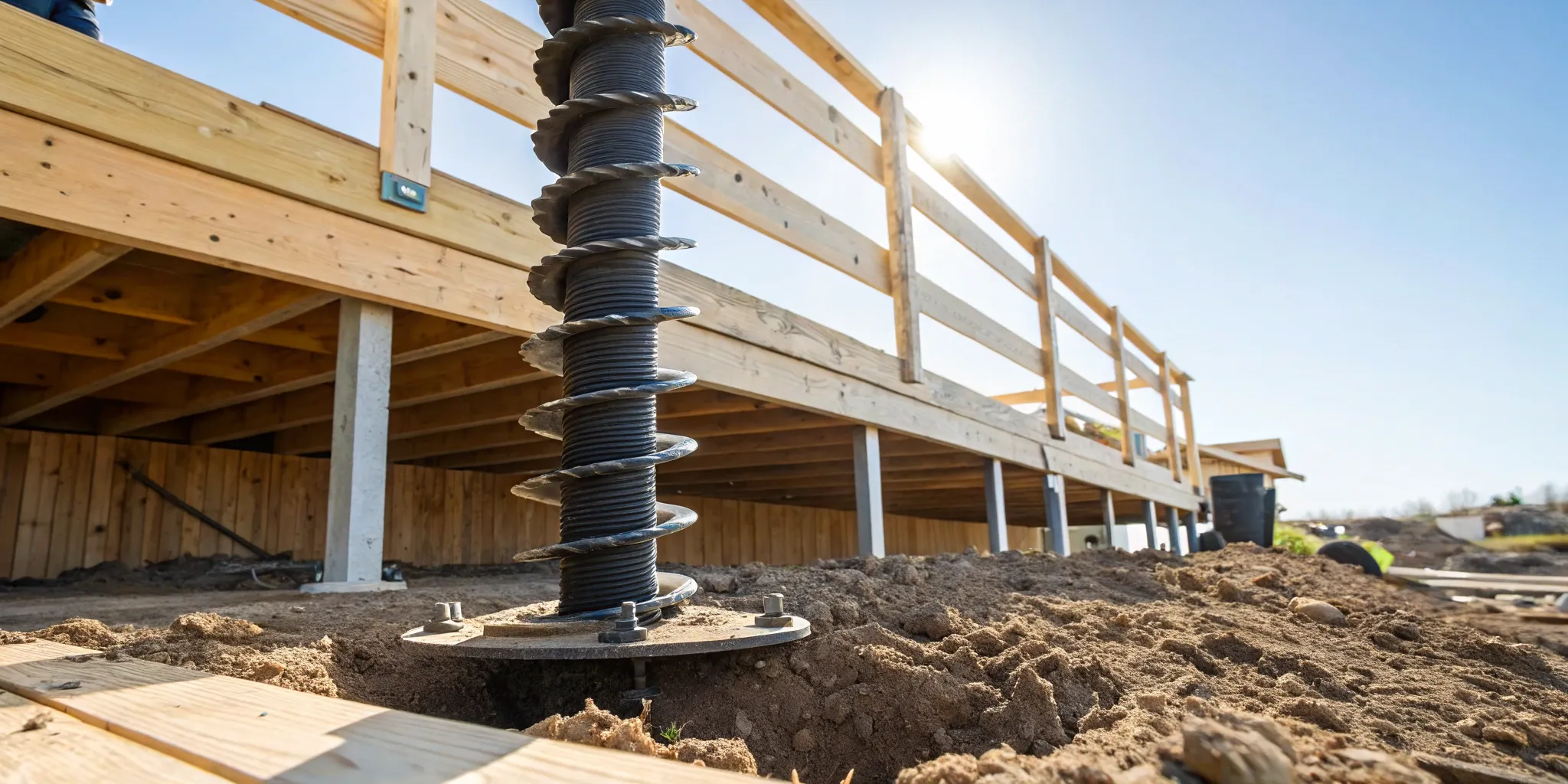
Building a deck is a major investment in your home, and you want to protect it. The biggest threat to that investment isn’t the weather on top, but the ground underneath. Shifting soil, water, and frost heave can cause traditional concrete foundations to crack, sink, or lift over time, leaving you with a deck that’s uneven and unsafe. This is why a permanent foundation solution is so critical. Helical piers for decks are designed for long-term performance, locking your structure into stable ground far below the surface. They aren’t just a base; they are an insurance policy against future foundation problems, ensuring your deck remains a safe, stable, and valuable addition to your home for its entire lifespan.
Key Takeaways
- Get a Superior Foundation, Faster: Helical piers are steel screws that anchor your deck deep into stable soil, creating an incredibly secure base. The installation is quick, minimally invasive to your yard, and lets you start building immediately—no waiting for concrete to cure.
- Leave Installation to the Experts: Installing helical piers is a job for certified professionals, not a weekend DIY project. An expert ensures the piers are driven to the correct depth for your specific soil conditions, guarantees the foundation can handle the required weight, and manages the entire permitting process for you.
- Invest in a Lasting, Low-Maintenance Solution: Because they are made from galvanized steel and anchored below the frost line, helical piers are a permanent, maintenance-free foundation. They resist common issues like settling and frost heave, giving you a stable, worry-free deck that will last for decades.
What Are Helical Piers and How Do They Work?
If you’re planning to build a deck, you’ve probably thought a lot about the design, the materials, and the finish. But the most critical part of your deck is the one you’ll never see: the foundation. That’s where helical piers come in. Think of them as giant steel screws that are twisted deep into the ground to create an unshakable foundation for your structure. Unlike traditional concrete footings that involve digging large holes and waiting for concrete to cure, helical piers are installed with specialized machinery that drives them down to stable, load-bearing soil.
This method provides a strong, reliable base that anchors your deck securely, preventing the shifting and settling that can happen over time due to soil movement or frost heave. It’s a modern approach to building a foundation that is faster, less invasive, and often more effective than old-school methods. By transferring the weight of your deck from the unstable surface soil to a solid layer of earth far below, helical piers ensure your outdoor space remains safe and level for years to come.
The Anatomy of a Helical Pier
So, what exactly is a helical pier made of? It’s simpler than you might think. The main component is a central steel shaft, which is essentially a high-strength steel pipe. Welded to this shaft are one or more helical plates, which look like large screw threads. These plates are the key to the pier’s function—they are what allows the pier to be screwed into the ground and are also what provides the anchoring force. The size and number of these plates can be adjusted based on your specific soil conditions and the weight of the deck it needs to support. This simple but brilliant design is what allows for such an efficient transfer of the structural load deep into the earth.
The Installation Process, Step-by-Step
The installation of helical piers is a clean and precise process. First, a professional team will evaluate your property to determine the exact placement points for the piers. Once the locations are marked, they bring in hydraulic equipment to drive the piers into the ground. The machine applies torque, essentially screwing the pier into the earth like you would a screw into wood. As the pier goes deeper, the installation team monitors the torque pressure to ensure it reaches the required load-bearing capacity. This tells them when the pier has hit solid, stable soil. After the pier is at the correct depth, a bracket is attached to the top, ready to connect directly to your deck’s support posts. The whole process is efficient, with minimal disruption to your yard.
How Much Weight Can They Hold?
One of the most common questions we get is about the strength of helical piers, and the answer is always impressive. These piers are incredibly strong. While the exact capacity depends on the pier’s size, the number of helical plates, and the soil conditions, a single helical pier can be engineered to support thousands of pounds. Some heavy-duty piers used in commercial or foundation repair applications can even support loads of up to 500 tons. For a residential deck, the piers are specifically chosen and installed to far exceed the weight of the structure, its occupants, and any heavy snow loads. This ensures your deck has a foundation that is not just adequate, but exceptionally stable and secure.
Do They Work in Your Soil?
Another major advantage of helical piers is their versatility across different soil types. Whether your property has soft clay, loose sand, or a mix of soil conditions, helical piers are an effective solution. The helical plates are designed to cut through various soil layers until they reach a stable stratum that can support the required load. This makes them an ideal choice for sites where traditional concrete footings might struggle, such as areas with a high water table, expansive clay soils, or poor fill material. They are also a fantastic solution for building on slopes or in areas with challenging terrain, which is why they are often used for hillside stabilization projects.
The Pros and Cons of Helical Piers
Helical piers are a fantastic solution for many foundation needs, but like any construction method, they have their strengths and weaknesses. Understanding both sides of the coin helps you make an informed decision for your property. The right choice always depends on your specific project, soil conditions, and property layout. For many homeowners, especially those planning a new deck or addition, the benefits are clear and compelling. They offer a modern alternative to traditional concrete footings that can save you time and hassle.
However, it’s just as important to know their limitations. In certain situations, another method might be a better fit. Let’s walk through the key advantages and potential drawbacks so you can see if helical piers are the right foundation for your project.
Why They’re Great for Decks
If you’re building a deck, helical piers are one of the best foundation options available. Decks can be incredibly heavy, especially if you’re planning for multiple levels, a hot tub, or an outdoor kitchen. Helical piers provide an exceptionally strong and stable base that can handle these heavy loads with ease. They are screwed deep into the ground until they reach stable, load-bearing soil, which prevents the sinking or shifting that can happen with shallow concrete footings. This deep anchoring gives you peace of mind that your deck will remain level and secure for years to come.
Quick and Efficient Installation
One of the biggest advantages of helical piers is the installation speed. Forget waiting days for concrete to cure. A professional crew can often install all the piers for a standard deck foundation in a single day. Because there’s no curing time, you can start building your deck frame immediately after the piers are in place. This efficiency drastically shortens your project timeline, letting you enjoy your new outdoor space much sooner. It also means less disruption to your daily life, with contractors spending less time on your property.
A More Eco-Friendly Option
Compared to traditional concrete footings, helical pier installation is much gentler on your landscape. The process doesn’t require large-scale excavation, so there are no big holes to dig or piles of displaced dirt to manage. Specialized equipment installs the piers with minimal disturbance to the surrounding yard. This means your lawn, garden beds, and tree roots are largely unaffected. This approach to foundation repair also produces less waste, making it a more sustainable choice that helps you keep your yard looking its best.
When Space Is an Issue
While helical piers are versatile, they do have one key requirement: space. The hydraulic equipment used to screw the piers into the ground needs a certain amount of overhead and side clearance to operate effectively. Typically, installers need about seven to nine feet of vertical space to handle the equipment. If your deck is being built in a very tight spot—like close to a property line, under a low-hanging roof, or surrounded by other structures—it might be challenging to get the machinery in place. An expert will assess your site to confirm there’s enough room to work safely.
When They Might Not Be the Right Fit
Helical piers are not a one-size-fits-all solution. Their effectiveness depends heavily on the soil conditions. They work best in soils that are relatively free of major obstructions. If your property has extremely dense, rocky soil or sits on solid bedrock, it can be difficult or impossible to screw the piers to the required depth. In these cases, the helices can’t properly anchor into the ground, and another foundation method might be more suitable. That’s why a thorough soil assessment is a critical first step for any new construction or repair project.
Key Factors for a Successful Installation
Getting helical piers installed correctly is about more than just drilling them into the ground. A successful project depends on careful planning and professional execution. From understanding your property’s unique soil conditions to making sure the right equipment can access your yard, several key factors come into play. Thinking through these elements beforehand ensures your new deck foundation will be safe, stable, and built to last for decades.
Evaluating Your Property First
Before any work begins, a thorough property evaluation is a must. A professional will conduct a soil investigation to understand the ground conditions you’re working with. This isn’t just a quick look; it involves analyzing the soil composition to determine the exact depth and specifications needed for the piers. The findings from this assessment are used to create engineered drawings that map out the installation precisely. This initial step is the most critical part of the process, as it ensures the entire foundation repair plan is tailored specifically to your property, guaranteeing a stable and secure base for your deck.
The Right Equipment and Space
Helical pier installation requires specialized hydraulic equipment, and it’s not exactly small. Installers need about seven to nine feet of clearance to operate the machinery that drives the piers into the earth. This is an important consideration for properties with tight side yards, nearby fences, or other obstructions. Before you commit, a good contractor will assess your site to confirm there’s adequate room to work safely and effectively. If access is limited, it could complicate the installation, so it’s best to have that conversation early on. This is one of the main reasons a DIY approach isn’t recommended—the machinery requires both space and expertise.
Dealing with the Frost Line
If you live in a climate with freezing winters, the frost line is a term you need to know. It’s the depth to which the ground freezes, and any foundation that sits above it is at risk of heaving and shifting during freeze-thaw cycles. One of the biggest advantages of helical piers is that they are installed deep into the ground, well below the frost line. This anchors your deck to stable soil that isn’t affected by temperature changes, preventing movement and keeping your deck level year after year. It’s a simple concept that makes a world of difference for long-term stability.
Meeting Local Building Codes
Any structural project, including a deck, needs to comply with local building codes. The good news is that helical piers are widely accepted and approved by most building authorities, including the International Residential Code (IRC). However, codes can vary by city or county, so it’s essential to work with a contractor who knows the local requirements inside and out. A professional installer will ensure that the pier specifications, depth, and placement all meet or exceed these standards. This not only guarantees your project will pass inspection but also gives you peace of mind that your deck is built safely and correctly.
How Weather Affects Installation
Waiting for perfect weather can delay construction projects for weeks, but that’s rarely an issue with helical piers. Unlike concrete footings, which require specific temperatures to cure properly, helical piers can be installed year-round in almost any weather. Whether it’s a chilly winter morning or a damp spring day, the installation process remains the same. This flexibility is a huge advantage, as it allows you to stick to your project timeline without worrying about weather-related setbacks. It means you can get your deck built and ready to enjoy much faster, regardless of the season.
Why You Need a Professional Installer
While the idea of a DIY project can be appealing, installing helical piers is one area where professional expertise is non-negotiable. This isn’t like assembling furniture; it’s about creating a stable and secure foundation for a structure that will hold friends, family, and furniture. A professional installation ensures the job is done correctly, safely, and in compliance with local regulations. From selecting the right equipment to understanding the nuances of your specific soil conditions, a certified installer brings a level of precision that simply can’t be matched without extensive training and experience.
Hiring a professional is an investment in peace of mind. They handle the complexities, from securing permits to guaranteeing the long-term stability of your deck. A pro has the right tools to measure torque and ensure each pier reaches the necessary load-bearing soil layer, which is critical for a lasting foundation. They also carry the proper insurance, protecting you from liability. Ultimately, a professional ensures your deck’s foundation is not just built, but engineered for safety and durability. When you work with experts in helical piers, you’re building on a foundation of confidence.
Choosing a Qualified Contractor
Finding the right contractor is about more than just getting a quote. You need a team that understands the science behind foundation support. A qualified installer will assess your project’s specific needs, calculating the load your deck will carry to determine the right size and type of helical piers. They know how to select the appropriate head bracket to connect the pier to your deck’s structure, a crucial step for ensuring stability. Their experience allows them to read the torque data during installation, confirming that each pier is anchored in solid, load-bearing soil, not just loose topsoil. This expertise is what separates a stable, long-lasting deck from one that could shift or settle over time.
Handling Permits and Inspections
Foundation work almost always requires a building permit, and for good reason—it’s a matter of public safety. A professional installer is well-versed in local building codes and will manage the entire permitting process for you. They know what documentation is needed, how to submit plans for approval, and how to schedule the necessary inspections. While helical piers are widely approved by building codes, the installation itself must meet specific local standards. Letting a professional handle the paperwork and coordination with city inspectors saves you from a major headache and ensures your project is fully compliant from start to finish, avoiding potential fines or legal issues down the road.
Ensuring a High-Quality Job
A high-quality installation is all about precision and the right equipment. Professional installers use hydraulic-powered machinery to drive the piers into the ground, which allows them to monitor torque ratings in real-time. This data tells them exactly when the pier has reached a stable soil layer capable of supporting the required load. Unlike concrete footings, this process involves no excavation, no messy concrete mixing, and no waiting for anything to cure. A professional team can often complete a foundation repair or deck installation in a fraction of the time, leaving your yard intact and providing a perfectly level, immediately usable foundation for your project.
Putting Safety First
When it comes to your home and family, safety is the top priority. A professional helical pier installer operates under strict safety protocols. Their teams are trained to handle heavy machinery and understand the risks involved in foundation work. A key part of their job is accurately calculating the load capacity for each pier to ensure the foundation can safely support the weight of your deck and everyone on it. Improper installation can lead to structural failure, which poses a serious risk of injury and property damage. By hiring a professional, you’re entrusting the safety of your project to experts who prioritize a secure and reliable outcome.
What to Look for in a Warranty
A strong warranty is a clear sign that a contractor stands behind their work and the quality of their materials. When vetting installers, always ask about their warranties. A reputable company will offer comprehensive coverage that protects both the materials and the labor. For example, at Bristol FX, we provide a lifetime warranty on our pier installations because we use high-strength, American-made steel and adhere to the highest installation standards. This type of guarantee gives you confidence that your investment is protected for the long haul. A warranty isn’t just a piece of paper; it’s a promise of lasting quality and performance.
How Helical Piers Perform Over Time
When you invest in a new deck, you want its foundation to be a one-and-done deal. The last thing you need is to worry about it shifting or settling a few years down the road. This is where helical piers really shine. They are engineered not just for immediate support but for incredible long-term performance. Unlike traditional concrete footings that can be susceptible to soil changes and frost heave, helical piers are designed to lock into stable soil deep underground, providing a secure base that stands the test of time. Their material, design, and installation method all contribute to a foundation that remains strong and stable for decades, giving you peace of mind and a deck you can enjoy for years to come.
How Long Do They Last?
Helical piers are built for the long haul. They are typically made from high-strength, galvanized steel, which is coated in a layer of zinc to protect it from rust and corrosion. This process makes them incredibly resilient against moisture and soil minerals that would degrade other materials over time. A properly installed helical pier foundation can easily last for decades—often well over 100 years. At Bristol FX, we are so confident in their durability that our push and helical pier installations come with a lifetime warranty. This isn’t just a temporary fix; it’s a permanent solution for your deck’s foundation.
What Maintenance Is Required?
One of the best features of a helical pier foundation is that it’s virtually maintenance-free. Once the piers are professionally installed, you don’t have to think about them again. There’s no need for periodic check-ups, resealing, or adjustments. They don’t crack or crumble like concrete can, and they aren’t affected by the seasonal expansion and contraction of soil in the same way. This set-it-and-forget-it quality is a huge advantage for homeowners. You get to spend your time enjoying your deck, not worrying about what’s holding it up. It’s a simple, reliable system that just works.
Standing Up to the Elements
Weather can be a major challenge for any construction project, but helical piers are remarkably resilient. Unlike concrete, which needs specific temperature and moisture conditions to cure properly, helical piers can be installed year-round in almost any weather. Rain, cold, or heat won’t delay your project. Once installed, they continue to perform exceptionally well against the elements. Because they are anchored deep below the frost line, they are not susceptible to frost heave, which is when frozen soil expands and pushes foundations upward. This makes them an ideal choice for ensuring your deck remains stable through harsh winters and wet seasons.
Maintaining Strength Over the Years
The strength of a helical pier doesn’t diminish over time. Their design is key to this lasting power. The helical plates, or blades, on the pier shaft are screwed into the ground until they reach a specific torque, which corresponds to the load-bearing capacity of the soil. This process ensures the pier is anchored in solid, competent soil, bypassing any weak or unstable layers near the surface. This deep anchoring provides incredible stability and prevents the foundation from settling or shifting. It’s a proactive approach to foundation repair that addresses potential issues before they can even start, ensuring your deck remains level and secure for its entire lifespan.
Ensuring Long-Term Stability
Long-term stability is the ultimate goal for any foundation, and helical piers deliver it exceptionally well, especially in challenging soil conditions. Whether you’re building on soft clay, loose sand, or on a slope, helical piers can be engineered to provide a solid base. The piers transfer the weight of the deck down to stable, load-bearing soil or bedrock, effectively creating a series of underground stilts. This method resists both downward (settling) and upward (uplift) forces, which is crucial during high winds or flooding. This level of engineered stability is why helical piers are trusted for everything from residential decks to major commercial projects and even hillside stabilization.
Breaking Down the Costs
When you’re planning a new deck, the foundation is one of the most critical parts of your budget. The total cost of a helical pier installation isn’t just a single number; it’s a combination of materials, labor, and the unique conditions of your property. While helical piers can sometimes have a higher upfront material cost compared to traditional concrete footings, they often make up for it with significant savings in labor and time.
Understanding these different cost components helps you see the full picture. It’s not just about buying the steel piers; it’s about investing in a fast, reliable, and long-lasting foundation for your outdoor space. A professional installer can give you a detailed quote that breaks down these expenses, so you know exactly what you’re paying for. This transparency is key to making an informed decision and ensuring there are no surprises along the way. Let’s look at what goes into the final price tag.
The Cost of Materials
The main material cost comes from the helical piers themselves. The price is typically calculated per foot, with an average cost of around $30 per foot. For a standard 20-foot pier, you might expect the material cost to be about $600. However, this can change based on the diameter of the pier shaft and the size of the helical plates, which are chosen based on your soil conditions and the weight of your deck. The final material bill will depend on how many piers you need and how deep they have to be installed to reach stable soil, so a larger deck will naturally require a bigger material investment.
Factoring in Labor and Installation
This is where helical piers really shine. Unlike concrete, which requires excavation, pouring, and waiting for it to cure, helical piers are installed quickly with specialized machinery. An experienced crew can often install all the piers for a standard deck in a single day. This efficiency drastically reduces labor costs. You’re not paying for days of digging or for a concrete truck to come to your property. The streamlined process means your project can move forward faster, saving you both time and money on the overall construction timeline.
How Your Property Affects the Price
No two properties are exactly alike, and these differences can influence the final cost. The type of soil on your land is a major factor; soft or loose soil may require deeper piers to find a stable load-bearing layer. Rocky soil can also present challenges that might require different equipment. The size and design of your deck determine how much weight the piers need to support, which affects the type and number of piers used. Accessibility to the installation site and the local climate, which dictates the required depth to get below the frost line, also play a role in the final quote for your foundation repair or installation.
Is It a Good Long-Term Investment?
While the initial material cost for helical piers might be higher than concrete, they are an excellent long-term investment. Their durability and resistance to frost heave mean you’re less likely to face costly repairs down the road from a shifting or sinking foundation. Because they can be installed in any weather, you avoid seasonal delays that can drive up project costs. When you choose helical piers for new construction, you’re paying for peace of mind and a stable, secure deck that will last for decades with minimal maintenance, ultimately providing better value over the life of your home.
Planning for Future Changes
It’s important to remember that helical piers are a permanent foundation solution. Once they are installed, they cannot be easily moved or reused. If you have plans to expand your deck or build an addition in the future, you’ll need to install new piers for the new section. This is a crucial consideration during the initial design phase. Make sure your deck plan accounts for your long-term vision for your property. Thinking ahead ensures that your initial investment serves you well and that any future projects can be integrated smoothly without having to work around an immovable foundation.
Related Articles
- What’s the Difference Between Push Piers and Helical Piers? – Professional Foundation Repair
- Push vs Helical Piers for Foundation Repair
- Push Piers vs Helical Piers: Foundation Repair by Bristol FX
Frequently Asked Questions
How do I know if helical piers are the right choice for my specific deck project? The best way to know for sure is with a professional property evaluation. Helical piers are incredibly versatile and work well in most soil conditions, from soft clay to sand. However, an expert needs to assess your specific site, consider the weight of your planned deck, and check for potential obstructions. This initial step ensures the foundation is engineered correctly for your property, giving you a clear answer on whether piers are the ideal solution for you.
How quickly can I start building my deck after the piers are installed? You can start building right away. This is one of the biggest advantages of helical piers. The installation process is fast, often completed in a single day, and because there is no concrete to mix or cure, the foundation is ready for construction the moment the last pier is in the ground. This efficiency helps shorten your overall project timeline significantly.
What happens if the installer hits a large rock or an underground obstruction? This is a situation where hiring an experienced professional really pays off. A thorough site assessment helps identify potential issues beforehand, but surprises can happen. If an installer encounters a large rock or another obstruction, they have several strategies. They may be able to adjust the pier’s location slightly or use different equipment to bypass the object. In the rare case of solid bedrock, they will discuss the best alternative foundation methods with you.
Are helical piers more expensive than traditional concrete footings? While the material cost for helical piers can sometimes be higher upfront, the total installed cost is often very similar to concrete, and can even be less. The major savings come from reduced labor. Installation is much faster, requires less equipment, and involves no excavation or waiting for concrete to cure. When you factor in their long-term durability and maintenance-free nature, helical piers provide fantastic value over the life of your deck.
Can helical piers be used for anything other than new decks? Yes, absolutely. Their strength and reliability make them a go-to solution for a wide range of projects. We regularly use helical piers to support home additions, sunrooms, and porches. They are also a critical tool in foundation repair for stabilizing homes that have started to settle, and their incredible load-bearing capacity makes them suitable for new commercial buildings and complex hillside stabilization projects.